How to Get Rid of Fruit Flies in a UK Kitchen: The Definitive 3-Step Battle Plan
It’s a familiar August scene in my UK kitchen: one day, nothing. The next, a cloud of tiny, unwelcome guests has taken over the fruit bowl. After years of battling this tiny enemy, I’ve perfected a 3-step battle plan that works every time.
These pests, Drosophila melanogaster, are frustratingly difficult to beat. A single female can lay up to 500 eggs in her short life, and the entire life cycle can complete in just over a week. This is why you need a strategy, not just a single trap.
This isn’t just a list of tips. This is a strategic plan to find the best way to get rid of fruit flies in your kitchen, for good. We will 1. Eliminate the Source, 2. Trap the Adults, and 3. Break the Life Cycle.
Let’s get your kitchen back.
First, Are They Actually Fruit Flies? (A Common UK Kitchen Mistake)
Before you declare war, you must identify your enemy. Many people waste time using fruit fly traps for a fungus gnat problem. This is a common mistake, and the solutions are completely different.
Check this quick identification table, based on guidance from horticultural experts like the Royal Horticultural Society (RHS), to be certain.
Fruit Flies vs. Fungus Gnats vs. Drain Flies
If your pests are black and near your houseplants, you have fungus gnats. See our guide on getting rid of fungus gnats. If they are fuzzy and near the sink, you have drain flies.
If they are tan-coloured and obsessed with your fruit bowl, you have fruit flies. Continue with this battle plan.
Step 1: Eliminate the Breeding Ground (What Causes Fruit Flies?)
You cannot win this fight with traps alone. If you don’t remove their food source and breeding ground, you’ll be trapping new flies forever. Fruit flies lay their eggs directly onto fermenting organic matter.
The Obvious Culprit: Your Fruit Bowl & Overripe Fruit
That ripening bunch of bananas is a five-star hotel.
-
Action: Immediately eat, refrigerate, or discard any overripe fruit. This includes soft apples, browning bananas, and even onions or old potatoes stored in a cupboard.
-
Experience Tip: In summer, I stop keeping a fruit bowl on the counter entirely. All fruit goes straight into the fridge.
The Hidden Culprits: Bins, Recycling, and Spills
Fruit flies aren’t picky. A drop of spilled wine, a smear of ketchup, or a damp cloth is enough.
-
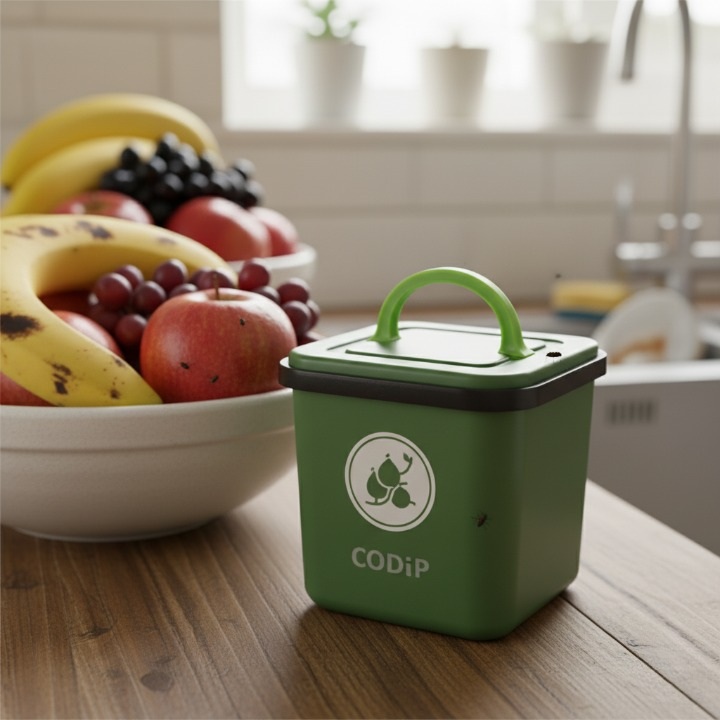
Your Food Compost Caddy: This is the number one suspect in most UK kitchens. It’s a dark, moist, fermenting paradise. You must empty it daily.
-
Recycling: That half-empty wine bottle for your council recycling? That’s a perfect nursery. Rinse all cans, bottles, and jars thoroughly before putting them in the recycling bin.
-
Rubbish Bin: Take your main kitchen bin out daily, even if it’s not full. The-fly-in-the-ointment is often a fly in the bin.
-
Spills: Wipe up all spills—juice, wine, beer, tea—immediately. Check for sticky patches under your toaster or microwave.
The “Gunk” in Your Kitchen Sink Drain (The Source You’re Missing)
If you’ve cleaned everything and still have flies, look in your sink.
Fruit flies don’t just “come up” the drain, they live in it. Over time, a layer of organic gunk, or ‘biofilm’, builds up on the inside of your pipes. This is a permanent, undisturbed food source for them. They will live and breed in your drain and fly out to find your fruit.
This is the source most people miss. We will destroy it in Step 3.
Step 2: Trap the Adult Population (The Best DIY Fruit Fly Traps)
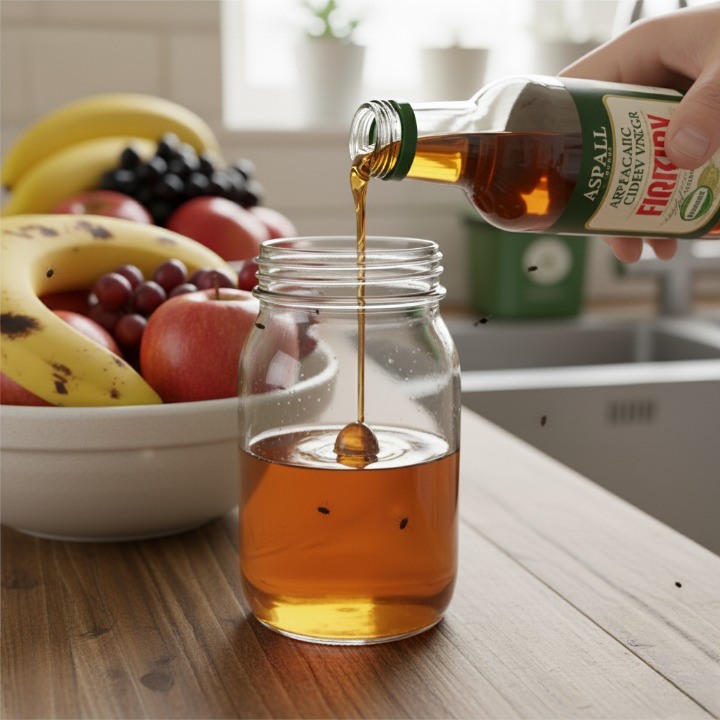
Now that you’ve removed their food, it’s time to deal with the adult flies that are still hovering. The apple cider vinegar (ACV) trap is the most effective DIY method, and science backs this up. Studies, like one from Scientific Reports, confirm that Drosophila are highly attracted to the chemical compounds in fermenting fruit, which ACV mimics perfectly.
The Classic: The Apple Cider Vinegar (ACV) & Soap Trap
This trap is my go-to and works within an hour.
-
Get a small bowl or jar.
-
Pour in about 50ml of apple cider vinegar. Don’t use white or malt vinegar; they aren’t as effective. ACV is the king.
-
Add one single drop of washing-up liquid (like Fairy Liquid). This is the magic ingredient. It breaks the surface tension of the vinegar, so when the flies land to take a drink, they fall in and drown.
-
Place the trap right next to the source of the problem (e.g., beside the fruit bowl or compost caddy).
My Pro-Tip: The Paper Funnel Trap (3x More Effective)
Forget covering the trap with cling film and poking holes. In my tests, that method is average at best.
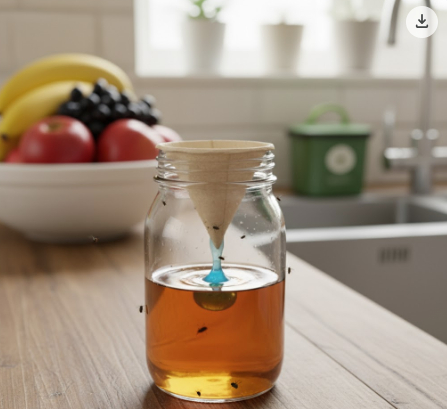
For a trap that is 3x more effective, use a paper funnel. Take a piece of A5 paper, roll it into a cone (like a piping bag), and snip off the very end. Place this funnel into a jar that has ACV and a small piece of ripe banana in the bottom (no soap needed for this one).
The wide opening of the funnel lets all the flies in, but they can’t figure out how to fly back up the tiny opening. It’s a one-way ticket.
The Red Wine or Beer Bottle Trap
Out of ACV? If you have a beer or wine bottle with a small amount of liquid left, just leave it on the counter. The flies will be drawn to the fermenting liquid and crawl inside. The shape of the bottle neck acts as a natural funnel, making it difficult for them to get out.
Step 3: Break the Life Cycle & Prevent Their Return
This is the step that ensures they don’t come back. Trapping is a short-term fix; prevention is the permanent solution.
Understanding the 7-Day Life Cycle
You must be persistent. The flies you see today are not the only problem. Their eggs, which you can’t see, will hatch tomorrow.
-
Day 0: Female lays eggs on a banana peel in your caddy.
-
Day 1-2: Eggs hatch into larvae (maggots).
-
Day 5-6: Larvae pupate.
-
Day 7-10: New adult flies emerge, ready to breed.
This is why you must be vigilant for at least one to two weeks after you see the last fly. You’re not just fighting the flies; you’re fighting the next generation.
How to Properly Clean Your Drains (The 3-Step Flush)
Pouring boiling water down the drain is not enough. It won’t remove the sticky biofilm. You need to scrub the pipes from the inside. This is the best way to get rid of fruit flies coming from your sink drain.
Do this just before you go to bed, for 3 days in a row:
-
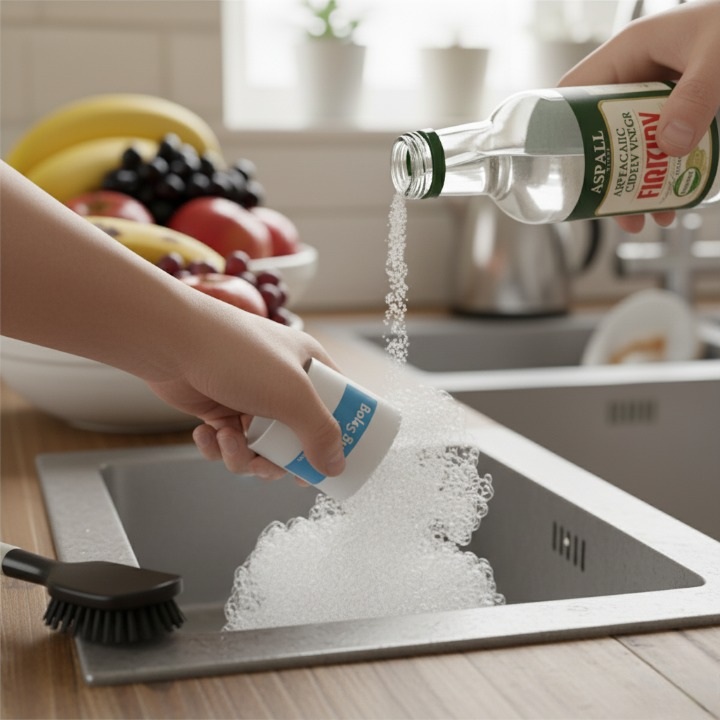
Scrub (The Fizz): Pour half a cup of baking soda (bicarbonate of soda) down the drain. Follow it with one cup of white vinegar. It will fizz and bubble. This chemical reaction helps to scrub the biofilm from the pipe walls. Put the plug in and wait 15 minutes.
-
Flush (The Heat): Boil a full kettle. After 15 minutes, unplug the sink and pour the entire kettle of boiling water slowly down the drain to flush all the dislodged gunk and any remaining larvae.
-
Repeat: Do this daily for 3 days to ensure you’ve eliminated the entire breeding ground.
Your New Daily Prevention Checklist
Turn this into a 5-minute closing-down routine for your kitchen each night.
-
[ ] All overripe fruit is in the fridge or bin.
-
[ ] Food compost caddy is emptied into the outside bin.
-
[ ] Main kitchen bin is taken out.
-
[ ] All recycling is rinsed and in the recycling bin.
-
[ ] All counters and hobs are wiped clean of crumbs and spills.
-
[ ] The sink is clean, and the plug is in.
-
[ ] Damp dishcloths or sponges are rinsed and hung to dry (not left in a wet pile).
What Smells Do Fruit Flies Hate? (Natural Deterrents)
If you’re looking for a natural way to keep them at bay, fruit flies (and many insects) dislike strong, aromatic oils.
-
Basil: Place a fresh basil plant on your windowsill. Flies dislike the smell.
-
Peppermint: Put a few drops of peppermint essential oil on a cotton ball and place it by your compost caddy or in your fruit bowl.
-
Lavender & Lemongrass: These scents are also effective deterrents.
Important: These smells will not kill an infestation. They are a prevention tool. They help to “shield” an area and make it less attractive after you have eliminated the source and trapped the adults.
Best Fruit Fly Traps in the K (When DIY Isn’t Enough)
If you have a severe, persistent infestation or just want a more powerful solution, you can buy commercial traps.
Best Sticky Traps (For Plants & Bins)
These are bright yellow, non-toxic sticky sheets. They are most effective for fungus gnats in your houseplants, but they will also catch fruit flies.
-
Our Pick: Yellow Sticky Traps.
-
Best For: Placing inside your bin lid or near plants.
-
Where to Buy: You can find them at UK retailers like B&Q, Robert Dyas, or Amazon.co.uk.
Best Pre-Baited Liquid Traps
These are small, discreet plastic traps (often shaped like an apple or dome) that come pre-filled with an attractive liquid.
-
Our Pick: Look for brands like Rentokil or Zero In.
-
Best For: A “set it and forget it” solution next to your fruit bowl. They last for weeks.
-
Pros: Less mess than DIY, very effective.
Best Electric UV Traps (The “Nuclear” Option)
For a truly persistent problem, an indoor electric fly trap (like the ones you see in a butcher’s shop) is unbeatable.
-
How it Works: It uses a blue UV light to attract the flies and then zaps them or traps them on a glueboard.
-
Best For: Larger kitchens or those who are completely fed up.
-
Pros: Kills all manner of flying kitchen pests, not just fruit flies.
When to Call Professional Pest Control
Let’s be realistic. You should be able to solve 99% of fruit fly problems yourself using this 3-step plan.
However, if you have followed this plan diligently for two weeks—cleaning drains, removing all sources, and setting traps—and you still have a cloud of flies, it’s time to call a professional. This could signal a more serious underlying issue, like a broken drain pipe under the floor.
For professional advice, always use a service accredited by the British Pest Control Association (BPCA).
FAQs
Why is my UK kitchen suddenly full of fruit flies?
This almost always means a new food source has appeared. The most common causes are a piece of fruit that has become overripe (like a banana), a bag of potatoes that has one rotting at the bottom, or a spill (like juice) that wasn’t cleaned up properly. They can also fly in from outside in summer.
How do I find the source of a fruit fly infestation?
Follow your eyes. The flies will congregate directly on or above their food source. Check your fruit bowl first, then your compost caddy, then your bin. If you can’t see a source, it’s almost certainly inside your sink drain.
What is the fastest way to get rid of fruit flies overnight?
The fastest way is a 3-part attack.
-
Remove the source: (e.g., throw out the ripe bananas).
-
Set multiple ACV traps: Place one by the old fruit spot and one by your sink.
-
Clean the drains: Do the baking soda, vinegar, and boiling water flush right before bed. You will wake up to a bowl full of trapped flies and a drastic reduction in their numbers.
Can I use white vinegar instead of apple cider vinegar for a trap?
You can, but it is far less effective. White vinegar is just acetic acid and water. Apple cider vinegar is fermented and contains compounds that perfectly mimic the smell of rotting fruit. If you only have white vinegar, add a splash of wine or a piece of banana to make it more attractive.
How do I get rid of fruit flies in my sink drain?
Do not just pour boiling water. You must use the 3-step flush: 1. Half cup of baking soda, 2. One cup of white vinegar (let it fizz for 15 mins), 3. A full kettle of boiling water to flush it all out. Repeat this for 3 nights.
Does one fruit fly mean an infestation?
Not necessarily, but it should be a warning. That one fly could be a pregnant female looking for a place to lay her 500 eggs. Kill it immediately and do a quick check to make sure your fruit is fresh and your caddy is empty.
What smells do fruit flies hate?
Fruit flies dislike strong essential oils. The most effective are peppermint, basil, lavender, and lemongrass. Use them as a deterrent after you have cleaned the infestation, not as a solution to kill them.
How long does it take to get rid of a fruit fly infestation?
You can trap the majority of adult flies in 24-48 hours. However, to end the entire infestation and stop the life cycle, you must be persistent with cleaning and trapping for at least one to two weeks.
Your Fruit-Fly-Free Kitchen Awaits
Getting rid of fruit flies isn’t about one magic trap. It’s a 3-part battle: remove their food (especially in drains), trap the adults (ACV is king), and clean daily to break their life cycle.
The key isn’t a single product; it’s persistence. A 5-minute “fruit fly sweep”—emptying the caddy, wiping the counters, and checking the fruit bowl—each night is the only ‘hack’ that truly works and keeps them gone for good.
What’s your unbeatable DIY trap recipe? Share your own tips in the comments below!
About the Author