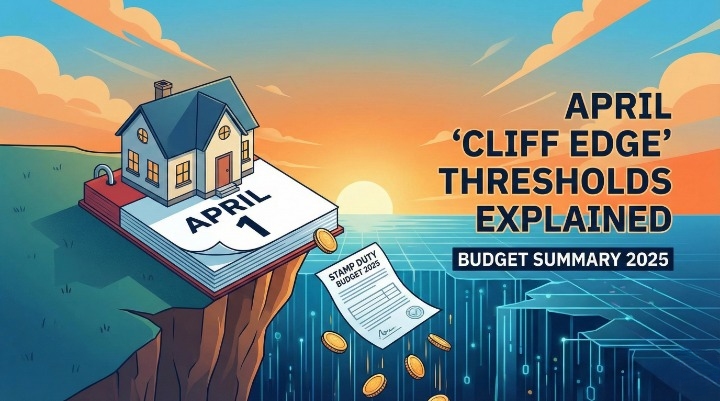
Stamp Duty Budget 2025: The April “Cliff Edge” & New Thresholds Explained
For property buyers in the UK, the most important date in 2025 isn’t New Year’s Day, it’s April 1st.
Following the Autumn Budget 2025, Chancellor Rachel Reeves confirmed what many experts feared: the temporary Stamp Duty Land Tax (SDLT) reliefs introduced in 2022 will expire as planned. There is no extension. This creates a financial “cliff edge” for homebuyers.
If you are in the process of buying a home, or thinking about listing yours, this deadline changes everything. Missing the cutoff date by a single day could cost you up to £6,250 in extra tax.
This Budget summary 2025 breaks down exactly how the Stamp Duty changes will hit your wallet, the critical dates you need to hit to beat the deadline, and why the “wait and see” approach might be the most expensive mistake you make this year.
The “Cliff Edge”: What Changes on April 1, 2025?
The “temporary” relief measures that raised the tax-free thresholds are ending. On April 1st, 2025, the system reverts to the old rates. This affects two main groups: standard home movers and first-time buyers.
Here is the data on exactly what you will pay before and after the deadline.
For Home Movers (Standard Rate)
If you are moving home, the threshold at which you start paying Stamp Duty is dropping by half.
The Change:
-
Current (Until March 31): 0% tax on the first £250,000.
-
From April 1, 2025: 0% tax on the first £125,000.
| Property Price | Tax Payable (Before April 1) | Tax Payable (From April 1) | Extra Cost |
| £250,000 | £0 | £2,500 | +£2,500 |
| £400,000 | £7,500 | £10,000 | +£2,500 |
| £600,000 | £17,500 | £20,000 | +£2,500 |
Analysis: Every buyer purchasing a property over £250,000 will effectively pay a “deadline penalty” of £2,500 if they fail to complete in time.
For First-Time Buyers (The Biggest Losers)
First-time buyers face the hardest hit. Not only does the tax-free threshold drop significantly, but the maximum price cap is also being lowered.
The Change:
-
Tax-Free Threshold: Drops from £425,000 back to £300,000.
-
Property Value Cap: Drops from £625,000 back to £500,000.
Warning: If you are a first-time buyer purchasing a home for £550,000, you currently get partial relief. After April 1st, you will lose all first-time buyer relief because the property exceeds the new £500,000 cap. You will pay the standard rate on the full amount.
| Property Price | Tax (Before April 1) | Tax (From April 1) | Extra Cost |
| £300,000 | £0 | £0 | £0 |
| £425,000 | £0 | £6,250 | +£6,250 |
| £550,000 | £6,250 | £15,000 | +£8,750 |
The Cost of Delay: Real-World Examples
Numbers on a spreadsheet are one thing, but let’s look at what this means for your bank balance.
Scenario A: The First-Time Buyer
Situation: You are buying your first flat in London or the South East for £425,000.
-
Completing in March: You pay £0 in Stamp Duty. You use that savings to furnish the flat.
-
Completing in April: You pay £6,250 in Stamp Duty. That money now goes to HMRC instead of your renovation budget.
-
The Bottom Line: A delay of 24 hours costs you £6,250.
Scenario B: The “Just Over” Buyer
Situation: You are a first-time buyer looking at a house priced at £510,000.
-
Currently: You pay discounted Stamp Duty on the portion between £425k and £510k. Total tax: £4,250.
-
After April 1st: Because the home is over the £500k cap, you lose all relief. You pay standard rates. Total tax: £13,000.
-
The Bottom Line: The tax bill triples. You pay an extra £8,750.
The Conveyancing Countdown: Is It Too Late to Buy?
This is where experience matters. Many buyers assume they can make an offer in February and move in by March. In the UK property market, that is virtually impossible.
According to data from Propertymark and The Law Society, the average time from “offer accepted” to “completion” is between 12 and 16 weeks. Additionally, as the deadline approaches, solicitors and local councils (who handle property searches) will face a massive backlog.
Critical Deadlines (To Complete by March 31, 2025)
If you want to beat the tax hike, you need to work backward from the deadline.
- December 15, 2024 (The “Safe” Zone):
You should have an offer accepted and solicitors instructed by this date. If you are not “under offer” by Christmas, your chances of completing by March 31st drop significantly.
- January 30, 2025 (The “Danger” Zone):
By the end of January, your mortgage offer should be secured, and, crucially, your solicitor should have ordered all local authority searches. Some councils take 6-8 weeks to return searches. If you order them in February, they might not arrive in time.
- March 15, 2025 (The Point of No Return):
You should aim to Exchange Contracts by mid-March. Exchange is the legal commitment. Once you exchange, the completion date is fixed. If you haven’t exchanged by this week, the risk of the deal slipping into April is extreme.
Pro-Tip: If you are buying right now, tell your solicitor immediately that your offer is conditional on completing before the Stamp Duty changes. Ask them if they have the capacity to fast-track your file.
[Check current local authority search turnaround times]
Other Key Budget 2025 Property Announcements
While the Stamp Duty Budget 2025 headlines focus on the April cliff edge, the Chancellor included other measures that affect investors and landlords immediately.
Second Home Surcharge Increase
Effective from October 31, 2024, the surcharge on “Additional Dwellings” (second homes and buy-to-let properties) increased from 3% to 5%.
This was an immediate change. If you are a landlord buying a property for £200,000, your upfront tax bill just jumped from £6,000 to £10,000. This 5% sits on top of the standard rates discussed above.
Capital Gains Tax (CGT)
The Budget maintained the residential property Capital Gains Tax rates at 18% (basic rate) and 24% (higher rate). While there were fears these would align with income tax, the government kept them lower to prevent a “lock-in” effect where landlords refuse to sell.
However, with the Stamp Duty changes April 2025 looming, many landlords are choosing to sell now to target first-time buyers who are rushing to use their relief.
Market Predictions: Will House Prices Drop After April?
This is the most common question we get: “Should I just wait? If taxes go up, surely house prices will come down to compensate?”
The Office for Budget Responsibility (OBR) forecasts suggest a “bunching” effect. We will likely see a spike in transactions in Q1 2025, followed by a slump in Q2 2025.
However, relying on a price crash is risky.
-
The Drop May Not Match the Tax: Even if prices soften by 1-2%, that might not cover the £6,250 tax hike for a first-time buyer.
-
Inventory Shortage: The UK still faces a chronic shortage of housing stock. This structural supply issue often keeps prices high even when taxes rise.
-
Interest Rates: Mortgage rates have a bigger impact on prices than Stamp Duty. If the Bank of England cuts rates in 2025, buyer demand could surge regardless of the tax change.
FAQs
Here are the answers to the most urgent questions buyers are asking right now.
Will Stamp Duty go down in 2025?
No. The Budget confirmed that the current lower rates will end on March 31, 2025. From April 1, rates will go up as they revert to previous thresholds.
Do I pay the old rate if I exchange contracts before April 1st?
No. Stamp Duty is charged at the point of completion (when you get the keys), not exchange. You must complete the purchase on or before March 31st to get the lower rate.
What happens if my purchase is delayed past the deadline?
You will be liable for the higher tax rate. You must have the extra funds available (e.g., the extra £2,500 or £6,250) to pay HMRC within 14 days of completion. If you don’t have the cash, the purchase may collapse.
Is there a mansion tax in the 2025 Budget?
Not explicitly, but the government introduced a “High Value Council Tax Surcharge” for properties worth over £2 million, alongside the increase in the Second Home Surcharge.
How long does conveyancing take in 2025?
Currently, the average is 12-16 weeks. However, expect this to increase to 16-20 weeks in early 2025 as the system becomes clogged with buyers rushing to beat the deadline.
Can I pay Stamp Duty in installments?
Generally, no. SDLT must be paid in full within 14 days of completion. It is usually handled by your solicitor.
Does the Stamp Duty change affect Scotland or Wales?
No. This specific change applies to England and Northern Ireland. Scotland (LBTT) and Wales (LTT) set their own property tax rates.
Conclusion
The Stamp Duty changes April 2025 are not a possibility, they are a certainty. The “Budget summary 2025” message is clear: the window of opportunity to save thousands of pounds is closing.
For first-time buyers, the difference is stark. Saving £6,250 is likely worth the stress of a fast-tracked purchase. For sellers, understanding this timeline helps you choose the right buyer, one who can actually move fast enough to keep the deal together.
Your Next Step: If you are serious about moving, do not wait until January. Instruct a solicitor today, get your mortgage in principle sorted, and make sure your property chain is as short as possible.
Disclaimer: This article provides a summary of the Autumn Budget 2025 and Stamp Duty regulations. Tax laws can be complex and subject to individual circumstances. Always consult with a qualified conveyancer or tax advisor before making property decisions.
About the Author