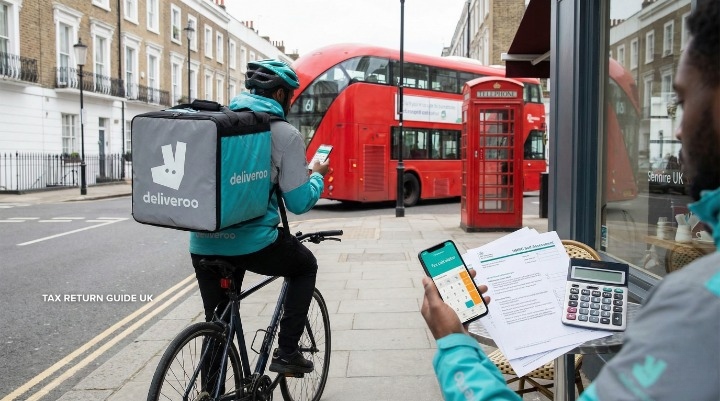
Deliveroo Rider Tax Return Guide UK: 2026 HMRC Rules & Saving Tips
Since January 2025, the “hidden” gig economy has effectively ceased to exist in the eyes of the taxman. Under the new digital platform reporting rules, Deliveroo now shares your earnings data directly with HMRC. If you have been riding throughout 2025, HMRC likely already knows exactly what you earned before you even log in to file.
As we approach the crucial January 31st, 2026, deadline, many riders are receiving “nudge letters” or feeling the pressure of their first official Self-Assessment. Whether you are a full-time courier or a student earning extra cash between lectures, this deliveroo rider tax return guide uk will help you navigate the 2026 landscape, claim every legal expense, and protect your hard-earned income.
Do You Need to File? The £1,000 Trading Allowance Rule
Not every rider needs to register with HMRC. The deciding factor is your “gross income”, the total amount Deliveroo paid you before any expenses or fees were taken out.
HMRC provides a Trading Allowance of £1,000 per tax year. If your total delivery income (from Deliveroo, Uber Eats, Just Eat, etc.) is under £1,000 between 6 April and 5 April, you generally do not need to report it or pay tax. However, the moment you earn £1,001, you must register as self-employed.
| Income Level | Action Required | Tax Implications |
| Under £1,000 | None | No tax due; no need to notify HMRC. |
| £1,001 – £12,570 | Register for Self-Assessment | No Income Tax due, but must file a return. |
| Over £12,570 | Register & File | Income Tax and National Insurance (NI) due. |
How to register as self-employed UK for students
Many students believe that because they earn under the £12,570 Personal Allowance, they can ignore HMRC. This is a common mistake. Even if you owe £0 in tax, you must still register if you exceed the £1,000 threshold.
For students, filing a return is also vital for Student Finance England (SFE). SFE often requires proof of income to assess your maintenance loan. Failing to declare your Deliveroo earnings can lead to overpayments that you will have to pay back later with interest.
2026 Digital Platform Reporting: What HMRC Already Knows
The 2025/26 tax season is different from any previous year. Under the OECD Model Rules (adopted by the UK), digital platforms must report seller/worker income to tax authorities annually.
In January 2026, Deliveroo sent a copy of your 2025 earnings summary to HMRC. If the figures you put on your tax return don’t match the figures Deliveroo provided, it will trigger an automated red flag.
Decoding the Deliveroo “Income Summary” vs Tax Year
Expert Tip: Deliveroo usually provides an “Annual Income Summary” based on the calendar year (1st January to 31st December). However, the UK tax year runs from 6th April to 5th April.
Do not simply copy the numbers from your Deliveroo 2025 summary into your tax return. You must manually calculate your earnings specifically for the tax year period. Using the wrong dates is the quickest way to receive an HMRC enquiry letter.
Maximising Your Pay: Allowable Expenses for Delivery Riders UK
The secret to a lower tax bill is claiming every allowable expense. Since you are self-employed, you only pay tax on your profits, not your total turnover. According to the Low Incomes Tax Reform Group (LITRG), choosing the right expense method can save you hundreds of pounds.
Mileage Allowance vs Actual Costs
Most riders choose between two methods for vehicle expenses:
-
Simplified Expenses (Flat Rate): You claim a set amount per mile. For cars, this is 45p per mile for the first 10,000 miles. For motorcycles or scooters, it is 24p per mile. This covers fuel, insurance, and repairs in one easy calculation.
-
Actual Cost Method: You total up every receipt for fuel, servicing, insurance, and gear, then multiply it by the percentage of time you use the vehicle for work.
My Pro-Tip: If you ride an older, fuel-efficient scooter, the 24p flat rate mileage often works out better than claiming actual fuel costs. However, if you recently bought a brand-new electric bike, the “Actual Cost” method (including capital allowances) might save you more.
Equipment, Data, and The “Substitute” Deduction
Don’t stop at fuel. You can also claim:
-
Phone & Data: A percentage of your monthly mobile bill used for the Deliveroo app.
-
Safety Gear: Helmets, high-vis jackets, and waterproof boots.
-
The “Substitute” Fee: Deliveroo allows you to use a “substitute” (someone else to do the deliveries for you). If you paid a friend to cover your shifts, that payment is a 100% tax-deductible business expense.
Step-by-Step: Getting Your UTR Number for Delivery Drivers UK
If this is your first time filing, you need a Unique Taxpayer Reference (UTR). This 10-digit code identifies you within the HMRC system.
-
Register by October 5th: You should ideally register for Self-Assessment by October 5th following the end of the tax year you started working.
-
Visit GOV.UK: Use the “Register for Self Assessment” service. You will need your National Insurance number and basic business details (e.g., “Courier services”).
-
Wait for the Post: HMRC will mail your UTR number to your home address. This can take up to 10 working days, so do not leave it until the last week of January.
-
Activate Your Account: Once you have the UTR, you must set up your Government Gateway ID to file the deliveroo rider tax return guide uk online.
Deadlines and Penalties (January 2026 Update)
HMRC is strict about deadlines. If you are filing for the 2024/25 tax year, the dates are:
-
31 October 2025: Paper return deadline.
-
31 January 2026 (Midnight): Online return deadline and payment of tax due.
Warning: If you are even one minute late, HMRC issues an automatic £100 fine. This applies even if you have no tax to pay. If you delay by three months, the fines can escalate to over £1,000.
If you cannot pay the full amount at once, HMRC often allows a “Time to Pay” arrangement, but you must contact them before the January 31st deadline to set this up.
Summary of Key Takeaways
Filing your first return doesn’t have to be a nightmare. Keep these three points in mind:
-
HMRC is watching: With direct data sharing in 2026, honesty and accuracy are your best defences.
-
Track your receipts: From phone mounts to your substitute’s wages, every pound spent on your business reduces your tax.
-
Don’t ignore registration: Even if you are a student or low-earner, the UTR is a legal requirement once you pass the £1,000 mark.
Tax is simply the final step of the delivery process. By staying organised and claiming your full allowable expenses for delivery riders UK, you ensure that your hard-earned money stays in your pocket, not HMRC’s.
FAQs
Do Deliveroo riders have to pay tax in the UK?
Yes, if your total gross income from self-employment exceeds £1,000 in a tax year.
How much can I earn on Deliveroo before paying tax?
You don’t pay Income Tax until your total income (including other jobs) exceeds your Personal Allowance, which is currently £12,570. However, you must still register if you earn over £1,000.
Can international students work for Deliveroo and pay tax?
Yes, but you must adhere to the 20-hour weekly limit on your visa. You must register with HMRC and pay tax just like any other UK resident.
What expenses can I claim as a Deliveroo rider?
You can claim mileage, safety gear, phone data, thermal bags, and any fees paid to substitute riders.
How do I get my UTR number?
Register for Self-Assessment on the GOV.UK website. HMRC will post your UTR to you within 10 days.
Does Deliveroo report my earnings to HMRC?
Yes. As of 2025, Deliveroo is legally required to share your annual earnings and account details with HMRC.
What happens if I miss the January 31st tax deadline?
You will receive an immediate £100 penalty. Interest will also be charged on any unpaid tax.
Can I claim my bike repairs on my tax return?
Yes. You can claim the actual cost of repairs if you aren’t using the simplified mileage flat rate.
About the Author