Media Wall Ideas 2026: The Ultimate UK Design & Cost Guide
The “grey-on-grey” era is finally fading. For years, UK living rooms were dominated by high-gloss grey furniture and cool-toned paint. But as we move into 2026, over 65% of home renovations now prioritise warmth, texture, and a dedicated technological focal point.
You want a cinema experience at home, but you likely fear the “office block” look, bulky units that dominate the room and offer zero character.
The modern media wall has evolved. It is no longer just a plasterboard box to hold a TV. It is an architectural feature that defines the mood of your home. Whether you are updating a semi-detached in Manchester or a new-build in Surrey, the shift is towards “Warm Modernism”, a blend of tactile materials, softer lighting, and smarter layouts.
This guide breaks down the most effective media wall ideas for 2026, analyses real UK installation costs, and provides expert tips to future-proof your investment against changing technology.
The Rise of “Warm Modernism” in 2026 Media Wall Design
Stark minimalism is out. Homeowners are tired of living in spaces that feel like clinical showrooms. The leading design philosophy for 2026 is “Warm Modernism” or “Midimalism” (Mid-century Minimalism). This trend focuses on clean lines but layers them with rich textures and organic warmth.
Moving Beyond Minimalism: The Midimalist Approach
If you are planning your media wall design, start by rethinking your materials. Standard painted plasterboard is functional, but it lacks depth.
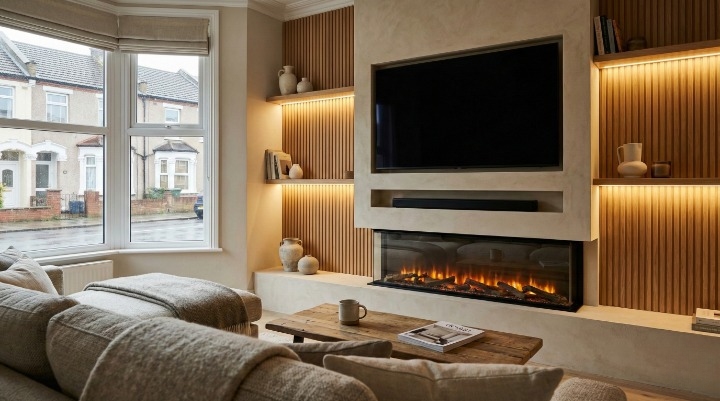
Current trends favour fluted timber panelling and natural wood slats. These add verticality to a room, making standard UK ceiling heights feel grander. We are seeing a massive shift away from cool LEDs (4000K) towards halo lighting in warm white (2700K). This softer glow reduces eye strain during movie nights and creates a cosy atmosphere when the TV is off.
Pro-Tip: Avoid high-gloss finishes on your cabinetry. They reflect screen glare and distract from the viewing experience. Opt for matt Fenix or stained oak veneers instead.
Icelandic Interior Modern: Bringing the Outdoors In
The “Icelandic Interior Modern” style is a refined evolution of Scandi design. It is darker, moodier, and more rooted in nature. Think volcanic stone textures, deep moss greens, and raw timber.
To achieve this look on a media wall, consider using microcement or Venetian plaster instead of standard emulsion paint. These materials mimic the look of concrete or stone but are warm to the touch. They provide a stunning, durable backdrop for a high-definition OLED screen.
Biophilic design principles remain crucial here. It isn’t just about placing a plant on a shelf; it’s about integrating natural materials into the structure. Using reclaimed wood for the soundbar shelf or a stone-effect hearth for an electric fireplace grounds the technology in something organic.
The New Neutral: Wallpaper of White and “Mushroom” Tones
White walls are not disappearing, but they are changing. The flat, brilliant white of the early 2020s is being replaced by complex neutrals like “Mushroom,” “Oatmeal,” and “Clay.”
If you prefer a brighter aesthetic, look for wallpaper of white that features heavy texture, think linen effects, woven grasses, or subtle geometric embossing. These “Textured Illusions” add necessary shadow and depth to a media wall without introducing visual noise.
[Dulux UK – 2026 Colour Trends]
Media Wall Ideas for Smaller UK Spaces
A common misconception is that you need a sprawling open-plan lounge to install a media wall. In reality, bespoke joinery is the most efficient way to maximise storage in compact British homes.
Small Bedroom Media Walls: Creating a Neutral Sanctuary
For neutral bedroom ideas, a media wall acts as a brilliant space-saver. By recessing the TV and wardrobes into a single run of cabinetry, you eliminate the need for bulky freestanding chests of drawers.
In smaller bedrooms, depth is your enemy. A standard media wall might be 30-40cm deep to accommodate equipment.
Contractor’s Insight: For bedrooms, we recommend a “slim build-out” of just 12-15cm. This is enough to chase in cables and mount the TV flush, without eating into your floor space. Use a “Samsung The Frame” or similar slimline screen to keep the profile tight.
Keep the colour palette monochromatic. Painting the joinery the same colour as the walls (colour drenching) makes the unit disappear, preventing the room from feeling cramped.
Small Conservatory Ideas: Turning Glass Rooms into Cinema Hubs
Conservatories are often the most underused rooms in UK houses, freezing in winter and boiling in summer. Transforming this space into a media room is a smart way to reclaim square footage.
However, light control is critical. A media wall in a conservatory must be positioned on the solid wall (usually the house wall) to avoid direct glare.
Refurbishing an existing conservatory to make it usable year-round, typically involving a new insulated roof, costs between £4,000 and £8,000 according to recent data from Checkatrade. Once insulated, a media wall with an integrated electric heater can make this the cosiest room in the house.
Checkatrade – Conservatory Refurbishment Costs 2026
Small Restroom Ideas: Cohesive Design in Compact Areas
While you won’t put a TV in the downstairs loo, the design language should flow. If your living room media wall features oak slats and microcement, carry those elements into the adjacent cloakroom.
Small restroom ideas for 2026 rely heavily on “floating” elements. A floating vanity unit opens up the floor, increasing the perception of space. Mirror the lighting temperature (2700K) from your main living area to maintain that warm, cohesive feel throughout the ground floor.
The Tech & Planning Phase: 3D Rendering of a Modern House
Never let a builder start studwork without a plan. The phrase “I’ll figure it out as I go” is the most expensive sentence in construction.
Why You Should Request a 3D Render Before Building
A 3D rendering of a modern house interior allows you to visualise the scale. A 65-inch TV looks massive in a store but can look lost on a 4-metre wide wall.
The Eye-Level Rule:
A major failure point we see in DIY installations is height. People mount their TVs too high, leading to neck strain (often called “r/TVTooHigh” syndrome).
- Seated Eye Level: Typically 105-110cm from the floor.
- TV Centre: The centre of your screen should align with this height.
- Fireplace Conflict: If you have a linear electric fire, you must balance the heat clearance (usually 20-30cm) with the optimal viewing height.
Future-Proofing:
Don’t build your recess for your current TV. Build it for your next TV. If you have a 55-inch screen now, frame the opening for a 65-inch or 75-inch model and use a filler panel. TVs are getting cheaper and larger; ripping out studwork in three years to upgrade is a nightmare.
Living Room Printable: A DIY Measurement Checklist
Before you buy materials, download a living room printable planning sheet or simply grab a tape measure and mark the following on your wall with masking tape:
- TV Position: Mark the exact corners.
- Soundbar: Ensure the shelf is wide enough (soundbars are getting longer).
- Socket Locations: Do they sit inside the proposed recess?
- Stud Locations: Use a stud finder to locate fixing points.
Real UK Media Wall Costs (2026 Price Guide)
Budgeting for a media wall is tricky because “media wall” can mean anything from a flat-pack unit to a steel-framed architectural feature.
Below are the verified average costs for 2026, sourced from MyBuilder and legitimate trade price indices.
| Project Level | Estimated Cost | What You Get |
| Budget DIY / Flat Pack | £600 – £1,200 | Pre-made MDF slat panels, basic timber frame, paint yourself. No electrics included. |
| Mid-Range Professional | £2,000 – £3,500 | Custom studwork, plasterboard, skimming, basic electrics (sockets moving), and painting. |
| High-End Bespoke | £4,500 – £8,000+ | Cabinetry grade joinery (sprayed finish), integrated smart lighting, premium electric fire, stone/veneer finishes. |
Hidden Costs: Labour, Plastering, and “First-Fix” Electrics
The sticker price of the electric fire and the wood is only half the story. You must factor in trades:
- Electrician: £350 – £500 per day. You will need them for moving sockets and installing fused spurs for the fire and TV.
- Plasterer: £200 – £300 per day. A media wall requires “skimming” to get that seamless finish.
- Decorator: If you aren’t painting it yourself, add £250 per day for a professional finish.
[MyBuilder – 2026 Carpenter & Electrician Rates]
Safety First: UK Building Regulations for Media Walls
If you are modifying the electrical circuits in your home, adding new sockets or fusing a hard-wired fire, you must comply with Part P of the Building Regulations (England and Wales).
Part P and Fire Safety: What You Must Know
Any electrical work in a “special location” (like a bathroom) or significantly altering a circuit typically requires certification. While a simple socket spur in a living room is often non-notifiable, it must still be safe.
The Heat Issue:
Electric fireplaces generate heat. While many blow heat forward, the unit itself gets warm.
Warning: Never install a games console (PS5/Xbox) in a tight, unventilated cubby directly above a heater. The combined heat can throttle performance or kill the device. Always install active ventilation fans or leave the cabinet backs open for airflow.
Consult Approved Document B regarding fire safety if you are building timber structures in multi-occupancy buildings or blocking any escape routes.
[GOV.UK – Building Regulations Approved Documents]
Conclusion
The 2026 approach to media wall ideas is about balance. It balances the stark, clean lines of modernism with the tactile warmth of Icelandic and Japandi influences. It balances the desire for a massive cinematic screen with the need for a calm, neutral living space.
Whether you opt for a budget-friendly timber frame or a £5,000 bespoke installation with microcement and halo lighting, the rules remain the same: plan your cable management, future-proof your TV recess, and respect the “Eye-Level Rule.”
Your home is your sanctuary. A well-designed media wall doesn’t just hold a television; it declutters your space and elevates your daily life.
Ready to start? Don’t guess the measurements. Grab a tape measure, check your stud locations, and begin sketching your layout today.
FAQs
Do media walls add value to a UK home?
Yes, high-quality built-in joinery is desirable. Estate agents report that functional, attractive storage solutions like media walls can increase buyer interest, particularly if they hide clutter effectively.
How much does a media wall cost in the UK (2026)?
A standard professionally built media wall costs between £2,000 and £3,500. DIY kits can be done for under £1,200, while luxury bespoke joinery can exceed £6,000.
Can I put an electric fire under any TV?
Generally, yes, but you must check the fire’s “clearance” specifications. Most modern linear electric fires blow heat downwards or forwards. However, you should install a solid shelf or deflector between the fire and the TV to prevent heat rising directly onto the screen.
How do I hide cables without a false wall?
If you don’t want to build a stud wall, you can channel the wall (chasing), use decorative trunking (less attractive), or use a “floating” panel system that sits just 50mm off the existing wall to sandwich the cables behind it.
Does a media wall need planning permission?
No, internal joinery and cosmetic changes do not require planning permission unless you live in a Listed Building.
What is the best height for a media wall TV?
For comfortable viewing from a sofa, the centre of the TV screen should be roughly 105cm to 110cm from the floor. Avoid placing it near the ceiling.
Is a bedroom media wall a good idea for small rooms?
Yes, if designed correctly. A shallow media wall (15cm deep) can actually save space by removing the need for a bulky TV stand or chest of drawers, creating a streamlined look.
About the Author