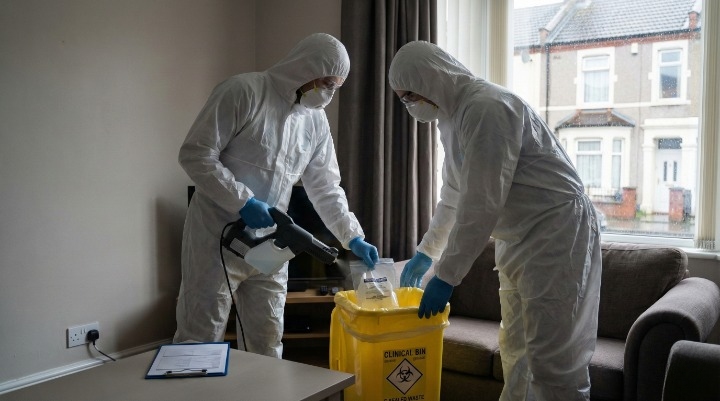
Crime Scene Cleaner Jobs: 2026 UK Salary & Career Guide
The police line tape drops, the forensic photographers pack away their cameras, and the investigative team leaves the premises. The sirens fade. That is when the real work begins.
For most people, a crime scene is a headline. For a specialist trauma cleaner, it is a workplace requiring nerves of steel, technical precision, and profound empathy.
Entering the field of crime scene cleaner jobs in the UK is not a decision to take lightly. It is far removed from the dramatic depictions on television. In 2026, this sector, formally known as biohazard remediation, is a highly regulated industry governed by strict health standards, including the updated National Standards of Healthcare Cleanliness 2025 and stringent COSHH regulations.
This guide provides a transparent look at the profession. We will cover the verified 2026 salary benchmarks, the essential qualifications you need, and the legal realities of working in trauma cleaning.
What Does a Crime Scene Cleaner Actually Do?
The job title “cleaner” is often a misnomer. You are not just cleaning; you are remediating a hazardous environment to return it to a safe, habitable state. A standard domestic cleaner removes dust and grime; a crime scene cleaner removes biological risks that can kill.
Beyond Blood: Common Biohazard Remediation Scenarios
While high-profile crime scenes grab attention, they make up only a fraction of the workload. A professional operating in the UK today spends the majority of their time on:
- Unattended Deaths: Decontaminating a property after a body has been discovered days or weeks post-mortem.
- Industrial Accidents: Cleaning machinery or workspaces following a serious injury.
- Needle Sweeps & Sharps Removal: Clearing drug paraphernalia from squats, public toilets, or void properties.
- Hoarding Cleanup: removing excessive waste that often poses fire and biohazard risks.
- Cell Cleaning: Sanitising police holding cells or prison areas contaminated with bodily fluids.
The Day-to-Day Routine of a Trauma Cleaning Specialist
The work is unpredictable. You do not clock in from 9-to-5. Most reliable firms operate on a 24/7 emergency call-out basis.
Experience Note: The First 15 Minutes
When you arrive at a site, you don’t grab a mop. The first 15 minutes are purely tactical. You conduct a dynamic risk assessment before kit bags even leave the van.
- The Smell: You check the intensity of the odour to determine the level of decomposition and required respiratory protection.
- The Path: You identify a “clean path” to enter and exit without cross-contaminating the hallway or communal areas.
- The Hazards: You scan for hidden dangers, loose floorboards, exposed wiring, or hypodermic needles tucked into sofa cushions.
Only once the site is deemed “secure” do you suit up in your PPE.
Crime Scene Cleaner Salary UK: 2026 Reality Check
One of the most common questions is about pay. Financial expectations often clash with reality. While this career offers stability, entry-level roles do not pay fortunes immediately.
Entry-Level vs. Senior Specialist Pay Scales
Based on data from the National Careers Service and live job market analysis from January 2026, here is what you can expect to earn.
| Experience Level | Annual Salary Range (UK Average) | Hourly Equivalent |
| Trainee / Entry Level | £22,000 – £26,000 | £11.50 – £13.50 |
| Experienced Technician | £28,000 – £34,000 | £14.50 – £17.50 |
| Senior Specialist / Team Lead | £36,000 – £43,000+ | £18.50 – £22.00+ |
Hourly Rates and On-Call Premium Pay
The base salary is often supplemented by “call-out” fees and unsociable hours pay.
- Call-Out Bonus: Many firms pay a retainer or a bonus (e.g., £50–£100) for attending an emergency call at 3 AM.
- Hazard Pay: Specialized tasks, such as high-risk needle sweeps or asbestos-adjacent work, may command higher hourly rates, typically between £18 and £26 per hour depending on the contract.
Check current salary trends on National Careers Service
How to Become a Crime Scene Cleaner in the UK
Unlike the police force, you do not need a university degree to enter this field. However, you cannot simply walk onto a job site without specific technical training. Employers look for proof of competence.
Step 1: Foundational Training (NASC & Biohazard Basics)
The National Academy of Crime Scene Cleaners (NACSC) and similar bodies set the industry benchmark. You should look for courses that cover:
- Biohazard decontamination.
- Insect infestation management (common in unattended deaths).
- Deodorisation techniques.
Step 2: Essential Certifications
Before applying, ensure you hold or are willing to obtain the following:
- Full UK Driving Licence: This is almost mandatory. You will drive unmarked vans to remote locations, often transporting heavy equipment.
- Hepatitis B Vaccination: Due to the risk of bloodborne pathogens, reputable employers will require proof of vaccination or immunity.
- DBS Check: A clean Disclosure and Barring Service check is non-negotiable. You will have access to private homes, often when the owners are vulnerable or deceased.
Step 3: Securing Your First Role
Start by looking for “Trauma Cleaning Technician” or “Biohazard Cleaning Operative” roles. Many companies prefer to train staff in-house to their specific standards, so a willingness to learn often trumps years of generic cleaning experience.
Mandatory Legal Compliance & Safety Standards
This is not a “bucket and sponge” industry. The UK has some of the strictest health and safety laws in the world regarding biological waste.
COSHH 2002 (Version 6, 2026 Context)
Every chemical used to destroy pathogens falls under the Control of Substances Hazardous to Health (COSHH) Regulations 2002.
In 2026, the focus has shifted heavily toward documented compliance. You must know exactly which chemical neutralises which pathogen and the correct contact time required. Using bleach blindly is a sackable offence in professional firms because it can react with ammonia in bodily fluids to create toxic gas.
The Upper Tier Waste Carrier Licence
You cannot put biohazardous waste in a black bin bag and throw it in a standard dumpster.
- The Law: The Environment Agency requires companies transporting human or healthcare waste to hold an Upper Tier Waste Carrier Licence.
- The Process: Waste must be placed in specific “clinical waste” yellow or orange bags, tagged for traceability, and incinerated at authorised facilities.
- Why It Matters: If you work for a company that cuts corners on disposal, you are liable for prosecution alongside them. Always ask a potential employer about their waste carrier licence during the interview.
The Psychological Reality: Is It Right for You?
The technical skills can be taught. The emotional resilience cannot.
Managing Secondary Trauma
Secondary trauma occurs when you are exposed to the trauma of others so frequently that you begin to experience symptoms of PTSD yourself. You will see things that most people only see in horror films.
- Compassion Fatigue: This is the physical and emotional exhaustion that reduces your ability to feel empathy. It is a common risk in this trade.
The “Resilience Profile” of a Successful Forensic Cleaner
The best technicians are those who can compartmentalise. They treat the scene as a problem to be solved, not a tragedy to be absorbed.
Pro-Tip: Ask About Support
In 2026, top-tier employers provide access to occupational counselling. During your job interview, ask: “What mental health support or debriefing protocols do you have in place for difficult cleans?” Their answer will tell you if they care about their staff’s longevity.
2026 Technology: The Tools of the Trade
The days of just scrubbing are gone. Modern remediation relies on advanced technology to ensure a property is clinically safe.
Electrostatic Spraying & UV-C
Technicians now use electrostatic sprayers which charge disinfectant particles, causing them to wrap around surfaces (like door handles and light switches) for 360-degree coverage. UV-C robots are also increasingly used to sterilise rooms after the manual clean is complete, killing airborne pathogens.
Advanced Odour Remediation
Masking a smell is not enough. The source must be removed.
- Ozone Generators: These machines alter the chemical structure of odour molecules. However, they are dangerous to humans and plants, so the site must be sealed during treatment.
- Hydroxyl Generators: A safer alternative often used when residents are still in adjacent rooms.
Crime Scene Cleaner vs. CSI: Understanding the Difference
Television often conflates these two roles. It is vital to understand the distinction before you apply.
| Feature | Scenes of Crime Officer (SOCO/CSI) | Crime Scene Cleaner (Specialist) |
| Employer | Police Force / Government | Private Companies / Contractors |
| Primary Goal | Preserve evidence & document the scene. | Remove biohazards & restore the scene. |
| Timing | Arrives during the investigation. | Arrives after the police release the scene. |
| Qualification | Degree in Forensic Science or Police training. | NACSC Training, COSHH, Biohazard Certs. |
| Salary Cap | £35k – £45k (Public Sector Bands) | £30k – £45k+ (Private Sector/Business Owner) |
If you want to solve crimes, join the police. If you want to help families recover their homes and dignity, choose trauma cleaning.
Conclusion
A career in crime scene cleaning offers a unique path for those who are detail-oriented, resilient, and looking for work that makes a tangible difference. It is physically demanding and emotionally taxing, but it provides a vital service that restores safety and dignity to chaotic situations.
If you are ready to pursue this path, focus on getting your driving licence, passing your DBS check, and enrolling in a recognised biohazard training course. The industry needs dedicated professionals who can handle the reality behind the yellow tape.
FAQs
Do you need a degree to be a crime scene cleaner in the UK?
No. A degree is not required. Employers value specific certifications (Biohazard, Sharps Awareness) and a strong work ethic over university education.
How much does crime scene cleanup cost in 2026?
Costs vary by severity, but a standard trauma clean can range from £800 to £3,500+. This is usually covered by buildings insurance, not the family directly.
Is crime scene cleaning a dangerous job?
It carries risks like exposure to HIV, Hepatitis, and chemicals. However, with correct PPE and strict adherence to COSHH V6 regulations, these risks are managed effectively.
How long does it take to qualify as a trauma cleaner?
You can complete foundational training courses in 3–5 days. However, becoming a fully competent “Senior Technician” typically takes 6–12 months of on-the-job experience.
Who pays for a crime scene to be cleaned in the UK?
In most cases, the property owner’s insurance policy covers the cost. The police do not clean crime scenes, nor do they pay for the cleaning.
Can I join the police to do crime scene cleaning?
No. Police CSIs gather evidence; they do not clean up biological waste. These are two completely separate career paths.
What is the hardest part of the job?
Most technicians report that dealing with the grief of family members and the smell of decomposition are the two most challenging aspects of the role.
About the Author