When Do The Clocks Go Forward 2026? UK Dates, Times & Device Checklist
Every spring, the UK prepares for slightly darker mornings in exchange for long summer evenings. The transition into British Summer Time (BST) shifts our daylight hours. However, the exact date changes every year based on the calendar.
Here is everything you need to know about the 2026 spring clock change. This includes the exact time it happens, whether you lose or gain an hour, and a quick checklist for your household devices.
In the UK, the clocks will go forward on Sunday, 29 March 2026. At exactly 1:00 am, the time will instantly jump forward by one hour to read 2:00 am. This marks the official start of British Summer Time (BST), meaning you will lose one hour of sleep but gain lighter evenings.
Key Takeaways
- Date: Sunday, 29 March 2026.
- Time: 1:00 am (advances to 2:00 am).
- Effect: You lose one hour of sleep and gain lighter evenings.
- Time Zone: The UK shifts from Greenwich Mean Time (GMT) to British Summer Time (BST).
- Autumn Reversal: The clocks will go back on Sunday, 25 October 2026.
Quick Start: The UK Time Change Rule-of-Thumb
Unsure when the clocks change? Use this simple rule to check the correct action:
- Is it the last Sunday in March? The clocks go forward one hour at 1:00 am to start BST.
- Is it the last Sunday in October? The clocks go back one hour at 2:00 am to resume GMT.
The Exact Date and Time for Spring 2026
The UK always moves its clocks forward on the last Sunday in March. For 2026, this specific date falls on Sunday, 29 March.
The change happens precisely at 1:00 am. At this exact moment, the official time becomes 2:00 am. You can verify the exact statutory time standards and dates on GOV.UK.
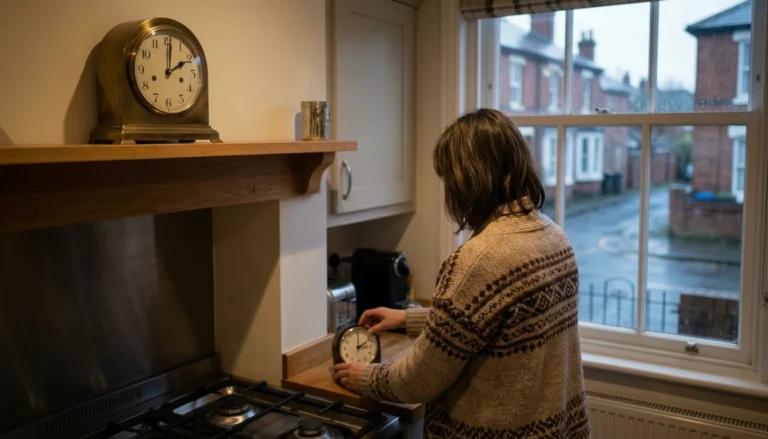
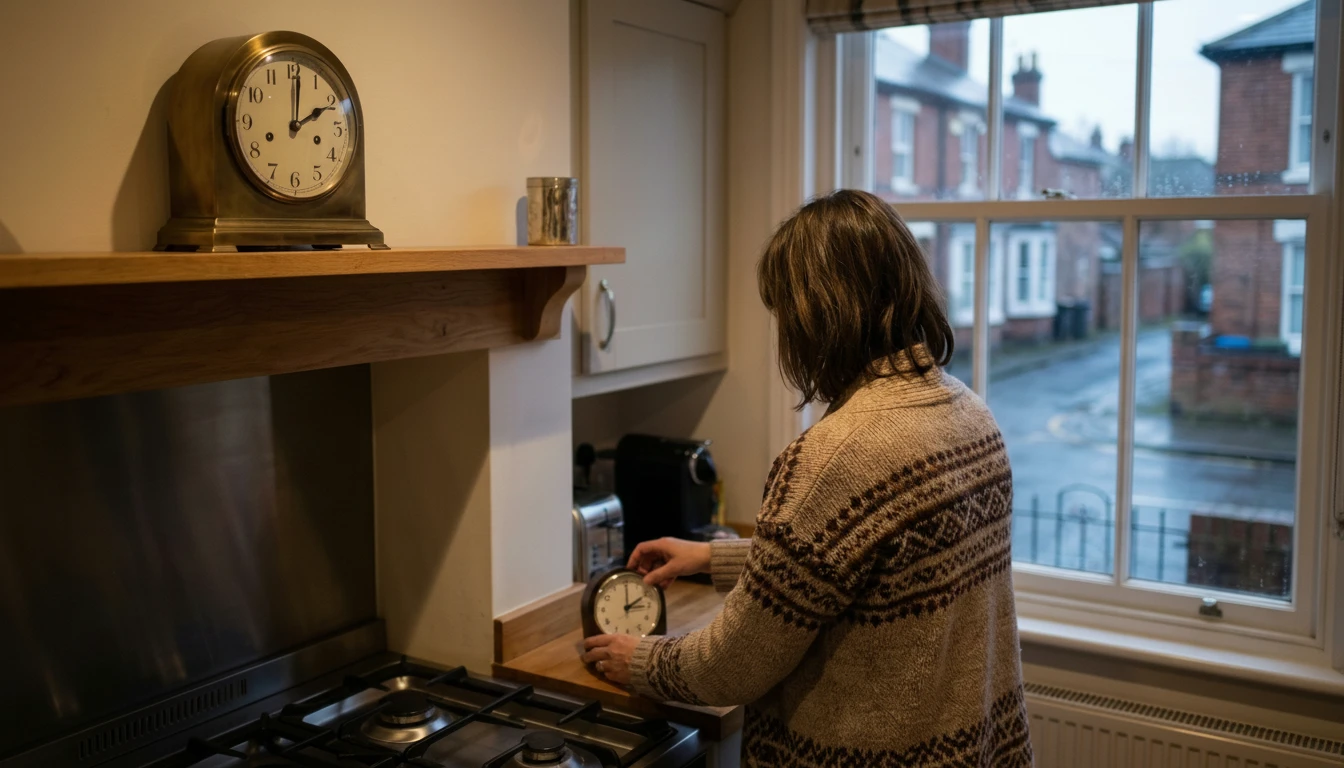
If you have a manual kitchen wall clock, you must move it forward by one hour yourself. For example, you will change it to read 2:00 am instead of 1:00 am.
Pro Tip: Change your analogue clocks and kitchen appliances before going to bed on Saturday night. This ensures you wake up to the correct British Summer Time.
Common Mistake: Do not assume older technology updates automatically. Always check older car dashboards and non-internet-connected devices to avoid running late on Sunday.
Do You Lose or Gain an Hour?
In the spring, you lose one hour of the day. Because the clocks skip from 1:00 am directly to 2:00 am, that hour effectively disappears.
The common phrase to remember this seasonal shift is “Spring Forward, Fall Back”. The clocks spring forward in March and fall back in October.
Pro Tip: Plan your Sunday schedule knowing that you lose one hour. Going to bed slightly earlier on Saturday can help your body adjust to the new time.
Moving the clocks forward marks the official start of British Summer Time. This period of advancing the clocks is also commonly referred to as Daylight Saving Time.
During British Summer Time, the UK gets more daylight in the evenings and less in the mornings. You will likely experience a noticeably lighter evening but a darker morning immediately following the transition.
British Summer Time (BST) vs. Greenwich Mean Time (GMT)
The UK alternates between two time systems throughout the year. The spring clock change moves the country from Greenwich Mean Time (GMT) into British Summer Time (BST).
While many people refer to this as Daylight Saving Time, the official UK time zone from late March to late October is BST. In autumn, the process reverses, and the country returns to GMT.
| Feature | Greenwich Mean Time (GMT) | British Summer Time (BST) |
| Active Period | Late October to Late March | Late March to Late October |
| 2026 Dates | Resumes 25 Oct 2026 | Starts 29 Mar 2026 |
| Daylight Impact | Lighter mornings, darker evenings | Darker mornings, lighter evenings |
| Clock Direction | Go Back 1 Hour | Go Forward 1 Hour |
Mid-Article Summary
- Clocks advance by 1 hour on Sunday, 29 March 2026.
- This jump happens at 1:00 am.
- You lose an hour of the day but start British Summer Time (BST).
Device Update Checklist: Will Your Tech Auto-Update?
Modern, internet-connected technology usually updates the time without your help. For example, if you go to sleep on Saturday night, your smartphone will seamlessly shift from 1:00 am to 2:00 am while you rest.
However, you must manually adjust offline household items. Waking up to mixed times across your home causes unnecessary confusion. Use this four-step process to verify your devices:
- Check your smartphone settings to ensure the “Set Automatically” or “Network Time” toggle is active.
- Verify that your laptop or computer time zone settings are synced to the internet.
- Identify isolated household appliances, such as microwaves and ovens, that require manual button presses.
- Locate your car dashboard manual so you know how to update the vehicle clock before your Monday morning drive.
Device Update Checklist
- Smartphones & Laptops: Auto-updates at 1:00 am (check your internet connection).
- Microwave & Oven: Manual update required (advance 1 hour).
- Car Dashboard: Manual update required (advance 1 hour).
- Analogue Wall Clocks: Manual update required (advance 1 hour).
- Central Heating Timer: Manual update often required to maintain correct heating and hot water schedules.
Commuter and Health Impacts of the Spring Shift
The transition into BST has an immediate effect on daily routines. A typical UK professional waking up on Monday, 30 March 2026, will navigate a darker morning commute than the previous week. However, they will benefit from extended natural daylight during their journey home after work.
Pro Tip: Be extra cautious on Monday morning commutes immediately following the change, as natural light is reduced. Plan outdoor tasks or social events for the evenings after 29 March to utilise the extra daylight hours.
Why Do We Change the Clocks in the UK?
The practice of changing the clocks was first introduced in the UK in 1916. A prominent early campaigner named William Willett proposed British Summer Time to prevent the waste of summer daylight.
By shifting the clocks forward in the spring, society could enjoy longer, lighter evenings. You can read more about William Willett’s original campaign at the Royal Museums Greenwich website.
When Do the Clocks Go Back in Autumn 2026?
The clocks will subsequently go back on Sunday, 25 October 2026. The UK consistently moves its clocks back on the last Sunday in October every year.
This autumnal clock change occurs by moving the clocks back one hour at precisely 2:00 am. Moving the clocks back ends British Summer Time and returns the UK to Greenwich Mean Time.
Pro Tip: Put a reminder in your calendar for Sunday, 25 October 2026, so you do not forget the autumn return to GMT.
Summary and Next Steps
Preparing for the 2026 spring clock change is simple once you know the exact date. By remembering that the clocks go forward by one hour at 1:00 am on Sunday, 29 March 2026, you can ensure your schedules, commutes, and household devices are perfectly aligned with British Summer Time.
Next Steps:
- Set a calendar reminder for Saturday, 28 March 2026, to change your manual clocks before bed.
- Review the Device Update Checklist to identify which appliances in your home need manual intervention.
- Plan your Sunday schedule factoring in the “lost” hour of sleep.
FAQs
What date do the clocks go forward in 2026?
In the UK, the clocks go forward on Sunday, 29 March 2026.
What time do the clocks change?
The clocks are moved forward by one hour at precisely 1:00 am, immediately becoming 2:00 am.
Do we lose or gain an hour in March?
You lose an hour of the day in March because the clocks spring forward.
Will my phone update the time automatically?
Yes, smartphones usually update the time automatically at 1:00 am, provided they are connected to the internet or a mobile network.
When does British Summer Time end in 2026?
British Summer Time ends on Sunday, 25 October 2026, when the clocks go back one hour.
Why was Daylight Saving Time introduced in the UK?
It was introduced in 1916, following a campaign by William Willett to prevent the waste of summer daylight and provide lighter evenings.
Is it Daylight Saving Time or British Summer Time?
Both terms are used. Daylight Saving Time is the general concept, while British Summer Time (BST) is the specific legal time zone used in the UK during this period.
About the Author