NASA Artemis 2 toilet: How the £22.6m system failed.
A £22.6m piece of cutting-edge technology nearly broke a historic lunar mission. Just hours after launch. The Artemis II mission sends astronauts around the moon in the Orion capsule. This ship features the advanced Universal Waste Management System, or UWMS.
A space bathroom isn’t just about astronaut comfort. In the harsh environment of zero gravity, a jammed fan is a severe life-support threat. It demands immediate, expert troubleshooting to stop airborne contamination.
The NASA Artemis 2 toilet, officially known as the Universal Waste Management System, is a £22.6m deep space facility relying on high-powered vacuum suction rather than gravity. On the mission’s first day, the toilet’s odour-control fan jammed. Astronaut Christina Koch quickly repaired the system to prevent microgravity contamination.
Key Takeaways
- The UWMS costs approximately £22.6m and uses powerful vacuum suction.
- A critical fan malfunction hit the system on day one of the Artemis II mission.
- Astronaut Christina Koch successfully repaired the toilet in-flight.
- Crew members must wear ear protection due to intense vacuum noise.
- Liquid waste vents directly into space, while solid waste gets compressed.
- Astronauts rely on a handheld backup urinal if the primary system fails.
Quick Start: How Space Suction Works (In 3 Steps)
- Lift the toilet lid to automatically trigger the airflow system for instant odour control.
- Secure your feet in the provided tethers to stay anchored.
- Wait for the fan to reach full operating speed before use.
Common Mistake: Trying to use the toilet before the fan reaches full speed. Without maximum suction, waste can escape into the cabin.
UWMS Troubleshooting Decision Tree
-
Is the fault light blinking?
-
YES: Stop. Do not use the UWMS. Deploy the backup urinal and await ground instructions.
-
NO: Proceed to the pre-use checklist.
-
-
Is the suction fan audible?
-
NO: Suspect a jammed fan. Do not force operation.
-
Inside the £22.6m Artemis II Space Loo
Vacuum Suction vs. Earth Gravity
Without gravity, waste doesn’t fall. The UWMS fixes this by using high-powered air suction to pull waste away from the body. It relies entirely on airflow rather than water.
Pro Tip: Allow the UWMS system to reach operating speed before donating fluid to ensure adequate suction. [NASA Universal Waste Management System specs]
Privacy and Female-First Design
Past spacecraft offered very little privacy. The Orion capsule changes this completely. It provides astronauts with a private toilet cubicle fitted with a solid door.
This marks a historic first for a space shuttle. The advanced toilet design also includes specific improvements to better accommodate female astronauts compared to older legacy systems.
The Day One Disaster: The Jammed Fan Incident
Christina Koch: The “Space Plumber”
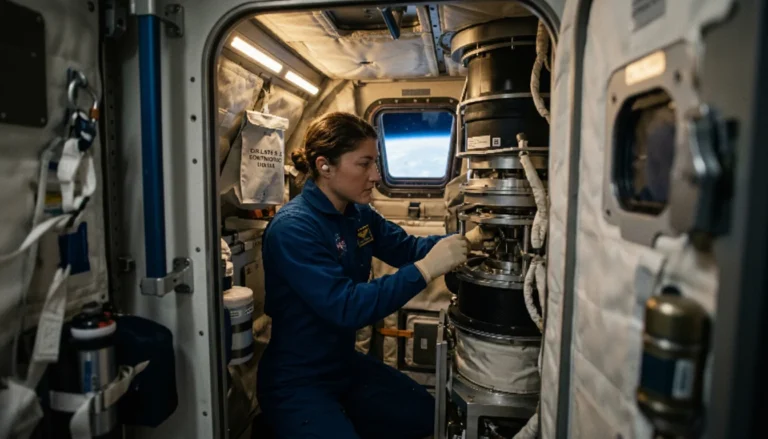
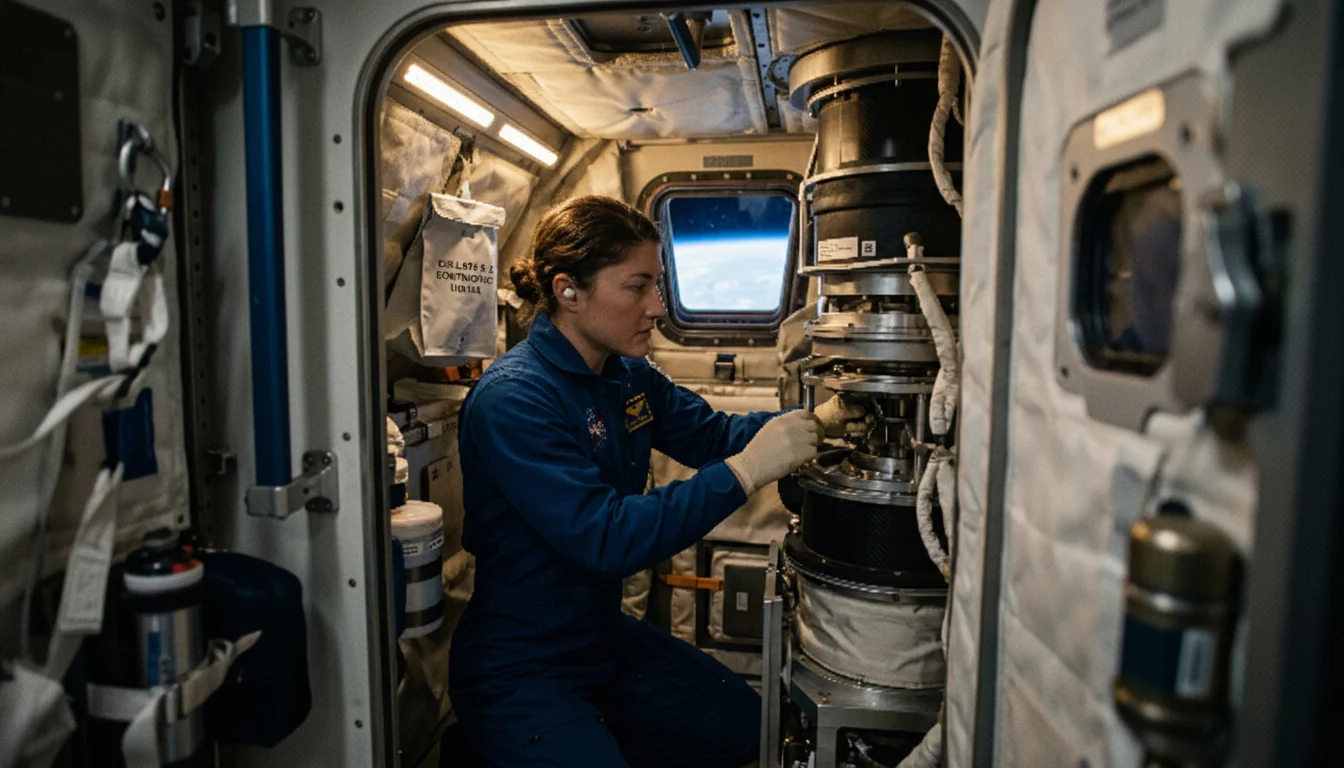
The Artemis II Incident: Just hours after liftoff, a blinking fault light signalled a jammed fan in the UWMS. This fan is responsible for removing odour and airborne particles. Without it, the cabin faced a severe sanitation crisis. Mission specialist Christina Koch initiated troubleshooting protocols and fixed the fault. This quick action earned her the nickname “space plumber”.
As NASA’s Gary Jordan noted during the event: “The toilet fan is reported to be jammed.”
Contingency Plans: The Backup Urinal
When the primary suction fails, astronauts need immediate alternatives. While the main toilet was disabled, the crew received strict instructions. They had to use a backup handheld bag-and-funnel system known as the Collapsible Contingency Urinal.
Pro Tip: Keep the Collapsible Contingency Urinal accessible at all times in case of sudden mechanical faults. [External Link: Artemis II mission timeline]
Why Space Plumbing is Life Support
Airborne particles don’t settle in space. They float. This means a broken fan turns a toilet into a severe biological hazard. Odour control isn’t just about smelling fresh. It is about keeping the cabin air safe to breathe.
David Munns, a leading voice on the matter, sums it up perfectly. “Having the ability to deal with waste is mission-critical.”
Lessons from Apollo: The Floating Waste Hazard
We learned this the hard way during the Apollo missions. Astronauts had to urinate into a condom-like contraption. For solid waste, they taped bags to their buttocks. It was primitive. Sometimes it failed.
During Apollo 10, loose waste bags actually leaked. Solid waste literally floated through the cabin. This ruined crew hygiene and highlighted exactly why modern airflow systems are mandatory today.
Artemis II UWMS vs. Apollo Methods
How much has space plumbing changed? A lot. Here is how the £22.6m UWMS stacks up against the historic Apollo missions.
| Feature | Artemis II (UWMS) | Apollo Era |
| Cost | £22.6m ($30m) | Negligible (Bags/Tape) |
| Waste Removal Method | High-powered vacuum suction | Gravity/Manual bagging |
| Solid Waste Storage | Compressed into sealed canisters | Taped bags |
| Privacy | Private cubicle with a solid door | None (Open cabin) |
| Female Accommodations | Specific anatomical improvements | None (Male-only crew) |
Mid-Article Summary
- UWMS relies on loud, high-powered air suction.
- Fan jams pose severe airborne contamination risks.
- Backup systems are vital for mission continuity.
- The cubicle offers rare privacy. As astronaut Jeremy Hansen noted, it’s “the one place during the mission where we can go and actually feel like we’re alone.”
A Step-by-Step Guide to Using the Artemis Toilet
Using the zero-gravity loo requires training. It is an exact science. Follow this pre-use checklist to operate the system safely.
- Ensure power is active and anchor yourself. Slip your feet into the floor tethers. Grip the handrails. You must remain securely anchored.
- Don ear protection. The vacuum suction is exceptionally loud. Crew members must wear ear defenders every single time.
-
Pro Tip: Always wear ear protection to prevent hearing fatigue.
-
- Lift the lid. This action automatically engages the airflow system for immediate odour and particle control.
- Select the correct attachment. Use specific funnels depending on liquid or solid waste.
- Compress solid waste immediately. After use, compress the waste into designated canisters.
-
-
Pro Tip: Compress waste instantly to prevent microgravity contamination.
-
Liquid waste requires less manual work. It simply vents into space daily during short missions like Artemis II. [Astronaut hygiene and space health protocols]
FAQs
How much did the NASA Artemis 2 toilet cost?
The Universal Waste Management System cost approximately £22.6m ($30m) to develop.
How do astronauts pee in space?
Because there is no gravity, they use high-powered air suction instead of water to pull liquid waste away from the body.
Who fixed the toilet on the Artemis 2 mission?
NASA astronaut Christina Koch successfully troubleshooted and fixed the jammed fan, earning her the nickname “space plumber”.
What happens to human waste on Artemis 2?
Liquid waste is vented into space daily. Solid waste gets compressed into secure canisters and is disposed of upon returning to Earth.
Why do astronauts wear ear defenders in the space bathroom?
The toilet’s vacuum suction system is incredibly loud, making heavy-duty ear protection completely necessary.
Is there a backup if the space toilet breaks?
Yes. If the fan jams, astronauts use a handheld bag-and-funnel system called the Collapsible Contingency Urinal.
How does the Orion toilet accommodate female astronauts?
The advanced design includes specific funnel shapes and airflow improvements to better fit female crew members compared to legacy systems.
Conclusion
Space travel is messy. The £22.6m UWMS is a massive leap forward from the tape-and-bag days of Apollo. Yet, even the best tech breaks. The day-one fan jam proved that human skill is still vital in deep space. Christina Koch’s fast action saved the ship from a massive hygiene crisis.
Next Steps:
- Explore further details on the Orion spacecraft’s environmental systems.
- Read up on Christina Koch’s historical milestones in space travel.
- Track the live progress of the Artemis II lunar flyby mission.
About the Author