Octopus Energy Zero Bills: A 2026 Guide to Living Without Energy Bills
The average UK household energy bill currently sits above £1,700 a year. Now, imagine a letter from your energy supplier guaranteeing you will pay exactly £0.00 for the next ten years. No standing charge. No unit rates. No catch.
This is not a concept for the distant future. It is the reality for over 5,000 UK households today.
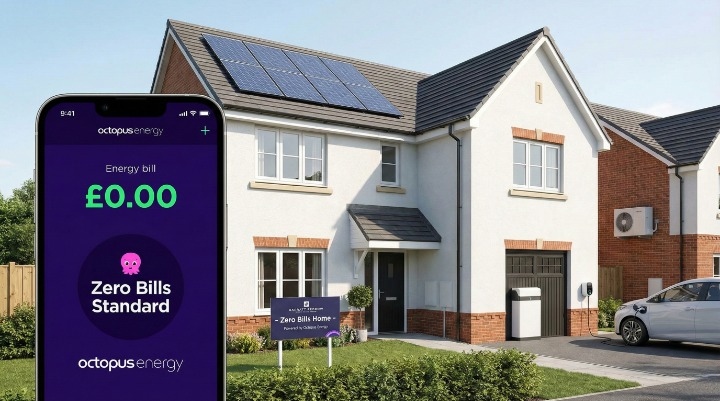
Octopus Energy Zero Bills is a world-first smart tariff that promises zero energy bills for five to ten years. Following the massive December 2025 partnership with Barratt Redrow, the UK’s largest housebuilder, this initiative has moved from a niche trial to a mainstream housing standard.
Whether you are looking to buy a future-proofed new build or want to know if your current home can be retrofitted, this guide covers everything. We break down the technology, the strict eligibility rules, and the financial fine print you need to know.
What is Octopus Zero Bills? (The 2026 Standard)
At its core, Octopus Zero Bills is a smart tariff that relies on specific hardware to eliminate your energy costs. It works by balancing your home’s energy generation with the grid’s needs.
Octopus essentially says: “If you install the right green technology and let us manage it, we will wipe your bill to zero.”
The Technology Trifecta: Solar, Battery, and Heat Pumps
You cannot get a Zero Bills tariff with a standard boiler. The home must operate as a mini-power station. To qualify, a property requires three specific pieces of hardware working in unison:
-
Solar PV Array: To generate renewable electricity during the day.
-
Home Battery Storage: Often using accredited batteries like GivEnergy or AlphaESS. This stores surplus solar energy for use when the sun goes down.
-
Air Source Heat Pump (ASHP): To provide heating and hot water without using gas.
Kraken AI: The “Brain” Behind Your £0 Bill
The hardware is the muscle, but Kraken is the brain. Kraken is Octopus Energy’s proprietary cloud-based platform. It connects to your heat pump and battery to optimise energy usage automatically.
When renewable energy on the national grid is abundant and cheap (typically windy nights or sunny afternoons), Kraken instructs your battery to charge and your water tank to heat up. When energy is expensive, the system discharges your stored battery power to run your home or exports it back to the grid for profit.
Because Kraken manages this arbitrage so effectively, Octopus makes enough money from the “grid balancing” services your home provides to offset the cost of the energy you use.
Fabric Fifth vs. Fabric First: Why Insulation Isn’t the Only Answer
Historically, UK construction followed a “Fabric First” approach, prioritising thick insulation and triple glazing above all else. Octopus has introduced a controversial but effective concept called “Fabric Fifth.”
This philosophy argues that while insulation is important, smart technology (the “Fifth” element) is now powerful enough to do the heavy lifting. A home does not need to be a hermetically sealed Passivhaus to achieve zero bills; it just needs a big enough battery and smart enough software.
[Read the official Fabric Fifth Whitepaper by Octopus Energy]
Is Your Home Eligible? New Builds vs. Retrofitting
In 2026, there are two primary routes to getting a Zero Bills home.
Buying a New Build: The Barratt Redrow Partnership
The easiest way to get Zero Bills is to buy a house designed for it. As of December 2025, Octopus has partnered with major developers including Vistry Group, Thakeham, and most notably, Barratt Redrow.
Barratt Redrow has committed to rolling out Zero Bills homes across multiple sites. The first major wave of these homes is currently completing in Wixams, Bedfordshire and Tewkesbury, Gloucestershire.
What to look for:
-
Listings explicitly marked with the “Zero Bills” accreditation logo.
-
Developers like Tilia Homes and Bellway, who are also active partners.
-
New builds in Scotland, where the 2025 implementation of the New Build Heat Standard has banned gas boilers in new properties, accelerating the adoption of heat pumps.
Retrofitting Existing Homes: The Suffolk Warm Homes Trial
For millions of existing homeowners, the question is: “Can I retrofit my house?”
The answer is yes, but the bar is high. In late 2025, Suffolk County Council launched a pioneering pilot scheme offering interest-free loans of up to £15,000 to help homeowners install the necessary battery and solar tech.
Retrofit Eligibility Checklist:
-
EPC Rating: Your home likely needs an EPC rating of at least C, though A is preferred.
-
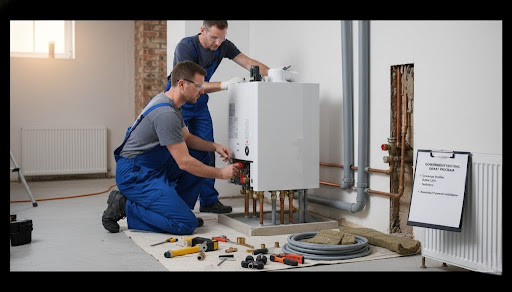
Heating: You must remove your gas boiler and install an electrically driven heat pump.
-
Roof Space: You need sufficient unshaded roof area for a solar array capable of generating roughly 100% of your annual demand.
-
Broadband: A stable, always-on internet connection is mandatory for Kraken to control the devices.
My Pro-Tip: Before spending thousands on a retrofit, request a “Zero Bills Feasibility Study” from an accredited installer. Not every roof angle or location works for the required solar generation.
The “Fine Print”: Fair Usage and Exclusions
While the marketing says “Zero Bills,” the contract has specific boundaries. It is vital you understand the Fair Usage Allowance to avoid unexpected costs.
Understanding the Fair Usage Allowance (10MWh Limit)
The “Zero” guarantee covers you up to a specific usage limit, typically set at 10,000 kWh (10 MWh) per year for electricity and heating combined.
To put this in context:
-
The average medium-sized UK home uses roughly 2,700 kWh of electricity and 11,500 kWh of gas (14,200 kWh total).
-
However, a highly efficient heat pump uses 3-4x less energy than a gas boiler to produce the same heat.
-
Therefore, 10,000 kWh is a generous allowance for a modern, energy-efficient family home.
The “Net Import” Rule:
Crucially, the allowance is often calculated on net imports. This means if you use 12,000 kWh but your solar panels generate and export 3,000 kWh back to the grid, your net usage is 9,000 kWh, keeping you safely within the free zone.
Why EV Charging is Billed Separately
This is the most common tripping point for new owners. Electric Vehicle (EV) charging is NOT included in the Zero Bills allowance.
If you charge your Tesla or Nissan Leaf at home, Octopus separates this usage from your household consumption. You will typically be billed for EV charging at the standard flexible rate or moved to a bolt-on tariff like Intelligent Octopus Go.
Comparison: Zero Bills vs. Standard EV Charging
| Feature | Zero Bills Tariff | Intelligent Octopus Go |
| Household Energy | £0.00 / kWh | ~24p / kWh (Peak) |
| Standing Charge | £0.00 / day | ~50-60p / day |
| EV Charging Cost | Billed separately | ~7p / kWh (Off-peak) |
Financial Impact: Property Value and Mortgage Benefits
The benefits of this system extend beyond monthly savings. The property market is beginning to value “energy freedom” at a premium.
Do Zero Bills Homes Sell Faster?
Data from early pilot sites suggests they do. Developers have reported that Zero Bills plots sell up to three times faster than comparable standard plots. In a cooling housing market, the guarantee of fixed living costs is a massive draw for buyers.
“Green Mortgages”: Boosting Your Borrowing Power
Lenders are taking note. Major UK banks, including Barclays and Halifax, offer “Green Mortgage” products that offer lower interest rates for properties with an EPC rating of A or B.
More importantly, some lenders are now adjusting their affordability calculations. Because you have no monthly energy bill (a saving of ~£150/month), lenders may view you as having higher disposable income, potentially allowing you to borrow more.
According to the Royal Institution of Chartered Surveyors (RICS), energy-efficient homes can command a “green premium” of up to 10.7% over non-efficient equivalents.
How to Find and Apply for a Zero Bills Home
Ready to make the switch? Here is how to navigate the market.
Using the “Zero Bills” Label on Rightmove
As of 2025, property portals like Rightmove and Zoopla have started integrating “Green Features” filters. When searching for new builds:
-
Filter by “New Homes”.
-
Look for keywords like “Zero Bills Accredited” or “Octopus Partner” in the description.
-
Check the developer’s own site map. Often, only specific plots on a development are upgraded to Zero Bills specification.
Steps to Get Your Current Home Accredited
If you are pursuing the retrofit route:
-
Check Eligibility: Visit the Octopus Energy website and use their “Zero Bills Home” tool.
-
Find an Installer: You must use an Octopus-accredited installer to ensure the battery and heat pump are compatible with Kraken.
-
Install & Certify: Once the hardware is in, the installer issues a commissioning certificate.
-
Switch Tariff: You apply for the Zero Bills tariff. Octopus will verify the connection to your Home Mini (the device that links your meter to Kraken) and switch you over.
FAQs
Does Zero Bills include the standing charge?
No, you do not pay a standing charge. The bill is genuinely £0.00 provided you stay within the Fair Usage allowance.
What happens if I exceed the Fair Usage limit?
If you exceed the 10 MWh allowance, you will be billed for the excess energy at the standard Flexible Octopus unit rate (capped by the Energy Price Cap). You will not be kicked off the tariff.
Is Zero Bills available in Scotland?
Yes. Following the New Build Heat Standard which effectively banned gas boilers in new Scottish homes from 2024, developers in Scotland are rapidly adopting heat pumps, making Zero Bills a perfect fit for the region.
Do I need a specific battery brand?
Yes. The system currently relies on specific integration with batteries that Kraken can control instantly. GivEnergy and Tesla Powerwall are frequently cited compatible units, but check the latest accredited list before buying.
What if my solar panels break?
You are responsible for maintaining the hardware. If your solar panels stop generating, you may breach the “Fair Usage” terms because you aren’t feeding energy back to the grid. It is highly recommended to have a maintenance package for your heat pump and solar array.
Conclusion
Octopus Energy Zero Bills has graduated from a clever marketing experiment to a genuine solution for the UK’s energy crisis. By shifting the focus from passive insulation to active, smart technology, it offers a way out of the volatile energy market.
For homebuyers in 2026, the choice is becoming clear: purchase a traditional home and remain tethered to fluctuating gas prices, or choose a Zero Bills home and lock in a decade of financial certainty.
While the upfront cost for retrofitting remains a barrier for many, the rapid adoption by volume housebuilders like Barratt Redrow suggests that within a few years, a home that pays for its own energy will simply be the standard expectation.
Are you ready to zero out your costs? Check the Official Octopus Zero Bills Map to see active developments near you.
About the Author