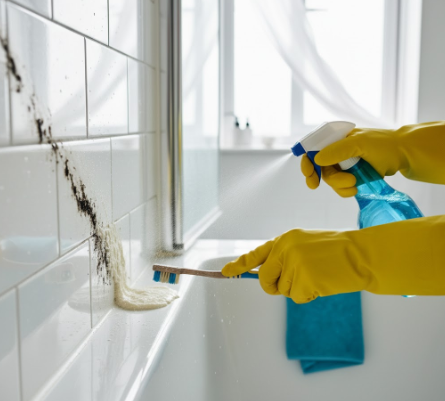
The Ultimate Guide: How to Remove Black Mould From Silicone Sealant for Good
We’ve all been there. You’ve scrubbed the bath and tiles, your taps are shining, but your sparkling clean bathroom is still ruined by that stubborn, ugly line of black mould on the silicone sealant. It’s frustrating, and it makes the whole room feel dirty, no matter how hard you clean.
That black spotting isn’t just unsightly. It can be a sign of poor ventilation and damp, which can contribute to health issues, especially for those with respiratory problems NHS guidance on damp and mould. And here’s the secret the cleaning product ads don’t tell you: most of the time, that mould isn’t just on the sealant. Silicone is porous, and the black you see is often a deep stain that has penetrated within it.
That’s why simply spraying and wiping doesn’t work.
Forget a random list of “cleaning hacks” that lead to frustration. This is a 3-level triage guide. As a content strategist obsessed with home solutions, I’ve battled this in everything from a new build to a damp Victorian flat. We’ll help you diagnose exactly how bad your mould is and give you the exact method to fix it—from a light mildew problem to a “full replacement” job.
First, Triage Your Mould: What Level Is Your Problem?
Before you grab the bleach, you need to diagnose the problem. Using the wrong method is a waste of time. Look closely at your sealant and find your level.
- Level 1: Surface Mildew You see light, pinkish-orange spots (often Serratia marcescens bacteria, not mould) or a few small, faint black specks. It looks like it’s just sitting on the surface of the sealant. Wiping it might smear it, but it doesn’t seem deep.
- Level 2: Stubborn Staining This is the most common problem. The mould is a dark black or deep brown. Wiping it does absolutely nothing. You can clearly see it’s under the surface, and it’s heavily concentrated in the 90-degree corners of the shower, bath, or window.
- Level 3: Deep-Set & Damaged This is the point of no return. The sealant itself is peeling away from the wall or tile. It might feel soft, gummy, or putty-like when wet. You might see cracks, or the sealant looks like it has shrunken, leaving visible gaps. The black mould is deep, and the seal is clearly broken.
What You’ll Need: Your Mould-Busting Toolkit
Once you’ve diagnosed your level, gather your gear. Don’t start without the safety items—you’re dealing with potent chemicals or mould spores.
Safety Gear (Non-Negotiable)
- Rubber gloves: To protect your skin from bleach or vinegar.
- Old clothes: Bleach splashes will ruin fabric.
- Safety glasses or goggles: To protect your eyes from splashes, especially when working with bleach or sprays.
- A good quality face mask (optional, but recommended if you are sensitive or cleaning a large area).
Cleaning Agents (Choose based on your Level)
- White vinegar (distilled)
- Bicarbonate of soda (Baking soda)
- Household bleach (A thick bleach gel is far more effective than a thin, watery bleach)
- A commercial mould remover spray (e.g., HG Mould Spray, Cillit Bang Black Mould Remover) Which? reviews on mould removers
Tools
- Cotton wool balls or kitchen roll
- An old toothbrush or a stiff-bristled grout brush
- A small bowl or container
- Spray bottle (for vinegar)
- Microfibre cloths
Level 1 Method: For Light Surface Mildew (The Natural Approach)
If you’re at Level 1, you’re in luck. You can solve this quickly without resorting to harsh chemicals. This method is also excellent for regular, preventative cleaning.
How to Clean Sealant with Vinegar and Bicarbonate of Soda
- Create a Paste: In a small bowl, mix a few spoonfuls of bicarbonate of soda with a tiny bit of water. You’re aiming for a thick, spreadable paste, like toothpaste.
- Scrub: Apply the bicarb paste directly to the mouldy sealant. Use an old toothbrush or grout brush to scrub the area vigorously. The bicarb is a fantastic, gentle abrasive that will lift the surface mildew and soap scum without scratching.
- Spray the Vinegar: Fill a spray bottle with undiluted white vinegar. Spray it directly onto the bicarb paste you just scrubbed. It will immediately fizz and bubble—this chemical reaction helps to lift stains and kill mildew spores.
- Let it Sit: Let the fizzing mixture sit on the sealant for 10-15 minutes. This gives the acetic acid in the vinegar time to work.
- Final Scrub & Rinse: Give the area one more quick scrub with your brush. Rinse the sealant thoroughly with warm water and dry it completely with a microfibre cloth.
Pro-Tip: Don’t have a spray bottle? No problem. After scrubbing with the bicarb paste, just soak a piece of kitchen roll in the white vinegar and press it directly onto the paste. This “soak” method keeps the vinegar in constant contact with the mildew.
Level 2 Method: For Stubborn, Ingrained Stains (The Pro-Bleach Soak)
This is the nuclear option for 90% of bathroom mould problems. If your sealant has those deep black stains, this is the method you need. It’s not a quick spray; it’s a deep-soak treatment.
How to Remove Deep Stains with the Bleach & Cotton Wool Method
- Safety First & Ventilation: This is the most important step. Put on your gloves and safety glasses. Open the bathroom window as wide as it will go. Turn on your extractor fan. The room must be well-ventilated. Bleach fumes are powerful and should not be inhaled in a small, enclosed space.
- Dry the Area: Bleach works best on a dry surface. Use a cloth to make sure the sealant and surrounding tiles are completely dry.
- Prepare the Soak: Take your cotton wool balls (or tear off strips of kitchen roll and roll them into long “sausages”). In a small bowl, pour a good amount of thick household bleach.
- Soak & Pack: Soak the cotton wool balls in the bleach. They should be fully saturated but not dripping everywhere.
- Apply to Sealant: Carefully press the bleach-soaked cotton wool firmly against the mouldy sealant. Pack it into the 90-degree corner. The goal is to ensure the wet bleach is in 100% contact with the mouldy line. The cotton wool’s job is to hold the bleach in place.
Common Mistake: Spraying a bleach-based mould remover and wiping it 30 seconds later will not work on stubborn mould. The active ingredient (sodium hypochlorite) needs dwell time—we’re talking hours, not minutes. This is precisely why the cotton wool soak method is so effective. It forces the bleach to stay wet and active on the mould for a prolonged period.
- Wait (This is the Magic Step): Leave the cotton wool in place for at least 4 hours. For very bad, deep-black stains, I’ve found the most effective treatment is to leave it overnight (around 8-12 hours).
- Remove & Rinse: The next morning (or after 4+ hours), put your gloves back on, remove the cotton wool, and discard it. The black stains should be completely gone.
- Rinse Thoroughly: Rinse the area thoroughly with cold water to remove all bleach residue. Dry the area.
Safety First: CRITICAL WARNING NEVER, EVER mix bleach and vinegar. This combination creates toxic chlorine gas, which can be lethal. If you have just tried the Level 1 (vinegar) method and it failed, you MUST rinse the area completely with plain water and dry it before you even think about starting this bleach method. Always follow the chemical safety guidelines from sources like the Health and Safety Executive (HSE) HSE guidance on cleaning products.
What About Commercial UK Mould Removers?
For a faster, no-fuss Level 2 solution, a dedicated mould and mildew remover is an excellent choice.
Products like HG Mould Spray or Cillit Bang Black Mould Remover are extremely popular in the UK and are highly effective. Their power comes from a high concentration of sodium hypochlorite (bleach) in a foam or spray formula that is designed to cling to vertical surfaces. This clinging action achieves the “dwell time” we talked about.
Always follow the manufacturer’s instructions, but the principle is the same: spray it on, let it sit for the recommended time (usually 15-30 minutes, much faster than the DIY soak), and rinse it off.
Level 3: When Cleaning Fails (How to Know It’s Time to Replace)
There is a point where no amount of cleaning will work. If you’ve tried the overnight bleach soak (Level 2) and the black stains are still there, stop scrubbing. You are not fighting a stain anymore; you are fighting a failed seal.
The mould has penetrated the entire body of the silicone, or (more likely) the seal has failed, trapping water behind the sealant. The mould you see is just the tip of the iceberg.
Signs You Must Replace, Not Clean:
- The sealant is visibly peeling, cracked, or has shrunk away from the wall, leaving a gap.
- The sealant feels soft, gummy, or putty-like when you press it.
- You’ve done the overnight bleach soak twice, and the black stains remain, or they disappear and return within a week.
Why Cleaning Won’t Work Here
At this point, you’re not cleaning; you’re just masking a deeper problem. According to sealant manufacturers like UniBond, the primary job of sealant is to create a flexible, waterproof barrier UniBond sealant guide. Once that barrier is breached, water gets trapped in the wall cavity every time you shower.
No amount of bleach can fix a physical gap that lets water in. The mould will simply grow back instantly because it has a permanent source of moisture.
The only permanent solution is to how to remove and replace silicone sealant cut out the old, failed sealant, thoroughly clean the gap (and kill any mould on the wall itself with a fungicide), let it dry completely, and apply a new, high-quality, mould-resistant silicone sealant.
How to Prevent Black Mould From Ever Coming Back
Cleaning is a cure. This is the prevention. You can have the cleanest bathroom in the world, but if you don’t control the environment, the mould will return.
Black mould has two requirements: organic matter (like soap scum) and persistent moisture. Control the moisture, and you control the mould.
The Root Cause: Condensation & Humidity
Every time you take a hot shower or bath, you fill the room with steam. This hot, humid air hits the cold surfaces of your tiles and sealant, instantly turning back into water (condensation). This is the water that mould needs to live. As housing charities like Shelter often point out, the root of most mould issues is damp and poor ventilation Shelter guide to damp.
Your 5-Minute Daily Post-Shower Routine
This is my single most important piece of advice. This small habit, which takes less than 5 minutes, is the ultimate way to prevent mould.
- Ventilate (During & After): Always, always, always use your extractor fan during your shower and leave it on for 15-20 minutes after you get out. If you have no fan, open the window wide (and keep the bathroom door closed during your shower to stop the steam from escaping into the rest of the house).
- Squeegee: Get a simple, cheap shower squeegee. After you’ve showered, spend 60 seconds squeegeeing the water off the glass and the tiled walls. This removes 90% of the moisture instantly.
- Wipe the Sealant (The Critical Step): This is the one nobody does, but it’s the most effective. Keep an old, dedicated microfibre cloth or a small, absorbent towel in the bathroom. After you squeegee, quickly wipe down the silicone sealant itself, especially in the corners.
- Leave the Door Open: When you’re done, leave the bathroom door open to allow fresh, dry air from the rest of the house to circulate and dry out any remaining moisture.
The Takeaway
To beat black mould on your sealant, you have to be a strategist. First, diagnose your problem.
- Level 1 (Surface Mildew) can be handled with a simple, natural vinegar and bicarb scrub.
- Level 2 (Ingrained Stains) needs the heavy-duty, long-dwell-time of a bleach soak.
- Level 3 (Damaged Sealant) means you must stop cleaning and start replacing.
The truth is, cleaning mould is a battle, but preventing it is a simple habit. Spending 30 seconds to wipe down your sealant after a shower is infinitely less work, cost, and frustration than spending a whole Saturday battling deep-set mould with bleach and cotton wool.
What’s your go-to method for battling mould? Have you tried the overnight bleach soak? Share your own pro-tips or frustrations in the comments below!
FAQs
What is the best mould remover for silicone sealant in the UK?
For stubborn stains, the most effective DIY method is a bleach-and-cotton-wool soak. For commercial products, UK reviewers and experts at Which? often recommend sprays with a high concentration of sodium hypochlorite, such as HG Mould Spray or Cillit Bang Black Mould Remover, as their foam formulas cling to the surface and have a strong bleaching action.
Does white vinegar remove black mould from silicone sealant?
Yes and no. White vinegar is acidic and will kill surface mould and mildew (our Level 1 problem). However, it is not a bleaching agent, so it will not remove the black stain left behind by deep-set mould. It’s best for prevention and light cleaning, not for deep-stain removal.
Why does my silicone sealant keep going black?
It’s not your cleaning; it’s the environment. Your sealant keeps going black because it’s staying persistently wet. This is caused by high humidity, constant condensation from showers, and a lack of ventilation. If it comes back very quickly (within days of cleaning), your sealant is likely damaged (Level 3) and is trapping water behind it.
Can bleach damage silicone sealant?
While bleach is the most effective way to remove stains, it is a harsh chemical. If used too frequently or in too high a concentration, it can, over a long period, cause the sealant to become brittle and lose its flexibility, leading to cracks. This is why we recommend the soak method for stubborn stains only, not for regular weekly cleaning.
How long should I leave bleach on mouldy sealant?
For the bleach and cotton wool soak method, “dwell time” is everything. For moderate stains, leave it for at least 4-6 hours. For very stubborn, deep-black stains, it is most effective to leave it overnight (8-12 hours) before removing and rinsing.
Is the black in silicone sealant actually mould?
Yes. The black, spotty substance you see is a common household mould (like Stachybotrys or Alternaria). The mould spores feed on tiny particles of soap scum and body oils, and they thrive in the damp, humid conditions of a bathroom. The black you see is the colony itself, as well as the dark pigment it “stains” the porous silicone with.
Can I just “seal over” the mouldy sealant?
Absolutely not.This is a critical mistake that will cause huge problems. Sealing over mould will not kill it. The mould will continue to grow under your new sealant, and you will have a much bigger, more expensive problem. More importantly, the new sealant will not bond properly to the old, mouldy sealant, so its waterproof seal will fail almost immediately. You must completely remove the old sealant first.
What’s the difference between mould and mildew?
This is a common point of confusion. Mildew is simply a type of mould. In everyday bathroom terms, “mildew” usually refers to the early-stage, powdery, or slimy mould that is pink, orange, or light brown and sits on the surface (our Level 1). “Black mould” refers to the more mature, deep-set, dark-black colonies that have stained the sealant internally (our Level 2).
About the Author