The 2025 ‘Tax Crackdown on Savings Accounts’: A UK Saver’s Guide
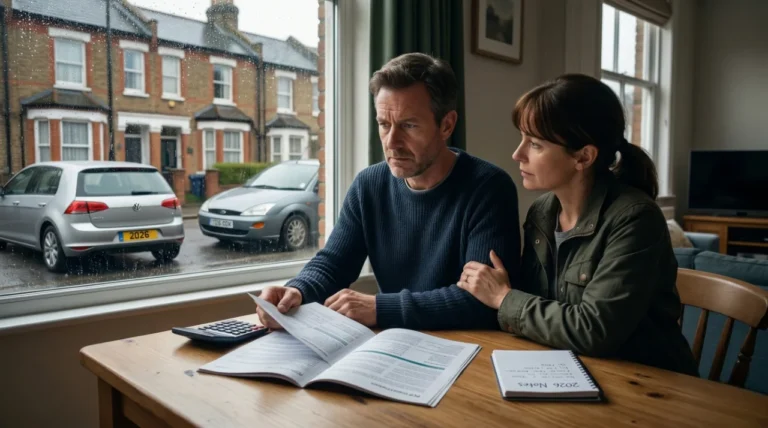
In October 2025, a brown HMRC envelope landed on my mat. It wasn’t a tax return; it was a ‘P800’ form stating I owed £120 in tax… on my savings. I thought savings were tax-free. I was wrong.
Like millions of other Brits, I’d been caught by the 2025 ‘tax crackdown on savings accounts.’
Let’s be clear: this isn’t a new tax. It’s the painful result of high-interest rates pushing us over a limit most people didn’t know they had. As confirmed by numerous reports in 2025, HMRC is now actively pursuing this untaxed interest, leading to a wave of surprise tax bills. UK news report on savings tax.
This guide will explain exactly what’s happening, how to find out if you owe money, how to pay it, and the simple, 100% legal steps to ensure you never pay tax on your savings again.
What is the “Tax Crackdown on Savings Accounts” (And Why Now)?
The “tax crackdown on savings accounts” refers to HMRC’s increased focus on collecting tax on savings interest that exceeds the Personal Savings Allowance (PSA).
This isn’t a new policy. The rules have been in place since 2016. So, why is this happening now?
It’s all down to interest rates.
For the last decade, interest rates were near zero. You’d be lucky to get 0.5% on your savings. At that rate, you would need £200,000 in savings to earn £1,000 in interest.
Fast forward to 2025. Top savings accounts are paying 5% or more. Suddenly, that same £1,000 of interest is earned with just £20,000 in savings.
Millions of diligent savers, who have never been liable for tax before, are now breaching their allowance. And HMRC is automatically collecting.
Authority Box: This Isn’t a New Law
This ‘crackdown’ isn’t a new law or a change in policy. Banks and building societies have been legally required to report all interest you earn to HMRC automatically since 2016. The only thing that’s changed is that high-interest rates mean millions are now exceeding their allowance, triggering an automatic tax liability.
How does HMRC know about my savings interest?
Every bank, building society, and financial institution in the UK reports the amount of interest they pay you directly to HMRC at the end of each tax year.
This process is automatic. It doesn’t matter if the interest is from your current account, a fixed-rate bond, or an easy-access saver. HMRC sees it all.
When the total interest they see exceeds your Personal Savings Allowance, their system automatically flags you for tax collection.
What is the Personal Savings Allowance (PSA)?
The Personal Savings Allowance (PSA) is the amount of interest you can earn from your savings each year without paying any tax on it.
Your allowance is not a fixed amount; it’s based on your Income Tax band.
How much is my Personal Savings Allowance for 2025/2026?
The rules are simple. For the 2025/2026 tax year, your allowance is set by your total annual income (your salary, self-employed profits, pensions, and other income before savings interest is added).
| Tax Band | Taxable Income | Personal Savings Allowance (PSA) |
| Basic Rate | £12,571 to £50,270 | £1,000 per year |
| Higher Rate | £50,271 to £125,140 | £500 per year |
| Additional Rate | Over £125,140 | £0 per year |
This means a basic-rate taxpayer (who pays 20% tax) can earn £1,000 in interest completely tax-free. A higher-rate taxpayer (40% tax) gets a £500 allowance.
If you’re an additional-rate taxpayer, you get no allowance at all. Every pound of interest you earn is taxable.
What about the Starting Rate for Savings?
There is one more crucial allowance that often gets missed. It’s called the Starting Rate for Savings.
This is a separate, additional allowance designed for those with lower incomes.
If your total income from other sources (like your pension or a part-time job) is less than £17,570 a year, you could be eligible for up to £5,000 in tax-free savings interest.
This is on top of your £12,570 Personal Allowance and your £1,000 Personal Savings Allowance. For some people, this means they can earn up to £18,570 in total without paying a penny in tax. It’s a hugely valuable allowance for pensioners and part-time workers. MoneySavingExpert Starting Rate for Savings Guide.
How to Check if You Owe Tax on Savings (The 5-Minute Test)
Don’t wait for a brown envelope. You can figure out your position in five minutes. This is the exact process I use.
Step 1: Find Your Total Interest
Log in to your online banking for all your accounts (savings, current accounts, bonds). Go to your 2024-2025 tax year summary (which runs from 6 April 2024 to 5 April 2025).
Your bank will have a document called an “Annual Interest Summary” or similar. Find the “Total Interest Paid” figure for each account and add them all up.
Step 2: Confirm Your Income Tax Band
Look at your P60 or your last payslip from the 2024-2025 tax year. Find your “total pay for the year.”
- If it’s between £12,571 and £50,270, you’re a basic-rate taxpayer. Your PSA is £1,000.
- If it’s between £50,271 and £125,140, you’re a higher-rate taxpayer. Your PSA is £500.
- If it’s over £125,140, you’re an additional-rate taxpayer. Your PSA is £0.
[GOV.UK Income Tax rates and Personal Allowances].
Step 3: Do the Math
Now, compare your two numbers.
- Total Interest (Step 1) vs. Your PSA (Step 2)
If your total interest is less than your PSA, congratulations. You owe nothing.
If your total interest is more than your PSA, you owe tax on the difference. For example:
- Your Interest: £1,300
- Your PSA: £1,000 (Basic Rate)
- You owe tax on: £300
Common Mistake: “This won’t apply to me.”
Savers in 2025 are being caught out because they underestimate how little savings it takes to break the limit.
- At 5% interest, a basic-rate taxpayer only needs £20,000 in savings to breach their £1,000 PSA.
- At 5% interest, a higher-rate taxpayer only needs £10,000 in savings to breach their £500 PSA.
Expert Tip: What About Joint Savings Accounts?
This is a critical question that most guides ignore. If you have a joint account with your partner, HMRC’s default position is to split the interest 50/50 for tax purposes.
Example: You and your partner have £40,000 in a joint account earning 5% interest (£2,000 per year).
HMRC will treat this as £1,000 of interest for you and £1,000 of interest for your partner.
You then each compare that £1,000 against your own individual Personal Savings Allowance. This can be a very effective tax-planning tool if one partner is a basic-rate taxpayer and the other is a non-taxpayer.
How Will I Know If I Owe? How to Pay Tax on Savings
If you’ve done the math and realised you owe tax, here’s how HMRC will typically collect it. You usually don’t need to do anything.
Option 1: The P800 Form (HMRC Contacts You)
This is what happened to me. A P800 is a “tax calculation” form. It will arrive by post (or in your online tax account) sometime after the tax year ends in April.
It will clearly state:
- How much interest HMRC believes you earned.
- How much tax you owe on it.
- How to pay (usually via an online payment or a cheque).
This is a “surprise tax bill.” You simply have to pay it by the deadline, usually within 30 days.
Option 2: A ‘PAYE Coding Notice’ (Your Tax Code Changes)
This is the most common method for people in employment (PAYE).
HMRC will simply “code out” the tax you owe. They will send you a “PAYE Coding Notice,” and your tax code will change. For example, it might change from the standard 1257L to 1157L.
This change means you will pay slightly more tax from your salary each month in the next tax year to cover the bill from the previous year. It’s less of a shock, but you still pay.
Option 3: Self Assessment (You Must Tell HMRC)
You are legally required to file a Self Assessment tax return if:
- You earned more than £10,000 in savings interest in one year.
- You already file a Self Assessment for other reasons (e.g., you’re self-employed or a landlord).
If you fall into this camp, you must declare your total untaxed interest on your tax return, and the bill will be added to your total Self Assessment liability.
Actionable Guide: How to Check Your Personal Tax Account
You don’t have to wait for a letter. You can check what HMRC knows about you right now. This is a vital part of managing your own finances.
- Go to GOV.UK and search for “Personal Tax Account.”
- Log in using your Government Gateway ID (the one you use for Self Assessment, checking your state pension, etc.).
- Navigate to the “PAYE” section and look for your “Tax Code” and “Tax Account Summary.” You can often see the untaxed interest HMRC has on file for you from the previous year.
How to Legally Avoid Paying Tax on Savings (The E-E-A-T Solution)
Getting a tax bill on your savings is frustrating. The good news is that it is 100% avoidable. You should not be paying tax on your savings. Here are the solutions.
Solution 1: Use Your Cash ISA Allowance (The Easiest Fix)
This is the number one solution. An Individual Savings Account (ISA) is a tax-free wrapper.
- You have a £20,000 ISA allowance each tax year (2025/2026).
- Any money you put into a Cash ISA (or Stocks & Shares ISA) is shielded from tax forever.
- All interest earned inside an ISA is 100% tax-free and does not count towards your Personal Savings Allowance.
- HMRC doesn’t even need to know about it.
If you are at risk of breaching your PSA, your first action should be to move savings into a Cash ISA until you are under the limit.
Solution 2: NS&I Premium Bonds (Tax-Free Prizes)
If you’ve already used your £20,000 ISA allowance for the year, Premium Bonds are the next-best option.
Run by the government-backed National Savings & Investments (NS&I), you don’t earn interest. Instead, you are entered into a monthly prize draw.
- Any “prizes” you win are 100% tax-free.
- They do not count towards your PSA.
- The current prize rate is equivalent to an “interest rate” of around 4.40% (as of late 2025), but your return is based entirely on luck.
- You can hold up to £50,000.
Solution 3: For Married Couples: Transfer Savings
If you are married or in a civil partnership, you can transfer money between each other without any tax implications.
If you are a higher-rate taxpayer (£500 PSA) and your partner is a basic-rate taxpayer (£1,000 PSA), it makes sense to hold the majority of your savings in their name to make use of their larger, £1,000 allowance.
Solution 4: For Pensioners and Low Earners
If you have a low total income (under £17,570), make sure you are using your Starting Rate for Savings. This £5,000 allowance is your most powerful tax-saving tool.
Conclusion
This ‘tax crackdown on savings accounts’ isn’t a new threat, but it is a painful side-effect of high-interest rates that is catching millions of unwary savers.
For most people, the Personal Savings Allowance is £1,000 (basic-rate) or £500 (higher-rate). Go over, and you will get a bill. Banks report everything to HMRC, so the process is automatic.
Getting a P800 tax bill is frustrating, but it’s fixable. The bigger mistake is ignoring it and letting it happen again next year. Taking 10 minutes to open or fund your Cash ISA is the single best financial move you can make today to protect your hard-earned savings.
People Also Ask: Your Top 8 Savings Tax Questions
How much interest can I earn tax-free in 2025?
It depends on your tax band. Basic-rate (20%) taxpayers get a £1,000 Personal Savings Allowance. Higher-rate (40%) taxpayers get £500. Additional-rate (45%) taxpayers get £0. You may also be eligible for the £5,000 Starting Rate for Savings if your total income is below £17,570.
What happens if I go over my Personal Savings Allowance?
You must pay tax on the interest above your allowance. This tax will be at your usual income tax rate (20%, 40%, or 45%). HMRC will usually collect this automatically by adjusting your tax code or sending you a P800 tax bill.
Will HMRC contact me if I owe tax on savings?
Yes. HMRC gets your interest details directly from your bank. If you owe tax, they will either send you a P800 tax calculation form demanding payment or they will send a PAYE Coding Notice to adjust your tax code and collect the tax from your salary.
Do I need to declare savings interest under £1,000?
No. If your total interest is below your Personal Savings Allowance (£1,000 for most people), you do not need to declare it or pay tax on it. If you normally fill out a Self Assessment tax return, you should still declare it, but your tax-free allowance will be applied.
Do I pay tax on savings if I am a pensioner?
Yes, the rules are the same. However, many pensioners have a total income below £17,570, which means they are eligible for the £5,000 Starting Rate for Savings in addition to their £1,000 PSA. This means many pensioners can earn £6,000 in interest before paying any tax.
Is savings interest taxed at 20% or 40%?
It is taxed at your marginal income tax rate. The interest is treated as the “top slice” of your income. So, if you are a basic-rate taxpayer, you pay 20% tax on the interest. If you are a higher-rate taxpayer, you pay 40%.
Are joint savings accounts taxed 50/50?
Yes. HMRC’s default position is that interest from a joint account is split 50/50 between the two owners. Each owner is then responsible for any tax owed on their half, based on their own individual Personal Savings Allowance.
What is the ‘starting rate for savings’?
It is a tax-free allowance of up to £5,000 for savings interest. It’s available to people with lower total incomes. If your non-savings income (e.g., from a pension or wages) is below £17,570, you can start to use this allowance.
About the Author