When is the UK Budget 2026? [Autumn 2025 Date & Expert Forecasts]
Businesses and individuals need certainty to plan their finances, but UK Budget dates can often feel like a moving target, especially with a new government in place.
Let’s get straight to the facts. The next confirmed UK fiscal event is the Autumn Budget 2025, scheduled for Wednesday, November 26, 2025. This will be the first major fiscal statement from the new Chancellor.
The official date for a UK Budget 2026 has not yet been announced.
However, we don’t need a crystal ball to make a very strong prediction. This article provides the official date for the Autumn 2025 event, explains why a Spring Budget 2026 (likely in March) is expected, and offers an expert guide on how to prepare your finances for the new fiscal cycle.
UK Budget 2026 Date: What We Know & Expert Predictions
The 2026 Date: Not Yet Announced
First, the simple answer: HM Treasury has not set or confirmed a date for any fiscal event in 2026. Any website claiming to have a specific date at this time is incorrect. The Chancellor of the Exchequer typically announces the date to the House of Commons several weeks or months in advance.
Expert Prediction: Why a March 2026 Budget is Likely
Despite no official confirmation, as financial planners, we can forecast the timing with high confidence. We fully expect a Spring Budget in March 2026.
This prediction isn’t a guess; it’s based on the two core pillars of the UK’s financial calendar:
- The OBR Forecast Schedule: By law, the Chancellor must commission two forecasts from the Office for Budget Responsibility (OBR) each financial year. This has created a steady “two-event” rhythm: one in Spring, one in Autumn.
- The UK Tax Year: A Budget in March is a matter of practical necessity. It allows the government to announce changes to taxation (like new income tax thresholds or National Insurance rates) and pass the subsequent Finance Bill through Parliament before the start of the new UK tax year on April 6th.
This rhythm, a major Budget in Spring and a secondary Statement in Autumn, is the new normal. The Autumn 2025 event simply solidifies this pattern.
Confirmed: The Next UK Fiscal Event (Autumn Budget 2025)
Official Date and Time
HM Treasury has confirmed that the Autumn Budget 2025 will take place on Wednesday, November 26, 2025. The Chancellor will deliver the speech (the “Budget Statement”) to the House of Commons at approximately 12:30 PM, immediately following Prime Minister’s Questions.
The New Chancellor: Rachel Reeves
This will be the first Autumn Budget delivered by the new Chancellor of the Exchequer, Rachel Reeves. This event will be a critical moment for the new government to outline its economic priorities and respond to the latest OBR forecasts.
What to Expect from the Autumn Budget 2025
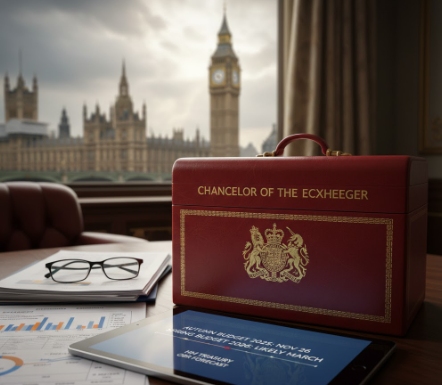
While the full details are kept in the famous Red Box until the day, the agenda is already taking shape. This budget will be the first major test of the government’s new fiscal rules.
We expect the Chancellor’s speech to focus heavily on the OBR’s economic forecast for growth, inflation, and public sector debt. According to independent analysis from bodies like the [Institute for Fiscal Studies (IFS)], the Chancellor may have very little “headroom” for major spending increases or tax cuts.
Key areas to watch will be any potential tax changes related to business investment, environmental levies, and possible adjustments to personal taxation, though the government has committed to its core manifesto pledges.
How to Prepare Your Business for the 2026 Budget (Even Without a Date)
As financial professionals, we see many businesses wait until the Budget speech to start planning. This is a mistake. The real opportunity is in the preparation.
Here is how you can prepare your finances for the next fiscal cycle, starting today.
Your 5-Point Financial Planning Checklist
- Benchmark Your Current Tax Position
Before any new policies are announced, understand your baseline. Review your current P&L, corporation tax liabilities, and capital allowance claims. Knowing your starting point is essential to measure the impact of any changes.
- Model Key Scenarios
Ask the “what if” questions. What would a 1% change in corporation tax mean for your bottom line? How would an adjustment to National Insurance thresholds affect your payroll? Running these models now removes panic later.
- Bookmark Primary Sources
Stop relying on newspaper headlines or social media rumours. The only two sources that matter are the HM Treasury for policy announcements and the Office for Budget Responsibility (OBR) for the data behind them.
- Review Capital Investment Plans
If you plan to buy significant assets, review the current rules on capital allowances, such as the Annual Investment Allowance. Budgets often tinker with these incentives, so understanding your current position is key.
- Schedule a Post-Budget Review
Book a slot in your advisor’s calendar now for the week after the Budget (whether in November or March). This commits you to moving from analysis to action quickly.
An Expert’s View on Budget Speculation
Common Mistake: “The biggest error we see is clients making rash decisions based on pre-Budget newspaper rumours. The real work begins after the Chancellor sits down. We advise clients to focus on the official Finance Bill and final OBR report, not the headlines.”
How is the UK Budget Date Actually Decided? The Official Process
The date isn’t just picked from a hat. It’s the end result of a complex process that demonstrates the government’s authority.
Step 1: The Chancellor & HM Treasury Set the Agenda
The Chancellor and their team at HM Treasury decide when they want to hold a fiscal event, balancing political aims with the economic calendar.
Step 2: The OBR’s 10-Week Forecasting Timeline
This is the most critical factor. Once the Chancellor sets a date, they must formally commission the OBR to produce its independent economic forecast. The OBR requires a minimum of 10 weeks to conduct this in-depth analysis. This 10-week timeline is the main reason why Budget dates are locked in so far in advance.
Step 3: The Parliamentary Process
The date is formally announced to the House of Commons. On the day, the Chancellor delivers the speech. This is followed by several days of debate, and the proposals are then put into law via the Finance Bill. According to UK Parliament guidance, this legislative process is why a Spring Budget is essential to get new tax codes ready for April.
Recent UK Budget & Fiscal Statement Dates (2023-2025)
This simple table shows the clear “Spring/Autumn” pattern that has been established, which is why we are so confident in our March 2026 prediction.
| Fiscal Event | Official Date |
| Spring Budget 2023 | March 15, 2023 |
| Autumn Statement 2023 | November 22, 2023 |
| Spring Budget 2024 | March 6, 2024 |
| No Autumn 2024 Event | (Due to General Election) |
| Spring Statement 2025 | March 12, 2025 |
| Autumn Budget 2025 | November 26, 2025 |
Conclusion: Your Next Steps
So, while we wait for the official UK Budget 2026 date, the key takeaway is that the fiscal rhythm is set. Your immediate focus should be on the confirmed November 26, 2025, Autumn Budget. We predict the next event after that will be a Spring Budget in March 2026 to align with the new tax year.
Ultimately, the exact date of the Budget is just a calendar entry. The strategy is what matters. By understanding the Spring/Autumn rhythm, the OBR’s role, and your own financial baseline, you can move from a reactive to a proactive position.
This article will be updated live with full analysis within minutes of the Chancellor’s speech. Bookmark this page to get our expert breakdown of the Autumn 2025 Budget and its impact on you.
FAQs (about the UK Budget)
When is the next UK Budget announcement?
The next confirmed fiscal event is the Autumn Budget 2025 on Wednesday, November 26, 2025.
When is the UK Budget 2026 expected?
The date is not yet announced. However, it is widely expected to be a Spring Budget in March 2026 to align with the start of the new tax year on April 6th.
How many Budgets or fiscal events are there each year?
Typically, there are two: a major Budget (often in Spring) and a second event (like an Autumn Statement) to provide an OBR forecast update, as required by law.
What is the difference between a Budget and an Autumn Statement?
A ‘Budget’ is a major fiscal event that introduces significant new tax changes and is accompanied by a Finance Bill to make them law. An ‘Autumn Statement’ or ‘Spring Statement’ is often (but not always) a less dramatic event, focused more on providing an update on economic forecasts.
Who is the current Chancellor of the Exchequer?
As of November 2025, the Chancellor of the Exchequer is Rachel Reeves.
Is the UK Budget the same as the Welsh Budget?
No. The Welsh Budget is a separate budget set by the Welsh Government (Senedd). It determines how the Welsh Government spends the block grant it receives from the UK Government, alongside its own devolved tax revenues.
What is the UK’s ‘Carbon Budget’?
This is entirely separate from the fiscal Budget. The Carbon Budget is a legal cap on the amount of greenhouse gases the UK can emit over a five-year period. It is part of the UK’s climate change targets.
What is the OBR’s role in the Budget?
The Office for Budget Responsibility (OBR) is the independent public body that provides the official economic and fiscal forecasts. The Chancellor must use these independent forecasts when setting Budget policy to ensure the figures are credible.
About the Author