When to Take Down Christmas Decorations 2026: The Exact Date
The festive period in the UK is a whirlwind of mince pies, social gatherings, and the warm glow of fairy lights. However, as the calendar turns to January, a familiar sense of dread often settles in. You look at your Christmas tree, perhaps looking a bit thirstier than it did in December, and the big question looms: when exactly should these decorations come down?
In 2026, the timing is trickier than usual. Traditionally, the “deadline” falls on a Monday, which presents a logistical challenge for busy households. Whether you are a strict traditionalist terrified of Victorian “goblins” or simply someone looking for a post-Christmas fresh start, this guide provides the definitive answer for 2026.
The Official Date: When to Take Down Christmas Decorations in 2026?
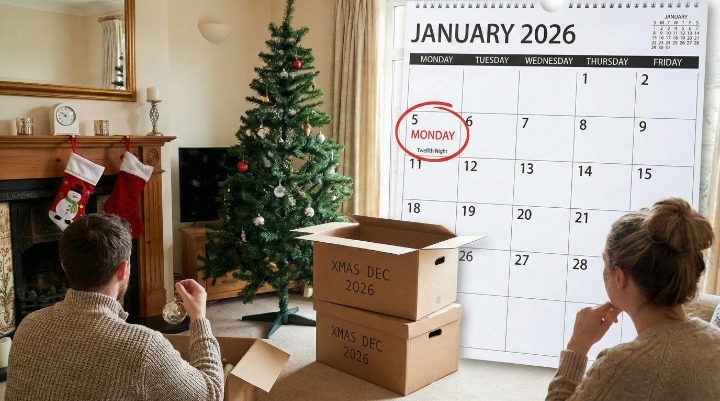
For the majority of UK households, the official date to take down Christmas decorations is Monday, 5th January 2026.
This date marks Twelfth Night, the formal end of the festive season. In British folklore and Christian tradition, leaving your decorations up past this point invites bad luck for the year ahead.
The 2026 Calendar Dilemma
Because January 5th falls on a Monday in 2026, many families face a practical choice. Most people return to work or school on Monday the 5th, making a massive cleanup operation on a weeknight feel exhausting.
Based on current UK trends, a large portion of the population will likely choose the preceding weekend, Saturday, 3rd January and Sunday, 4th January 2026, to pack away the tinsel. While this technically beats the tradition by a day or two, it avoids the “bad luck” associated with being late.
| Event | Date in 2026 | Day of the Week |
| New Year’s Day | 1st January | Thursday |
| Twelfth Night (Traditional Removal) | 5th January | Monday |
| Epiphany | 6th January | Tuesday |
| Candlemas (The Historical Loophole) | 2nd February | Monday |
Twelfth Night vs Epiphany: Why is there a Debate?
If you have ever argued with a neighbor about the “correct” date, you aren’t alone. The confusion stems from how the 12 days of Christmas are counted.
The Church of England View (January 5th)
The Church of England traditionally counts the 12 days starting from Christmas Day itself. In this calculation, the Twelfth Night falls on 5th January. This is the most widely accepted date in the UK for removing decorations.
The Epiphany Tradition (January 6th)
Other denominations start the count on 26th December (Boxing Day). This places Twelfth Night on 6th January, which coincides with Epiphany, the day the Three Wise Men (the Magi) reached the baby Jesus.
According to the Church of England’s official liturgical calendar, Epiphany is a distinct feast day that begins the moment Twelfth Night ends. For many, January 6th is the absolute limit; as long as the house is clear by the time you go to bed on the 6th, you have followed the rules.
Is it Really Bad Luck to Leave Decorations Up?
In the UK, we are a superstitious bunch when it comes to the festive season. The belief that keeping decorations up too long causes misfortune isn’t just a modern excuse to tidy up; it has deep historical roots.
The “Tree Spirits” Superstition
In medieval England, people decorated their homes with “evergreens” like holly, ivy, and yew. It was believed that these plants provided a winter refuge for tree spirits. However, these spirits needed to be released back into the wild after the festivities ended. If you kept the greenery inside past Twelfth Night, the spirits would become trapped and eventually turn “sour,” causing mischief in the home.
The “Goblins” Warning
By the 17th century, the superstition took a darker turn. Famous poet Robert Herrick wrote in 1648 about the consequences of missing the deadline:
“For look, how many leaves there be / Neglected there (maids, trust to me) / So many goblins you shall see.”
The idea was that for every leaf of holly or ivy left behind after Twelfth Night, a goblin would appear to disrupt the household. While we use plastic trees and tinsel today, the psychological weight of this “bad luck” remains a staple of British culture.
The “Candlemas” Loophole: Why You Can Wait Until February
If you find the January 5th deadline too depressing, there is a historical “loophole” that allows you to keep the festive cheer alive for much longer.
Historically, Christmas decorations in the UK stayed up until Candlemas, which falls on 2nd February. This was the traditional end of the winter season in the Middle Ages. According to English Heritage, many grand historic houses still follow this tradition, keeping their greenery in place until early February.
Why Choose Candlemas 2026?
January in the UK is notoriously grey and dark. Keeping your fairy lights and tree up until Monday, 2nd February 2026, can provide a significant mental health boost.
Pro-Tip: If you choose the Candlemas route, I recommend swapping “Christmas” specific items (like Santa figurines) for general winter greenery and white lights. This shifts the vibe from “forgot to tidy up” to “intentional winter hygge.”
Practical 2026 Guide: Tree Disposal & Storage Hacks
Once you decide on a date, the actual task of de-decorating can be overwhelming. As a content writer who has covered UK home trends for years, I have seen that the most successful cleanups involve a strategy for the “big items.”
1. UK “Treecycling” Schemes
If you have a real Nordmann Fir or Norway Spruce, do not simply dump it on the pavement.
-
Council Collection: Most UK councils offer free tree collection in the first two weeks of January. You usually need to check your local authority website to see if you need to book a slot.
-
Charity Pickup: Organizations like JustHelping often run “Treecycle” fundraisers where they collect your tree in exchange for a small donation to a local hospice.
2. The Fire Safety Check
According to the London Fire Brigade, a dry Christmas tree is a significant fire hazard. By early January, most real trees have lost a significant amount of moisture.
The Needle Test: Grab a branch and let it run through your hand. If the needles fall off in heaps, the tree is a “tinderbox.” Regardless of tradition or the 2026 date, if your tree is bone-dry, take it down immediately for safety.
3. Professional Storage Hacks
To make next year’s setup easier, avoid the “everything in one box” approach.
-
The Cardboard Light Hack: Wrap your fairy lights around a piece of flat cardboard to prevent tangling. It saves hours of frustration in December.
-
Egg Cartons for Baubles: Small, fragile ornaments fit perfectly into empty egg cartons, providing cheap and effective padding.
-
Label Everything: Use a Sharpie to label boxes by room (e.g., “Living Room Mantel” or “Outdoor Lights”).
FAQs
What date is Twelfth Night 2026?
Twelfth Night 2026 falls on the evening of Monday, 5th January.
Is it bad luck to take decorations down early?
No. There is no historical or religious superstition against taking decorations down before the 12 days are up. Many people choose to clear the house on New Year’s Day to start the year with a clean slate.
What happens if I miss the Twelfth Night deadline?
According to superstition, if you miss the 5th/6th January deadline, you must leave your decorations up until Candlemas (2nd February) or even the following Christmas to avoid bad luck. Practically, though, you should just take them down as soon as you have a free moment!
When is Epiphany 2026 UK?
Epiphany is Tuesday, 6th January 2026. This is a Christian feast day celebrating the revelation of God incarnate as Jesus Christ.
Should outdoor lights stay up longer?
While indoor trees are usually removed by the 5th, many UK residents keep outdoor “warm white” lights up throughout January to brighten the dark evenings. This is generally accepted as “winter lighting” rather than “Christmas decorations.”
The Psychological Benefit of the Fresh Start
There is a documented psychological phenomenon often called the “Post-Christmas Slump.” For many, the act of taking down the tree and cleaning the house is a vital part of overcoming this.
[10 tips to Beat the January Blues in the UK]
Clearing the clutter creates physical space, which often translates to mental clarity. When you pack away the red and green, you create a “blank canvas” for your New Year’s resolutions and goals.
In 2026, since the deadline is a Monday, I suggest setting aside Sunday afternoon, 4th January, for a “slow Sunday” cleanup. Put on a podcast, brew a pot of tea, and treat the process as a ritual of renewal rather than a chore.
Final Thoughts for 2026
Whether you follow the 5th January tradition to the letter or prefer the 2nd February Candlemas loophole, the most important thing is that your home feels comfortable for you.
Traditions are meant to add joy to our lives, not stress. If the thought of a Monday night cleanup on the 5th fills you with dread, give yourself permission to do it early.
Found a clever storage hack or have a family tradition we missed? Share your post-Christmas cleanup photos with us on social media!
About the Author






i promise Dr.Wealthy if my husband come back i will share testimony about him
My name is Davena, I’m from California in the USA. I want to use this opportunity to thank my great doctor who really made my life a pleasurable one today. This great man Dr.Wealthy brought my husband back to me, i had three lovely kids for my husband, about four years ago my husband and I had been into one quarrel or the other until he finally left me for one lady. I felt my life was over and my kids thought they would never see their father again. I tried to be strong just for the kids but I could not control the pains that tormented my heart, my heart was filled with sorrows and pains because I was really in love with my husband. Every day and night i think of him and always wish he would come back to me, until one day i met a good friend of mine that was also in a situation like me but her problem was her ex-boyfriend who she had an unwanted pregnancy for and he refused to take responsibility and dumped her. she told me that mine was a small case and that i should not worry about it at all, so i asked her what was the solution to my problems and she gave me this great man email address. i was doubting if this man was the solution, so i contacted this great man and he told me what to do and i did them all, he told me to wait for just two day and that my husband will come crawling on his kneels just for forgiveness so i faithfully did what this great man asked me to do and for sure after two days i heard a knock on the door, in a great surprise i saw him on his kneels and i was speechless, when he saw me, all he did was crying and asking me for forgiveness, from that day, all the pains and sorrows in my heart flew away, since then i and my husband and our lovely kids are happy. that’s why i want to say a big thank you to Dr.Wealthy. This great man made me understand that there is no problem on earth that has no solution so please if you know that you have this same problem or any problem that is similar, i will advise you to come straight to this great man. you can email him at:wealthylovespell@gmail.com