Daylight Savings 2026: Exact UK Clock Change Dates & Sleep Guide
Every year, the UK goes through the ritual of shifting clocks, but daylight savings 2026 falls on specific dates you need to bookmark. It is easy to confuse the nationwide time change with popular summer music festivals when searching online. However, the actual timezone shift brings real biological and logistical impacts to your daily routine.
Whether you want to know if you gain or lose an hour, or you need a plan to keep your toddler’s sleep on track, this guide covers everything. We outline the exact dates, digital device rules, and an NHS-backed sleep adjustment strategy.
In the UK, daylight savings 2026 begins on Sunday, 29 March at 1:00 am when clocks go forward by one hour, starting British Summer Time (BST). The clocks will go back by one hour on Sunday, 25 October at 2:00 am, returning the UK to Greenwich Mean Time (GMT).
Key Takeaways
- Clocks spring forward on 29 March 2026, meaning you lose an hour of sleep.
- Clocks fall back on 25 October 2026, giving you an extra hour in bed.
- Smartphones and internet-connected computers update automatically.
- Analogue clocks, car dashboards, and microwaves require manual adjustments.
- Gradual bedtime shifts can prevent severe body clock disruption.
Quick Start: The “Spring Forward” Home Preparation List
You can avoid Sunday morning confusion by preparing your home the night before. Follow this simple checklist to ensure your household runs on the correct time.
- Check your smartphone and smartwatch settings are set to “Automatic Time Zone”.
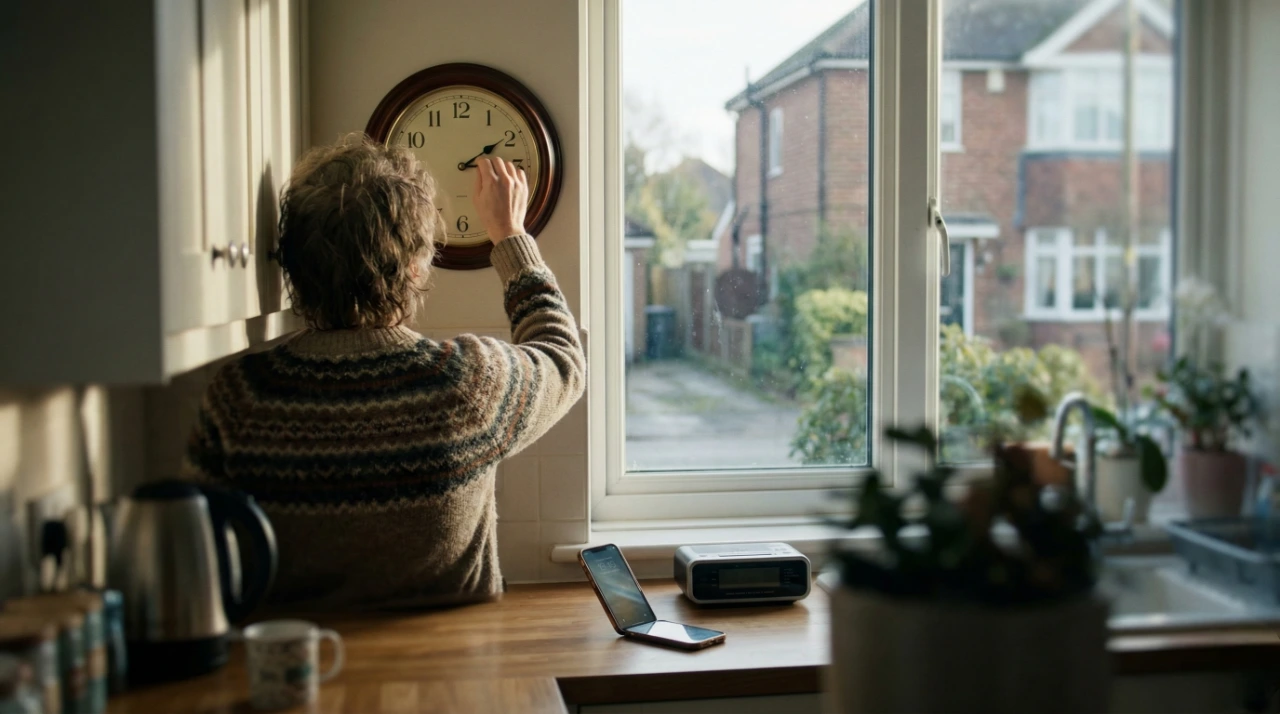
- Manually advance analogue wall clocks by one hour on the Saturday night before you go to sleep.
- Manually advance oven and microwave clocks by one hour on Saturday night.
- Manually advance your car dashboard clock by one hour on Sunday morning.
- Adjust central heating timers or thermostats if they do not connect to the internet.
Common Mistake: Differentiating your search queries is vital if you are looking for summer events. Searching for “BST 2026” heavily overlaps with the British Summer Time Hyde Park music festival, which is entirely unrelated to the UK time zone change.
When Do the Clocks Change in the UK in 2026?
March 2026: British Summer Time (BST) Begins
In the UK, the clocks go forward by one hour at 1:00 am on the last Sunday in March. This shift marks the official start of British Summer Time. In 2026, this change happens on Sunday, 29 March.
Moving to BST means there is more daylight in the evenings and less light in the mornings. You will lose one hour of sleep during this specific transition. For more official government details on the schedule, you can review the GOV.UK British Summer Time guidance.
Pro Tip: Remember the classic phrase “Spring forward, Fall back” to easily recall that clocks advance in March and retreat in October.
October 2026: Returning to Greenwich Mean Time (GMT)
The clocks go back by one hour at 2:00 am on the last Sunday in October. In 2026, the clocks will go back on Sunday, 25 October.
This change returns the UK to Greenwich Mean Time, commonly known as GMT. Shifting back to GMT in October provides you with an extra hour in bed.
Manual vs. Automatic: Which Clocks Need Changing?
Most internet-connected digital devices, such as smartphones and computers, update to the new time automatically. For example, your smartphone, smartwatch, and internet-connected laptop will shift to British Summer Time (BST) at 1:00 am on 29 March 2026 without any user input.
Analogue clocks, car dashboards, and some household appliances typically require manual adjustment. Consider the typical scenario of a morning commuter. They set their analogue kitchen clock and car dashboard clock forward the night before the March transition. They then rely on their smartphone’s automatic update as their primary alarm. This combination ensures they wake up at the correct, newly adjusted time for their Sunday morning plans.
| Device Type | Update Method | Action Required |
| Smartphones / Tablets | Automatic | Ensure “Set Automatically” is toggled ON |
| Computers / Laptops | Automatic | Must be connected to the internet |
| Analogue Wall Clocks | Manual | Move forward/back 1 hour manually |
| Car Dashboard Clocks | Manual | Check vehicle manual for time settings |
| Ovens / Microwaves | Manual | Adjust via appliance buttons/dials |
Mid-Article Summary
- March 29: Forward 1 hour (BST starts).
- October 25: Back 1 hour (GMT starts).
- Check manual appliances the night before to avoid schedule mishaps.
How Daylight Savings Affects Your Health (And How to Cope)
Clock changes can disrupt the circadian rhythm, which is the internal body clock that takes its cues from light and dark. Even a one-hour shift can cause minor disruption to your daily routine. Experts note that sunlight is the most effective gatekeeper for our circadian rhythms. Furthermore, the single most important thing that you can do for your sleep is to follow a consistent schedule.
Pro Tip: Maximise your morning light exposure immediately upon waking during the first week of British Summer Time. Opening your curtains right away helps your internal body clock adjust to the new timezone faster.
Step-by-Step: NHS-Aligned Child Sleep Adjustment Plan
To minimise sleep disruption, especially for children, individuals can bring their bedtime forward by 15 minutes every three nights leading up to the clock change.
- On Wednesday, 25 March, bring your child’s bedtime forward by 15 minutes.
- On Saturday, 28 March, bring their bedtime forward by another 15 minutes.
- Ensure the bedroom is completely dark using heavy curtains or blackout blinds.
- Wake the child at the newly adjusted time on Sunday morning and expose them to natural daylight immediately to help reset their internal clock.
In a typical scenario, a parent of a toddler brings their child’s bedtime forward starting a few days before 29 March 2026. By the time BST begins, the child’s circadian rhythm has adjusted smoothly. This prevents the early morning wake-ups and tantrums associated with the sudden loss of an hour.
Pro Tip: Use blackout blinds during British Summer Time. The lighter evenings can make it difficult for children to fall asleep at their normal time. For further practical advice on resting well, review the NHS sleep guidance.
The History of UK Clock Changes
The concept of shifting the clocks is over a century old. A serious proposal for daylight saving time in Britain was first made in 1907 by William Willett. He proposed the idea in a pamphlet to prevent the waste of valuable morning daylight. Today, many appreciate the shift, as it is very nice to have that extra hour of daylight in the summer months when the weather is warm.
End Summary
Daylight savings in 2026 requires a minor adjustment on 29 March and 25 October. While your digital devices handle the heavy lifting automatically, adjusting your biological clock and household appliances takes a little manual effort. Preparing your home and routine in advance prevents groggy mornings and missed appointments.
Next Steps:
- Add the March and October 2026 clock change dates to your digital calendar now.
- Check your smartphone’s date and time settings to ensure automatic updates are enabled.
- Plan your child’s 15-minute sleep adjustment schedule starting a few days before 29 March.
FAQs
Do the clocks go forward or back in March 2026?
In the UK, the clocks go forward by one hour at 1:00 am on the last Sunday in March.
When do the clocks change in October 2026?
The clocks will go back by one hour on Sunday, 25 October 2026, returning the UK to Greenwich Mean Time (GMT).
Will my iPhone update automatically when the clocks change?
Yes. Most internet-connected digital devices, such as smartphones and computers, update to the new time automatically.
Do we lose or gain an hour in spring?
Shifting to British Summer Time in March results in losing one hour of sleep.
Why did the UK introduce daylight saving time?
A serious proposal for daylight saving time in Britain was first made in 1907 by William Willett to prevent the waste of daylight.
How long does it take for your body to adjust to the clock change?
Clock changes can disrupt the circadian rhythm, but gradual adjustments and morning light exposure can help your body adjust within a few days.
Is British Summer Time the same as GMT?
No. British Summer Time (BST) is one hour ahead of Greenwich Mean Time (GMT). The UK observes BST from late March to late Octob
About the Author