Tenerife Weather Warnings: UK Travel Rights & Safety Guide
A sudden storm in the Canary Islands can quickly turn a winter sun holiday into a stressful ordeal. When Spanish authorities issue weather alerts, UK tourists often feel confused about travel safety and flight impacts. This guide breaks down exactly what official AEMET alerts mean, how local emergency plans affect your trip, and the hard truth about your UK refund rights.
During Tenerife weather warnings, check the official AEMET website for the alert level (Yellow, Orange, or Red). Follow the UK FCDO travel advice, as this determines your package holiday refund rights. If your flight is delayed due to severe weather, airlines must still provide duty of care under UK261 regulations.
Key Takeaways
- AEMET is the only official body issuing tiered weather alerts for Tenerife.
- Your right to a full holiday refund depends entirely on UK FCDO advice, not local weather apps.
- Flight delays trigger passenger “duty of care” rights, even in extraordinary weather circumstances.
- Local emergency plans (PEIN) can close roads and popular attractions like Mount Teide without notice.
- Flash flooding is a severe risk in dry ravines during heavy rain.
Quick Start: Severe Weather Checklist
If a severe weather warning is issued while you are in Tenerife, take these immediate steps:
- Check the official AEMET app for the current alert level (Yellow, Orange, or Red).
- Review your airline’s app or live departure boards for potential diversions.
- Check the Cabildo de Tenerife’s official channels for road, trail, and national park closures.
- Move rental vehicles away from dry ravines and underground car parks prone to sudden flooding.
- Stay within the grounds of your accommodation and strictly avoid coastal paths.
Understanding AEMET Alerts in Tenerife
Generic weather apps do not trigger emergency protocols on the island. Only the Spanish State Meteorological Agency (AEMET) has this authority. [AEMET Official Warnings]
Yellow vs. Orange vs. Red (What They Actually Mean)
| Alert Level | Meteorological Meaning | Practical Impact on UK Tourists |
| Yellow | No severe risk to the general public, but potential local disruption. | Minor travel delays. Avoid coastal paths and high-altitude hiking. |
| Orange | Significant meteorological risk. High potential for damage. | Suspension of outdoor events. High chance of road closures and flight diversions. |
| Red | Extreme, exceptional risk. Widespread severe impact. | Strict instructions to stay indoors. Total closure of national parks and public facilities. |
Common mistake: Assuming a yellow weather warning on your smartphone means you can cancel your package holiday for a full refund. You cannot. Standard cancellation terms still apply.
The North/South Microclimate Divide
Tenerife features distinct microclimates due to its central volcanic peak. Severe weather often affects the northern half of the island much more intensely than the south.
During severe storms, flights meant for Tenerife North (TFN) are frequently diverted to Tenerife South (TFS) or other islands like Gran Canaria. This happens because low visibility and strong crosswinds make northern landings unsafe. Local authorities prepare for these divides actively.
“From today at 15:00, the emergency island device is put into action to anticipate an episode of adverse weather that will affect Tenerife,” stated Rosa Dávila, President of Tenerife, ahead of recent storms.
Flight Delays and UK Passenger Rights
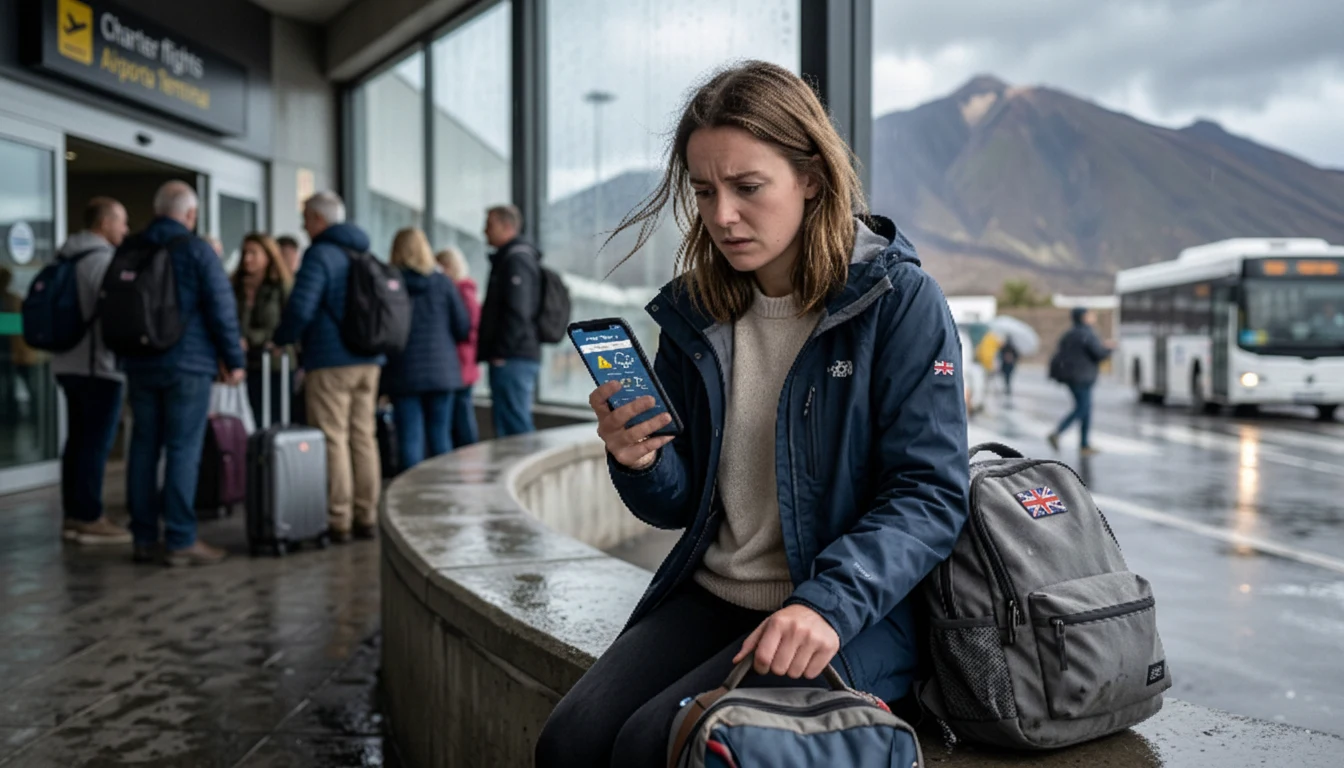
A severe storm counts as an “extraordinary circumstance” under UK aviation law. This means you will not get direct financial compensation for the delay itself. However, airlines cannot simply abandon you at the departure gate.
5 Steps to Take When Your Flight is Delayed by Weather
- Check your airline’s live tracker on your phone before speaking to desk staff.
- Do not leave the airport unless an airline representative explicitly instructs you to do so.
- Ask ground staff for your “Duty of Care” vouchers to cover food and drink.
- Keep all itemised receipts if the airline runs out of vouchers and you must pay yourself.
- Await alternative routing information, as your airline is legally required to get you to your destination.
Pro Tip: Under UK261 rules, even if a flight delay is caused by “extraordinary circumstances” like severe weather, your airline is still legally obligated to provide “duty of care” (food, drink, and accommodation). [CAA Passenger Rights]
Can I Cancel My Holiday for a Full Refund?
This is the most common question UK tourists ask when an Orange or Red alert drops. Many travellers assume a severe weather warning gives them an automatic right to their money back. Unfortunately, travel law does not work this way.
Decision Tree: Can I cancel my Tenerife holiday due to weather warnings?
- Step 1: Has the UK FCDO advised against “all non-essential travel” to Tenerife?
-
-
Yes: You are legally entitled to a full refund for package holidays.
-
No: Proceed to Step 2.
-
- Step 2: Has your airline cancelled your specific flight?
-
Yes: You are entitled to a refund for the flight or an alternative booking.
-
No: Proceed to Step 3.
-
- Step 3: Do you want to cancel simply because the weather looks bad?
-
Result: You will likely lose your money. Standard cancellation terms apply, and most standard travel insurance will not cover “disinclination to travel.”
-
Take a typical scenario as an example. A UK family booked on a package holiday to Tenerife South experiences a delayed outbound flight due to an AEMET Orange wind alert. Because the UK FCDO has not advised against travel, they cannot claim a full refund for cancelling preemptively. They must wait for the airline to officially cancel the flight to be eligible for a refund.
Pro Tip: Do not automatically cancel your UK package holiday if you see a weather warning. Unless the FCDO changes its advice, you will likely lose your money. [Citizens Advice Holiday Cancellations]
Summary: Weather Warnings and Your Money
- Refunds require an FCDO “against all non-essential travel” advisory.
- AEMET warnings alone do not legally mandate UK travel providers to issue refunds.
- Airlines must provide food and accommodation for weather-delayed flights.
Local Emergency Plans & Tourist Safety Rules
When extreme weather hits, the Tenerife Island Council frequently activates the PEIN (Island Emergency Plan). This protocol allows local authorities to suspend outdoor activities and close roads to protect the public. [Cabildo de Tenerife Updates]
Road Closures and Teide National Park
Severe weather at sea level often translates to extreme conditions at altitude. In March 2026, Storm Therese triggered the PEIN. This resulted in the suspension of all outdoor events and the closure of access routes to Teide National Park due to heavy snow above 1,800 metres.
Pro Tip: If an Orange or Red alert is issued, assume that access roads to Mount Teide (such as the TF-21 and TF-24) will be closed due to snow, ice, or high winds.
The Hidden Danger of Flash Floods (Barrancos)
Tenerife’s landscape features many barrancos, which are deep, dry riverbeds and ravines. These present a major hazard during heavy rain.
Consider a typical scenario where hikers in northern Tenerife ignore a Yellow rain alert. As the rain intensifies, a flash flood occurs in a dry ravine. Because the Island Emergency Plan is active, hiking trails are officially closed. Ignoring these closures not only endangers their lives but may also invalidate their standard travel insurance coverage.
“Flash flooding can cause travel disruption and damage to property and infrastructure,” warns the UK FCDO. “Check weather warnings from Spain’s meteorological office (AEMET) before travel.”
Pro Tip: Avoid walking in or parking near dry ravines during heavy rain warnings. They can flash flood rapidly even if it is not raining directly overhead.
Essential Apps and Resources for UK Tourists
Staying safe requires accessing reliable information on the ground. Avoid relying on social media rumours.
Always factor in extra travel time to Tenerife South (TFS) airport during heavy rain. Major routes like the TF-1 motorway are prone to localised flooding and severe congestion.
You should also download the ‘112 Canarias’ app before you travel. It can send your exact GPS coordinates directly to local emergency services if you are stranded.
Rosa Dávila, President of Tenerife, advises all visitors during storm events: “Maximum caution is requested; avoid unnecessary travel and always follow official information.”
End Summary
Tenerife’s weather warnings require serious attention. By relying on official AEMET alerts and FCDO guidance, you can make informed decisions about your trip. Understanding local emergency plans and your UK passenger rights will help you protect both your safety and your wallet.
Next Steps:
- Check the official UK FCDO Spain travel advice page for any advisory changes.
- Download the AEMET app to monitor local Yellow, Orange, and Red alerts.
- Review your travel insurance policy’s extreme weather clauses.
FAQs
What does an orange weather warning mean in Tenerife?
An Orange warning means there is a significant meteorological risk with a high potential for damage. You should expect the suspension of outdoor events, possible road closures, and localized flight diversions.
Is it safe to travel to Tenerife during a weather warning?
Generally, yes, if you follow local authority guidance. Check the UK FCDO advice before you travel. If they do not advise against travel, standard safety precautions apply.
Will I get a refund if I cancel my Tenerife holiday due to bad weather?
No, unless the FCDO advises against all non-essential travel. Cancelling preemptively because of bad weather usually means you lose your money under standard booking terms.
Does Jet2/Ryanair/easyJet fly to Tenerife during storm warnings?
Airlines monitor the situation constantly. Flights will operate unless crosswinds or visibility make landing unsafe. Always check your specific airline’s live tracker before heading to the airport.
What is the PEIN emergency plan in Tenerife?
The PEIN is the Island Emergency Plan activated by the Tenerife Island Council. It allows them to coordinate emergency responses, close roads, and ban outdoor activities during extreme weather.
Are Mount Teide excursions cancelled during bad weather?
Yes. High winds, ice, and snow frequently force the closure of the cable car and access roads to Teide National Park during Orange and Red alerts.
What should I do if my Tenerife flight is cancelled due to wind?
Under UK261 regulations, your airline must offer you an alternative flight to your destination. They must also provide duty of care, including meals and hotel accommodation, while you wait.
About the Author