Black Pudding: Is It Good For You? The NHS Iron Paradox
The media loves to call it a superfood. Dietitians, however, label it a processed meat. What exactly are you putting on your breakfast plate? Black pudding is a powerful short-term iron supplement. But you must manage it strictly to avoid long-term health risks. Let us break down the facts.
Yes, black pudding is exceptionally high in iron and protein, making it an excellent dietary addition for individuals with low iron levels. However, because it is classified as a processed meat high in saturated fat and salt, the NHS advises strictly limiting consumption to an average of 70g per day.
Key Takeaways
- A 50g serving delivers roughly 10mg of dietary iron.
- The NHS classifies it as a processed meat linked to bowel cancer risks.
- Salt levels can reach up to 2g per 100g.
- Saturated fat is high, with some recipes using up to 50% beef suet.
- Daily consumption should stay under the 70g limit.
- Pair your slice with Vitamin C to maximise iron absorption.
Quick Start: The Iron Absorption Optimizer Method
Want the benefits without the waste? Try this routine:
- Serve a measured 50g portion of black pudding to get roughly 10mg of iron.
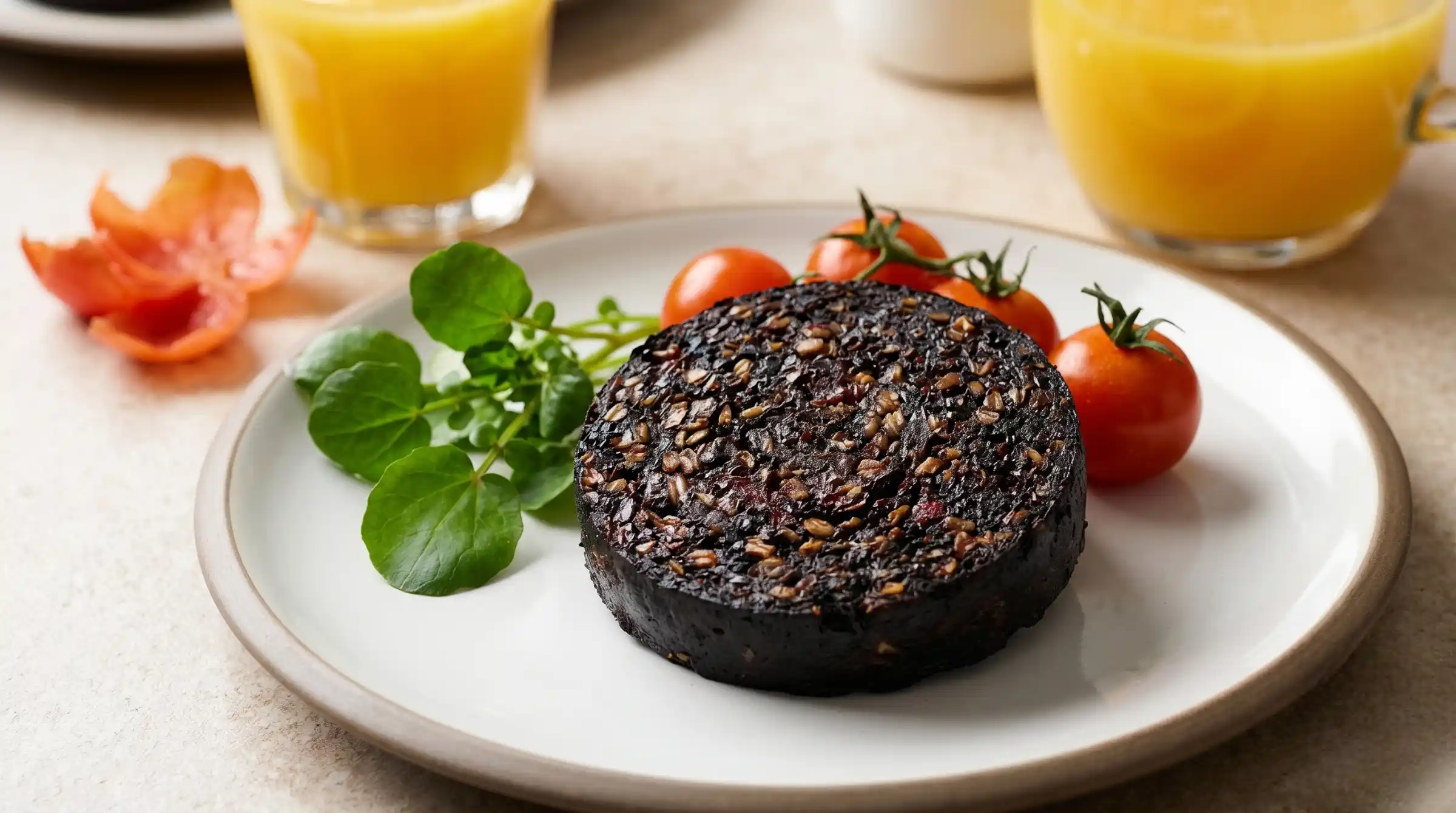
- Prepare a Vitamin C source, like a glass of orange juice or a side of tomatoes.
- Consume them together in the same meal to dramatically boost how much iron your body absorbs.
The Core Dilemma: Superfood or Processed Meat?
It is easy to get confused. You see headlines praising its nutrients. Then you hear warnings about processed meats.
The Iron and Anaemia Benefits
Let us start with the good news. Black pudding is an incredibly dense source of dietary iron. A standard 50g portion gives you about 10mg of iron. That is far higher than what you get from standard cuts of beef or lamb.
NHS dietitians even recommend it for patients fighting low iron or anaemia. It works fast. It is a highly effective way to raise your levels.
Pro Tip: Treat black pudding as a dietary supplement alongside other NHS-recommended iron sources, rather than a staple daily meal.
Common mistake: Relying on it as your main protein source. This ignores its high processed fat content entirely.
The Processed Meat & Bowel Cancer Risk
Here is the catch. Despite the nutrients, it is still a processed meat. It is salted, preserved, and altered from its raw state.
The NHS is very clear on this. You should limit total red and processed meat to an average of 70g per day. Eating more than this increases your risk of bowel cancer.
Pro Tip: Always weigh your portions to ensure you stay under that 70g NHS recommendation.
Case Study: Think about a practical week. A person tracking their diet switches from daily black pudding to an occasional 90g weekend slice. They deliberately plan meat-free days to balance their weekly average and follow NHS guidance.
Nutritional Breakdown: Fat, Salt, and Carbohydrates
The Stornoway Reality: Saturated Fat
Traditional UK recipes do not cut corners on fat. Take Stornoway Black Pudding, for example. This protected recipe legally mandates a composition of 37% to 50% beef suet.
That is a massive hit of saturated fat. Eating high amounts of this fat raises your blood cholesterol levels. High cholesterol leads to heart issues.
Pro Tip: Opt to grill or bake the pudding instead of frying it. Do not add extra oil to a product already loaded with fat.
Pro Tip: Factor that high beef suet content into your daily saturated fat limits to keep your heart healthy.
Hidden Salts and Roughage
Fat is not the only issue. The salt content is naturally high.
Official protected food names allow up to 2% salt content by weight. That equals 2g of salt per 100g. High salt intake is a fast track to high blood pressure.
It does offer a small silver lining. Black pudding contains regional cereals like Scottish oatmeal or pearl barley. This gives you a minor source of dietary carbohydrates and roughage.
Pro Tip: Look for those regional variations with oatmeal if you want a slight boost in fibre alongside your iron..
| The Pros (Nutrient Density) | The Cons (Processed Risks) |
| Exceptional iron content (~10mg/50g) | High saturated fat (up to 50% beef suet) |
| Good source of protein and zinc | Classified as a processed meat |
| Recommended for anaemia support | High salt content (up to 2% by weight) |
| Contains minor dietary roughage | Linked to bowel cancer if overeaten |
4 Rules for Eating Black Pudding Safely
You can enjoy blood sausage without wrecking your diet. Just follow these four steps.
- Respect the 70g limit. Keep your daily average under this official NHS threshold for processed meats.
- Pair with Vitamin C. Drink orange juice or eat tomatoes alongside your meal. This simple trick dramatically increases how much iron your body actually absorbs.
- Skip the frying pan. Grill or bake it. The product is already packed with fat. Do not add more.
- Check the salt labels. Traditional recipes can hide up to 2g of salt per 100g. Read the packaging closely to protect your blood pressure.
Mid-Article Summary Box
- Quick Recap:
-
-
It is a functional food for iron, not a daily staple.
-
Saturated fat and salt levels are historically high.
-
Moderation is legally and medically defined by the 70g threshold.
-
The NHS Processed Meat Limit Checklist:
- [ ] Is my daily portion of black pudding under 70g?
- [ ] If I am eating a larger 90g portion today, have I planned meat-free days to balance my weekly average?
- [ ] Have I accounted for other processed meats (like bacon or sausages) in today’s total limit?
Common Mistakes When Eating Blood Sausage
People often make a few key errors. The biggest one? Over-relying on it for daily protein. It is true that it contains protein and immune-supporting zinc. But its classification as a processed meat means you cannot treat it like a chicken breast.
Another mistake is ignoring your total weekly meat intake.
Consider a typical patient managing mild iron-deficiency anaemia. They safely add a 50g portion of black pudding to their weekly diet. They eat it with a glass of orange juice. Crucially, they track their overall intake. They ensure they do not exceed the NHS weekly guidelines for processed meats by cutting out bacon on other days.
FAQs
Is black pudding good for weight loss?
No. It is very dense in calories and saturated fat. While the protein keeps you full, the high fat content makes it unsuitable for strict calorie-deficit diets.
Can I eat black pudding every day?
You should not eat large portions daily. The NHS advises keeping your intake of red and processed meats below a 70g daily average. Check the NHS red meat advice for more details on portion control.
Is it safe to eat black pudding when pregnant?
Yes, provided it is cooked thoroughly until steaming hot. Cold, pre-cooked meats carry a risk of listeria, so always heat it properly.
Does black pudding lower cholesterol?
Absolutely not. It contains a high amount of saturated fat, often from beef suet. Eating this raises your blood cholesterol levels over time.
How much black pudding should I eat for anaemia?
A 50g portion is ideal. This delivers roughly 10mg of dietary iron without pushing you too close to the maximum daily processed meat limit.
Is black pudding better for you than white pudding?
Black pudding usually wins. White pudding lacks the animal blood, meaning it completely misses out on the massive iron boost, while still carrying similar fat and salt risks.
Why is black pudding classified as a processed meat?
It is heavily altered from its raw state. To increase shelf life and flavour, producers salt, cure, and preserve the meat, placing it in the same risk category as sausages and bacon.
Final Verdict: Balancing the Blood Sausage
The superfood myth needs a reality check. Black pudding is a double-edged sword. Yes, it acts as a phenomenal short-term supplement to fix low iron. But the massive salt and saturated fat content cannot be ignored. By treating it as an occasional functional tool rather than a daily breakfast staple, you can harness its benefits while respecting the firm NHS limits on processed meats.
Next Steps:
- Consult your GP or dietitian if you suspect you have iron-deficiency anaemia before changing your diet.
- Weigh your standard slice tomorrow morning. Check it against the 70g limit.
- Swap your morning coffee (which blocks iron absorption) for orange juice the next time you eat black pudding.
About the Author