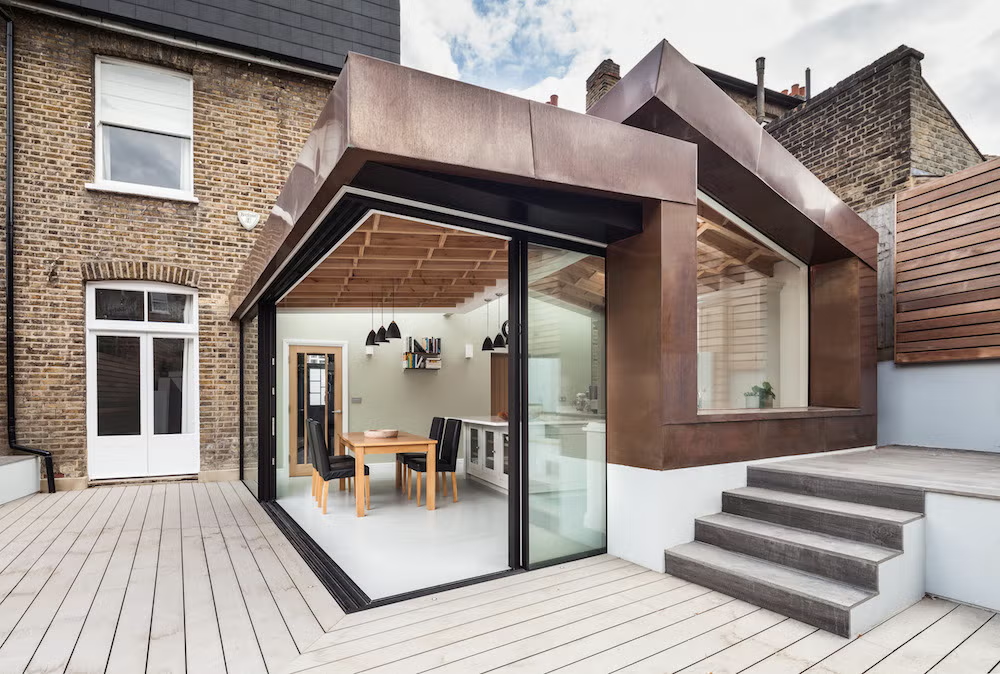
Every street in London has a rear extension that looks like it was designed in five minutes. Flat roof. Bi fold doors. Grey composite decking outside. White handleless kitchen inside. You’ve seen it a thousand times. Its fine. Its functional. Its completely forgettable.
Then there’s the house three doors down where the extension feels different the moment you walk in. The ceiling soars. Light pours in from unexpected angles. The kitchen connects to the garden in a way that makes the whole ground floor feel twice its size. The materials have texture and warmth. Nothing looks generic.
Both cost roughly the same. Both took roughly the same time to build. The difference was who designed them and how much thought went into the decisions that most people rush through. At Extension Architecture, we’ve delivered single storey extensions across London where the design decisions made all the difference. Here’s what separates the forgettable from the exceptional.
Ceiling Height Is the Biggest Free Upgrade
Standard ceiling height in a new extension is 2.4 metres. Standard ceiling height in a Victorian terrace is 2.7 metres. Walk from one into the other and the new room feels like it’s pressing down on you.
Raising the extension ceiling to match the original house costs almost nothing extra in materials. A few more courses of brick. Slightly taller glazing. That’s it. But the room feels completely different.
Go further with a pitched or vaulted ceiling and the effect is dramatic. A ceiling that rises to 3 metres at the ridge creates a sense of volume that makes a modest extension feel grand. The footprint stays the same. The material cost increases marginally. But the experience of being in the room transforms entirely.
Most builders default to 2.4 because that’s what they always do. An architect specifies the height that makes the room feel right.
Roof Light Position Changes Everything
Two identical extensions. Same size. Same layout. Same number of roof lights. One feels bright and alive. The other feels flat and shadowless.
The difference is where the roof lights sit.
A roof light over the kitchen island creates a pool of focused daylight exactly where you’re working. A roof light over the dining table makes meals feel like they’re happening outdoors. A roof light at the junction between old and new brings light into the deepest part of the plan where side windows can’t reach.
Move any of those sixty centimetres in the wrong direction and the light lands on a worktop nobody uses or a floor area that doesn’t need highlighting. The position is everything. The builder puts them where they’re easiest to install. The architect puts them where they make the biggest impact.
The Garden Threshold
Where the kitchen floor meets the garden is one of the most important details in the whole extension. Get it right and inside and outside feel like one continuous space. Get it wrong and there’s a visible barrier that separates them.
Level thresholds with flush track sliding doors eliminate the step between kitchen and patio. The same floor material running from inside to outside tricks the eye into reading both areas as a single room. On warm days the doors disappear completely and your kitchen effectively doubles in size.
A raised threshold with a step down to the garden creates a psychological break. You’re inside or you’re outside. Never both. That 150mm step might seem trivial but it fundamentally changes how the space feels and how often you actually use the garden.
Material Choices That Age Well
The grey kitchen and white quartz worktop look sharp on Instagram. Give them five years and they look dated. Give them ten and you’re replacing them.
Natural materials age differently. Engineered oak flooring develops character over time rather than looking worn. Porcelain tiles that mimic natural stone shrug off a decade of family life without showing it. Brass or brushed steel hardware develops a patina that makes it look better not worse.
Your architect guides these choices based on longevity not trends. A design and build approach helps here because the construction team can advise on how different materials perform in practice, not just how they look in a showroom.
The Rooms Behind the Extension
Here’s what most people forget. When you extend at the rear, the existing rooms between the front door and the new kitchen still need to work. A beautiful new extension that leaves a dark awkward hallway and a disconnected front reception room behind it is only half a project.
Good design considers the whole ground floor. Can the hallway open up into the living space? Does removing the wall between the old kitchen and dining room improve the flow? Should the downstairs cloakroom move to free up a better route from front to back?
These internal changes cost relatively little when done alongside the extension. The builders are already on site. The floor is already being laid. Addressing the existing rooms at the same time produces a ground floor that feels complete rather than a house with a nice new bit bolted onto the back of an unchanged old bit.
The Decisions That Don’t Cost Extra
Matching the ceiling height. Positioning roof lights intentionally. Specifying a level threshold. Choosing materials that age gracefully. Thinking about the rooms behind the extension. None of these add significant cost to the project. They just require someone to think about them before the builder starts.
That thinking is what an architect provides. And its the reason two extensions that cost the same amount can feel like they belong to completely different categories of home.
About the Author