Crude Oil Price UK: Why Brent Hit $82 & 2026 Market Forecasts
Global energy markets experienced severe shocks in early March 2026. Military strikes in the Middle East caused immediate alarm, pushing trading numbers to sudden highs.
Understanding the current crude oil price requires looking past the daily panic. Analysts separate the physical supply of oil from the emotional risk premium caused by global conflict. Separating these two factors is the only reliable way to predict future UK inflation and energy costs.
The UK crude oil price is primarily dictated by the Brent Crude benchmark, which surged to $82 per barrel in March 2026 following Middle East geopolitical strikes. However, underlying market fundamentals predicted a 2026 baseline average of just $58 per barrel due to a projected global oversupply of 3.2 million barrels per day.
Key Takeaways
- Brent crude reached intraday highs of $82 per barrel following US and Israeli strikes on Iran.
- Pre-crisis data from the US Energy Information Administration forecasted an average of $58 per barrel for 2026.
- Geopolitical tensions have added an estimated $4 to $10 risk premium to every barrel.
- Marine insurers temporarily suspended coverage in the Strait of Hormuz, a route handling 20% of global petroleum.
- UK forecourt petrol prices lag behind wholesale crude drops, as seen in February 2026.
Quick Start: Do this first
- Switch your market ticker from West Texas Intermediate to the Brent Crude benchmark.
- Check the current GBP/USD exchange rate, because a weak Pound inflates domestic oil costs.
- Review the latest Office for National Statistics producer input price indices to gauge upstream inflation.
- Monitor GOV.UK weekly road fuel statistics for retail forecourt updates.
Understanding Global Benchmarks: Brent vs. WTI
Financial news broadcasts often mention two different types of oil. Brent Crude is extracted from the North Sea and serves as the primary pricing benchmark for two-thirds of the world’s traded oil. West Texas Intermediate is the American standard, extracted primarily in Texas and heavily tied to US domestic demand.
European markets and UK refineries rely heavily on Brent pricing. Any global event that disrupts international shipping lanes will show up immediately in the Brent barrel price.
Pro Tip: For the most accurate gauge of UK energy costs, always monitor the Brent Crude benchmark rather than West Texas Intermediate.
Common mistake: Many UK business owners accidentally check West Texas Intermediate prices on financial websites because US markets often dominate the headlines. Relying on American benchmark data leads to inaccurate forecasting for domestic UK transport and production budgets.
Geopolitical Shocks and the Strait of Hormuz
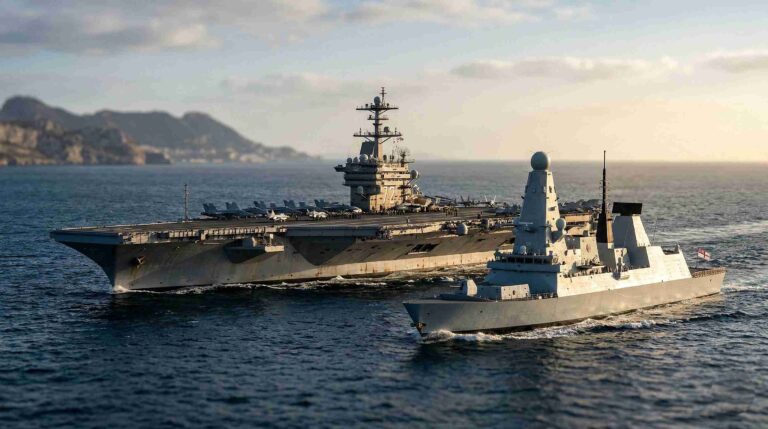
The price of crude oil reacts instantly to perceived threats in major shipping lanes. In early March 2026, Brent crude spiked to an intraday high of $82 per barrel. This sudden surge was a direct response to US and Israeli military strikes on Iran.
These regional conflicts create massive global problems because of physical geography. The Strait of Hormuz is a narrow passage that acts as a critical chokepoint for the Middle East.
Mini Case Study: The Strait of Hormuz Chokepoint Following the military strikes in March 2026, marine insurers temporarily suspended coverage for vessels passing through the Strait of Hormuz. Because this specific body of water handles roughly 20% of all global petroleum shipments, the localized supply chain risk instantly translated into a price surge. This event demonstrates how regional conflict creates immediate global commodity shocks, forcing traders to price in severe disruption risks. Analysts and procurement teams track these ongoing risks by checking maritime insurance advisories for global shipping routes.
The “Risk Premium” Versus Market Fundamentals
Traders often react emotionally to breaking news. This creates a risk premium that inflates the daily barrel price. In early 2026, experts estimated this premium added $4 to $10 to the cost of each barrel. However, the physical supply of oil told a very different story.
Before the recent escalations, the market anticipated a massive surplus. Analysts predicted that global oil production would outpace demand by an average of 3.2 million barrels per day in 2026. Because of this excess supply, the US Energy Information Administration originally forecast an average price of just $58 per barrel for the year.
Pro Tip: Avoid reacting to intraday price surges, such as the $82 peak. Instead, look at monthly averages and fundamental supply forecasts for long-term planning.
Here is a simple method to track the geopolitical risk premium yourself:
| Step | Why it matters | Pro Tip |
| 1. Identify Baseline Forecast | Establishes the fundamental value based on physical supply and demand. | Use official baseline projections (e.g., $58 per barrel). |
| 2. Check Live Spot Price | Shows current market reaction to external events. | Focus on daily closing prices rather than intraday volatility. |
| 3. Subtract Baseline from Spot | Isolates the extra risk premium inflating the market. | Historically $4 to $10 during early 2026 tensions. |
| 4. Monitor Supply Chokepoints | Determines if the premium will hold or fade. | Watch marine insurance statuses in major shipping lanes. |
Summary: The Current Oil Market Gap
- Temporary geopolitical risk is inflating daily prices far above standard levels.
- Global oil supply is expected to outpace demand by 3.2 million barrels per day in 2026.
- Worst-case scenarios, such as the total removal of Iranian exports, could push the 2026 average up to $91 per barrel.
How Wholesale Prices Impact UK Consumers and Businesses
Global barrel prices eventually alter domestic inflation and the overall cost of living. The Bank of England watches these commodity changes closely. When oil becomes expensive, everything from manufacturing goods to delivering groceries costs more money.
Pro Tip: Always remember the currency effect. Because Brent crude is priced in US Dollars, UK businesses must factor in the GBP/USD exchange rate. A weak Pound makes importing oil more expensive for the UK, even if the global barrel price stays flat.
Drivers often wonder why forecourt prices do not drop immediately when the global market crashes. This happens due to a four-stage trickle-down process:
- Large energy firms purchase raw crude on global commodity markets.
- Industrial refineries process this raw crude into usable petrol and diesel.
- Wholesale distributors buy these refined fuels using futures contracts.
- Retail forecourts adjust their prices two to four weeks later based on the cost of refilling their underground tanks.
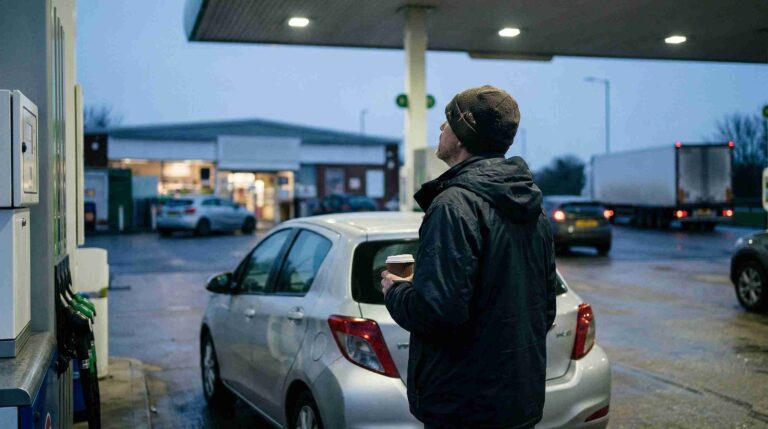
The data clearly shows this delay. In January 2026, the Office for National Statistics reported a massive 23.8% year-on-year drop in crude oil producer input prices. Despite this huge wholesale crash, average UK pump prices for petrol and diesel only dropped by 1.8p and 1.2p per litre respectively the following month. You can track these upstream material costs directly through the ONS producer input price indices.
Forecasting UK Energy Costs in 2026
Looking ahead requires balancing short-term panic with long-term economic data. Historical records show that global oil supply shocks often increase domestic UK inflation and create severe economic headwinds.
Pro Tip: Align your corporate forecasting with official reports. Track the UK’s producer input prices to anticipate consumer goods inflation before it hits the retail sector. Also, follow Bank of England alerts, as they directly connect crude volatility with domestic monetary policy. You can review their latest assessments via the Bank of England monetary policy reports.
Checklist: Assessing UK Business Exposure to Crude Volatility
- Verify that your primary market tracking is set to Brent Crude rather than West Texas Intermediate.
- Review your supply chain’s reliance on shipping routes passing through the Strait of Hormuz.
- Check the ONS producer input price indices monthly to gauge upstream inflationary pressures.
- Monitor Bank of England reports for macroeconomic warnings related to global oil supply shocks.
Conclusion
The current crude oil price reflects a tug-of-war between basic supply economics and severe geopolitical fear. While the world actually produces more oil than it needs right now, the threat to major shipping lanes keeps the daily barrel price high. Preparing for 2026 means watching both the physical supply chains and the global political arena.
Next Steps for UK Businesses
- Audit your international supply chain for any direct exposure to the Strait of Hormuz.
- Subscribe to GOV.UK weekly road fuel statistics to anticipate fleet transportation costs.
- Adjust your Q3 and Q4 financial forecasting to account for the current $4 to $10 risk premium.
FAQs
Why is the UK petrol price still high when crude oil drops?
It takes two to four weeks for wholesale price changes to reach the consumer. Refineries and distributors buy oil in advance, meaning forecourts sell fuel based on older, higher prices before the cheaper inventory arrives.
What is the difference between Brent and WTI crude?
Brent Crude is extracted from the North Sea and dictates prices in Europe and the UK. West Texas Intermediate (WTI) is extracted in America and primarily affects the US market.
How much of the world’s oil passes through the Strait of Hormuz?
Approximately 20% of all global petroleum shipments travel through the Strait of Hormuz, making it a highly sensitive chokepoint for global energy markets.
What is a geopolitical risk premium in oil trading?
A risk premium is extra money added to the price of a barrel by traders who fear upcoming supply cuts. It reflects market anxiety rather than a physical shortage of oil.
How does the Bank of England use crude oil prices?
The Bank of England monitors oil prices because expensive energy drives up the cost of manufacturing and transport. This helps them predict national inflation and set interest rates.
Will global oil supply meet demand in 2026?
Yes. Before recent conflicts, analysts predicted that global oil production would oversupply the market by 3.2 million barrels per day in 2026.
What happens to Brent crude if Iranian exports stop completely?
Analysts warn that severe scenarios removing Iranian oil from the global market entirely could push average Brent crude prices to $91 per barrel by the end of 2026.
How does the GBP/USD exchange rate affect UK fuel costs?
Global oil is sold in US Dollars. If the value of the British Pound falls against the Dollar, it costs the UK more to buy the same amount of oil, driving up domestic prices.
About the Author