Hog Roast Masterclass: 2026 UK Laws, Costs & The Crackling Secret
In 2025, the average weight of a clean pig carcase in the UK hit a record high of 90.9kg, according to data from the Agriculture and Horticulture Development Board (AHDB). For an event planner or catering professional, that number isn’t just a statistic. It represents a significant shift in logistics. A larger animal means longer cook times, heavier manual handling requirements, and a narrower margin for error when trying to achieve that perfect, golden crackling.
Beyond the culinary spectacle, a hog roast is a complex operation. It sits at the intersection of thermal physics, strict UK legal compliance, and heritage butchery. Whether you are catering a wedding for 200 guests or attempting a DIY spit roast for a garden party, the difference between a memorable feast and a public health disaster lies in preparation.
This guide breaks down the technical, legal, and culinary essentials of the modern British hog roast. We will move beyond the basic bread roll and explore the specific regulations, from LPG safety to Natasha’s Law, that define professional catering in 2026.
What is a Hog Roast? (More Than Just a BBQ)
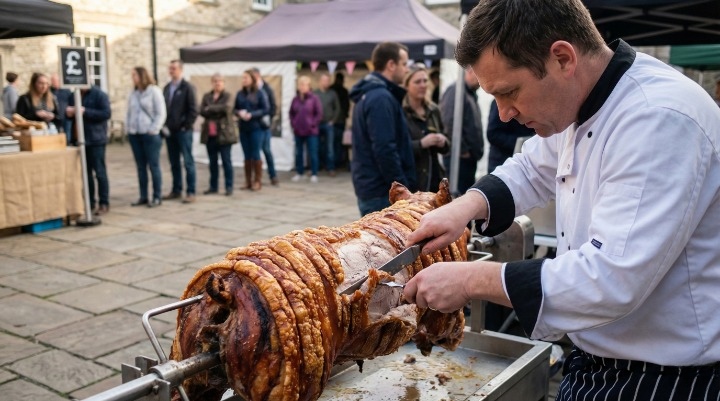
At its core, a hog roast is the process of slow-cooking a whole pig using indirect heat. Unlike a traditional barbecue where meat sits directly over a flame, a hog roast relies on consistent, circulating heat to render the fat slowly while keeping the flesh succulent.
The Anatomy of a Spit Roast
The defining feature of this method is the spit, a metal pole (skewer) that runs longitudinally through the pig. In professional setups, this spit connects to a motor that rotates the animal at a slow, consistent speed (typically 2–4 revolutions per minute).
This rotation serves a dual purpose:
- Self-Basting: As the fat renders, it rolls over the surface of the meat rather than dripping away immediately. This keeps the pork moist.
- Even Cooking: It prevents one side from burning while the other remains raw.
While traditional methods used open fire pits, modern UK caterers predominantly use stainless steel hog roast machines powered by propane gas (LPG). These machines are designed to operate like mobile ovens, often featuring glass viewing panels and temperature gauges to meet strict HACCP (Hazard Analysis and Critical Control Point) standards.
A Brief Heritage: From Medieval Banquets to 2026 Trends
The tradition is deeply rooted in British history. According to sector specialists at Spitting Pig, roasting whole animals was a staple of Medieval aristocratic banquets. It was a display of wealth and community, often the centerpiece of harvest celebrations.
Today, the “Nose-to-Tail” eating movement has revitalised interest in the hog roast. Consumers in 2026 are increasingly conscious of provenance. They don’t just want meat; they want to know the animal was reared locally and that no part is wasted. This shift has moved the hog roast from a rustic novelty to a sustainable catering choice for high-end events.
The Logistics of Scale: Planning Your 2026 Event
Catering for a large crowd involves more math than cooking. The most common mistake novices make is misjudging the yield of a whole pig.
Calculating Portions for 90kg+ Carcasses
With the average carcass weight now exceeding 90kg, portion control is critical. You might look at a 90kg pig and assume it feeds an army, but you must account for the “drop loss” (moisture lost during cooking) and the weight of the bone structure.
The Pitmaster’s Experience: “Never calculate portions based on raw weight. A good rule of thumb is a 50-60% yield. A 90kg pig will typically provide around 50kg of edible meat. If you are serving standard 150g portions in a bun, that’s roughly 330 servings. If you are serving it as part of a plated meal with sides, aim for 200g portions, which drops your capacity to 250 guests. Always buffer by 10%.”
Sourcing Red Tractor & Hyperlocal Pork
The quality of the final product is dictated entirely by the raw ingredient. In the UK, the Red Tractor assurance scheme is the baseline for food safety and animal welfare.
However, for a superior roast, look for “outdoor-reared” or “free-range” pigs from local butchers or farm shops. Breeds like the Gloucestershire Old Spot or Saddleback carry higher levels of intramuscular fat. This fat renders down during the 10–12 hour cook, providing natural basting that leaner commercial breeds cannot match.
Sourcing locally also reduces food miles, a key selling point for 2026 event clients who prioritise sustainability.
The Legal Essentials: UK Regulations You Can’t Ignore
If you are exchanging money for food, you are a food business operator. This means you fall under the jurisdiction of the Food Standards Agency (FSA) and local council environmental health officers.
Gas Safety (LPG) and the HSE Mandate
Most professional hog roast machines run on Liquid Petroleum Gas (LPG). This introduces significant risk if not managed correctly. The Health and Safety Executive (HSE) is clear on the dangers of carbon monoxide poisoning and explosion risks in mobile catering.
- Ventilation: Machines must be operated in well-ventilated areas. If roasting inside a marquee, you generally need to roast outside and only bring the machine in for service once the gas is disconnected.
- Certification: If you hire a machine, it should come with a valid Gas Safety Certificate (CP42 for commercial catering equipment).
- Storage: Spare gas bottles must be stored upright, outside, and away from any ignition sources or combustible materials.
Natasha’s Law & Allergen Management for Caterers
Since October 2021, “Natasha’s Law” (The UK Food Information Amendment) has required full ingredient labeling for food that is “pre-packed for direct sale” (PPDS).
While a hog roast served directly from the spit onto a plate is generally “non-prepacked,” the law bites if you wrap leftovers or sandwiches in advance for guests to take home.
- The Trap: If you wrap a hog roast roll in cling film and place it on a table for later collection, it must have a label showing the name of the food and a full ingredients list with allergens emphasized (e.g., Wheat in the roll, Sulphites in the apple sauce).
- Gluten Cross-Contamination: Even if the pig is gluten-free, the stuffing and bread rolls are not. You must have a segregated area and separate utensils if you claim to offer a gluten-free option.
Achieving a Level 5 Food Hygiene Rating
To operate legally, you must register your business with your local authority at least 28 days before opening. They will inspect you based on three pillars:
- Hygienic Food Handling: Preparation, cooking, re-heating, and cooling.
- Physical Condition of Premises: Cleanliness, layout, lighting, and pest control.
- Food Safety Management: Systems or checks in place to ensure food is safe (HACCP).
The HACCP Checklist for Hog Roasts:
- Receipt: Check temp of raw meat (must be below 8°C).
- Storage: Keep raw pork separate from ready-to-eat foods (buns/salad).
- Cooking: Core temperature must reach 75°C for at least 30 seconds.
- Holding: Meat must be kept above 63°C during service.
The Pitmaster’s Method: How to Roast a Hog
Cooking a whole animal is a marathon, not a sprint. It requires patience and temperature control.
Scoring and the “Salt-Wick” Crackling Technique
The crackling is often the most fought-over part of the roast. Achieving glass-like, crunchy skin requires preparation before the heat is even turned on.
Experience Note: The Water Enemy “Moisture is the enemy of crackling. If the skin is wet, it will steam rather than roast, becoming rubbery. Dry the skin thoroughly with paper towels. When scoring the skin (cutting lines into it), use a sharp Stanley knife. Cut through the skin and fat but do not cut into the meat. If you cut the meat, juices will bubble up during cooking and make the skin soggy.”
The Method:
- Score: Create diamond or parallel lines across the midsection.
- Oil: Rub a small amount of vegetable oil over the skin.
- Salt: Massage coarse sea salt into the scores. The salt acts as a wick, drawing out moisture and helping the skin bubble up.
- Heat: Blast with high heat for the first hour to set the crackling, then lower the temperature for the long slow cook.
Managing Hot-Holding Temperatures
Once the pig is cooked, you cannot simply turn the machine off and wait for guests. Bacterial growth is most rapid in the “Danger Zone” between 8°C and 63°C.
According to FSA guidelines, you can keep food hot for up to two hours. However, professional hog roast machines are designed to hold heat. You must use a probe thermometer to verify the meat stays above 63°C. If the temperature drops, you must reheat it to 75°C rapidly or discard it.
Equipment & Cost Analysis: DIY vs. Professional Catering
Is it cheaper to do it yourself? In 2026, the gap between DIY and hiring a pro has narrowed due to rising insurance and equipment costs.
The Hidden Costs of Hog Roast Machine Hire
Hiring a machine for the weekend typically costs between £250 and £450 depending on the model and location. However, you must also factor in:
- Gas: A 19kg propane bottle costs roughly £40–£60.
- The Pig: A 60kg–70kg pig from a butcher can cost £180–£250.
- Cleaning: Many hire companies charge a hefty “cleaning fee” (often £50+) if the machine isn’t returned spotless. Scrubbing burnt-on pork fat takes hours.
Why Public Liability Insurance is Non-Negotiable
If you are catering for a public event or a paid private function, Public Liability Insurance (PLI) is essential. It covers you if a guest gets food poisoning or trips over your gas line. Most venues in the UK will ask for proof of PLI (usually up to £5 million or £10 million cover) before letting you set up. Do not operate without it.
Beyond the Bun: Traditional and Modern Accompaniments
The classic hog roast is served in a floury bap with apple sauce and sage and onion stuffing. It is a winning combination because the acidity of the apple cuts through the rich, fatty pork, while the stuffing adds savoury bulk.
2026 Side Dish Trends
However, modern palates are evolving. To stand out, caterers are looking beyond the beige buffet.
- Chimichurri: This fresh herb sauce (parsley, garlic, vinegar, chilli) is becoming a popular alternative to apple sauce, offering a sharper, more vibrant contrast to the pork.
- Charred Greens: Instead of limp salad leaves, think grilled tenderstem broccoli or charred hispi cabbage with hazelnut dressing.
- Brioche & Ciabatta: Moving away from cheap white rolls to high-quality artisan breads adds perceived value to the dish.
Conclusion
A successful hog roast is a triumph of planning. It balances the primal appeal of fire and meat with the rigorous demands of modern food safety. For the guest, it is theater, the sight of the rotating spit and the smell of roasting pork. For the host, it is a logistical challenge that requires respect for the ingredient and the law.
Whether you are a caterer looking to expand your portfolio or a host planning a wedding, remember that the secret lies in the details: the dryness of the skin before salting, the ventilation of your gas supply, and the provenance of your pork.
Ready to get started? If you are hiring a professional, ask to see their Food Hygiene Rating and Gas Safety Certificate before booking. If you are doing it yourself, order your pig at least two weeks in advance and clear your schedule, great food cannot be rushed.
FAQs
How many people does a full hog roast feed?
A standard 50kg–60kg pig will feed approximately 100–120 people in buns. A larger 80kg–90kg pig can feed up to 250–300 people. Always check the “dead weight” vs. “live weight” with your butcher to calculate yield accurately.
How long does it take to cook a 50kg pig?
As a general rule, allow 1 hour of cooking time for every 10kg of meat, plus 30 minutes resting time. A 50kg pig usually takes around 5–6 hours to cook thoroughly.
Can you do a hog roast in the rain?
Yes, but you need shelter. Cold wind and rain on the machine’s exterior can lower the internal temperature, extending cooking times significantly. A gazebo (with open sides for ventilation) is essential for British weather.
How much does a professional hog roast cost in the UK (2026)?
For a fully catered service including a chef, bread, sides, and service, expect to pay between £1,000 and £1,800 for 100 guests. Prices vary by region and menu complexity.
What is the difference between a pig roast and a hog roast?
Technically, a “pig roast” usually refers to a younger, smaller animal (under 40kg), while a “hog roast” refers to a mature, larger animal. In casual conversation, the terms are used interchangeably.
Do I need a license to serve a hog roast in public?
If you are selling food on public land (like a street market), you need a Street Trading License from the local council. If you are on private land (like a wedding venue), you don’t need a trading license, but you must be registered as a food business.
Can I do a hog roast in my back garden?
Yes, provided you own the equipment or hire it legally. Be mindful of smoke drifting into neighbours’ properties, as this can be classified as a statutory nuisance.
What happens to the leftovers?
Leftovers must be cooled quickly (within 90 minutes) and refrigerated. Under Natasha’s Law, if you pack these leftovers for guests to take away, you must label them with full ingredients and allergens.
About the Author