Remembrance Day 2025: The Complete Guide to UK Traditions, Services, and Observance
At 11 am on November 11th, a silence falls across the United Kingdom. In offices, schools, and on streets, the nation pauses.
But what is this silence for, and how does it differ from the parades seen on Sunday? Remembrance is a core part of the UK’s cultural calendar, yet the distinction between its two key dates—Remembrance Day and Remembrance Sunday—is the single most common point of confusion for millions of people.
This guide is your single, definitive resource for 2025. We will clarify the “what, when, and why” of Remembrance Day, explain the vital difference from Remembrance Sunday, explore the traditions, and provide a practical guide on how you can participate, find local services, and talk to your family about its meaning.
What’s the Difference? Remembrance Day vs. Remembrance Sunday 2025
This is the most important distinction to understand. The two days serve different, but related, purposes.
Remembrance Day (Armistice Day): Tuesday, November 11th
Remembrance Day is fixed on one specific date: November 11th.
It is a direct commemoration of the moment the guns fell silent at the end of the First World War. This Armistice was signed at 11 am on the 11th day of the 11th month in 1918.
The Imperial War Museums (IWM) confirm this date as the anniversary of the Armistice. While it is a significant day, most people mark it by observing the two-minute silence at 11 am, often at their workplace or school.
Remembrance Sunday: Sunday, November 9th
Remembrance Sunday is different. It is always held on the second Sunday in November. In 2025, this falls on Sunday, November 9th.
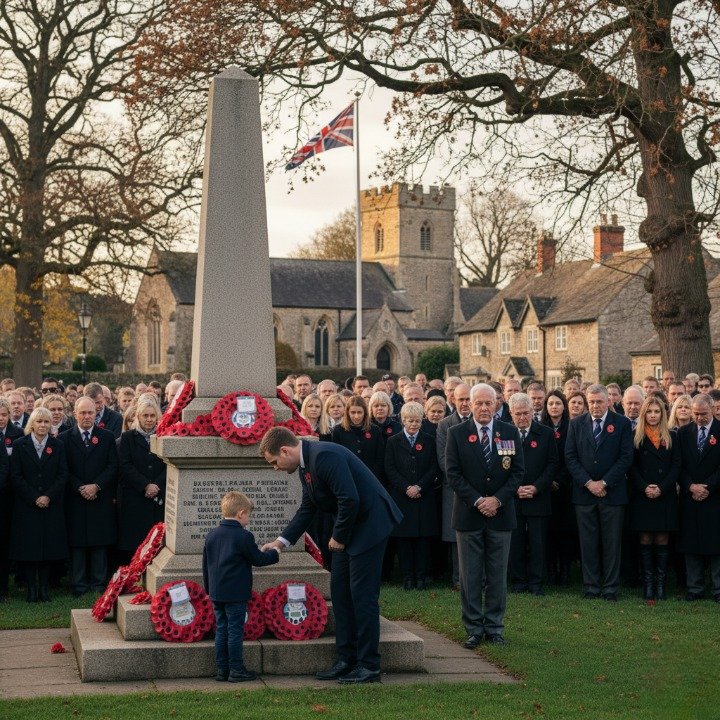
This is the day of the UK’s main national commemorations. It includes the National Service of Remembrance at the Cenotaph in London, as well as countless local services, parades, and wreath-laying ceremonies in cities, towns, and villages across the country.
Here is a simple breakdown:
| Feature | Remembrance Day (Armistice Day) | Remembrance Sunday |
| 2025 Date | Tuesday, November 11th | Sunday, November 9th |
| When it Occurs | Always on November 11th | The second Sunday in November |
| Key Observance | Two-minute silence at 11 am | National Service at The Cenotaph; local parades |
| Primary Meaning | Anniversary of the end of WWI | The national day of commemoration for all conflicts |
The Meaning of Remembrance: Why We Observe
The act of remembrance is built on a foundation of powerful traditions, each with a specific meaning.
The Poppy: A Symbol of Sacrifice (And Why We Wear It)
The red poppy is the most enduring symbol of remembrance. Its origins trace back to the battlefields of the First World War. Amidst the mud and destruction of Northern France and Belgium, bright red poppies were the first flowers to grow.
This sight inspired Canadian doctor Lieutenant-Colonel John McCrae to write his famous 1915 poem, In Flanders Fields.
After the war, the symbol was adopted by The Royal British Legion (RBL). Today, the Royal British Legion Poppy Appeal uses the poppy to raise vital funds for veterans and their families.
The Two-Minute Silence: A National Pause for Reflection
The two-minute silence is a central act of remembrance, a moment for a shared national pause.
It is observed on two occasions:
- At 11 am on Remembrance Day (Nov 11th), marking the exact time the Armistice began.
- At 11 am on Remembrance Sunday, as the starting point for the national and local services.
“Lest We Forget”: The Meaning of the Famous Phrase
This phrase, etched on war memorials everywhere, is often mistaken as being from a war poem. It is actually from Rudyard Kipling’s 1897 poem “Recessional.”
“Lest We Forget” is not a threat, but a plea—a reminder to never forget the scale of the sacrifice made by those who served.
The Poppy Appeal: Supporting the Armed Forces Community
The Poppy Appeal is not just about remembrance; it’s about providing vital, modern-day support.
According to The Royal British Legion, the funds raised help veterans and their families with everything from financial aid and housing to mental health support and career guidance. Wearing a poppy is a direct way to support this ongoing work.
How to Observe in 2025: From National Tributes to Local Services
You can participate in remembrance in many ways, from national events to personal acts.
The National Service of Remembrance (The Cenotaph, London)
The focal point for the nation is the National Service of Remembrance. This is held at The Cenotaph in Whitehall, London, on the morning of Remembrance Sunday (November 9th, 2025).
The service, led by His Majesty King Charles III and members of the Royal Family, is a solemn tribute. According to official 2025 details from GOV.UK, the service begins with a two-minute silence at 11 am. This is followed by wreath-layings and the moving march-past of thousands of veterans.
The event is broadcast live on BBC One, Sky, and other major networks for all to watch.
2025 Themes: 80 Years Since WWII & 25 Years of Open Service
While remembrance honours all conflicts, 2025 carries special significance.
The commemorations, including the RBL’s Festival of Remembrance at the Royal Albert Hall (held on Nov 8th), marked the 80th anniversary of the end of the Second World War. This year’s events also highlighted the 25th anniversary of the UK lifting the ban on gay and lesbian personnel serving openly in the armed forces.
These themes remind us that remembrance is an evolving tradition, recognizing the contributions of all who have served.
Expert Tip: How to Find Your Local 2025 Service
The national service in London is well-publicised, but remembrance is fundamentally a community event. If you’re searching “remembrance service near me,” you will often find it difficult to get a clear answer from a simple search.
From our experience, here is the most effective way to find your local parade and wreath-laying times:
- Check Your Local Council Website: This is the most reliable source. Search for “[Your Town] council remembrance sunday”. Most councils publish road closure info and service timings.
- Find Your Local RBL Branch: Many local Royal British Legion branches post their event details on their websites or social media pages.
- Look at Your Local Church or War Memorial: For the most direct information, check the noticeboard at your main parish church or at the town’s war memorial itself.
An E-E-A-T Guide: Talking to Children About Remembrance
It can feel challenging to talk to young children about war and sacrifice. As parents and educators, we want to be honest without being frightening. From our experience, the best approach is to start with the tangible symbols.
- For Young Children (Ages 3-6): The poppy is your best starting point. It’s a simple, visual symbol. We highly recommend using the CBeebies “Poppies” animation. It’s a beautiful, two-minute film that portrays remembrance through nature, with no frightening imagery.
- For Older Children (Ages 7-11): They are ready for more context. You can explain that the poppy represents remembering people who helped keep us safe. The Royal British Legion’s “Teaching Remembrance” resources are excellent, offering age-appropriate materials for schools and homes.
The goal is not to explain the complexities of war, but to introduce the concept of gratitude and remembrance.
Beyond the Red Poppy: Understanding Other Symbols of Remembrance
The red poppy is the most well-known symbol, but you may see others. Each represents a different, specific focus of remembrance.
The White Poppy (Peace Pledge Union)
The white poppy, distributed by the Peace Pledge Union, has been worn since 1933. It represents remembering all victims of war (including civilians), a commitment to peace, and a challenge to war itself.
The Purple Poppy (Animals in War)
The purple poppy commemorates the animals who served and died in conflict. From horses and mules on the front line to dogs and pigeons, this symbol, promoted by groups like the War Horse Memorial, remembers their sacrifice.
The Black Poppy (Black, African, and Caribbean Communities)
The Black Poppy, or Black Poppy Rose, was introduced to highlight and remember the contributions of Black, African, and Caribbean communities to the war efforts. It aims to ensure their stories of service and sacrifice are a central part of the remembrance narrative.
Final Words
From the 11th-hour silence on Armistice Day to the solemn parades of Remembrance Sunday, the act of remembrance is a living tradition that shapes the UK in November. It is a time to understand our past, honour the sacrifice, and support those still living with the impact of conflict.
Ultimately, remembrance is both a national, public act and a deeply personal one. It’s the moment we connect our present to our past, ensuring those sacrifices continue to have meaning for a new generation.
How are you and your community observing Remembrance this year? Share your local traditions or thoughts in the comments below.
FAQs
What is the difference between Remembrance Day and Remembrance Sunday?
Remembrance Day is always on November 11th, marking the 1918 Armistice. Remembrance Sunday is the second Sunday in November, which is the day for national services.
Why is Remembrance Day on November 11th?
It marks the exact date and time (11 am on 11/11/1918) that the armistice agreement was signed, effectively ending the First World War.
Is it 2 minutes silence on Remembrance Day or Sunday?
Both. A two-minute silence is held at 11 am on Remembrance Day (Nov 11th) and again at 11 am on Remembrance Sunday.
What is the correct poppy etiquette? (e.g., which side to wear it)
The Royal British Legion states there is no ‘correct’ side. Tradition holds that men wear it on the left lapel (close to the heart) and women wear it on the right. The RBL simply says the best way to wear it is “with pride.”
What is the white poppy for?
The white poppy remembers all victims of war (including civilians) and signifies a commitment to peace. It is distributed by the Peace Pledge Union.
What do the words “Lest We Forget” mean?
It is a plea to never forget the sacrifices made by those in war. The phrase comes from an 1897 poem by Rudyard Kipling.
Are shops open on Remembrance Sunday?
Yes. Remembrance Sunday is a normal Sunday trading day. However, many shops will pause to observe the two-minute silence at 11 am.
What is Armistice Day?
Armistice Day is the original name for Remembrance Day. They are the same thing, both commemorating November 11th.
About the Author