How to Stop Condensation on Bedroom Windows Overnight in the UK
Waking up to dripping windows and soaked sills is a frustrating daily reality for millions during the UK winter. We seal up our homes to save energy, but this traps moisture inside. You do not necessarily need expensive ventilation systems to fix this. Mastering the balance of background heat and a simple morning routine is the key to a dry bedroom.
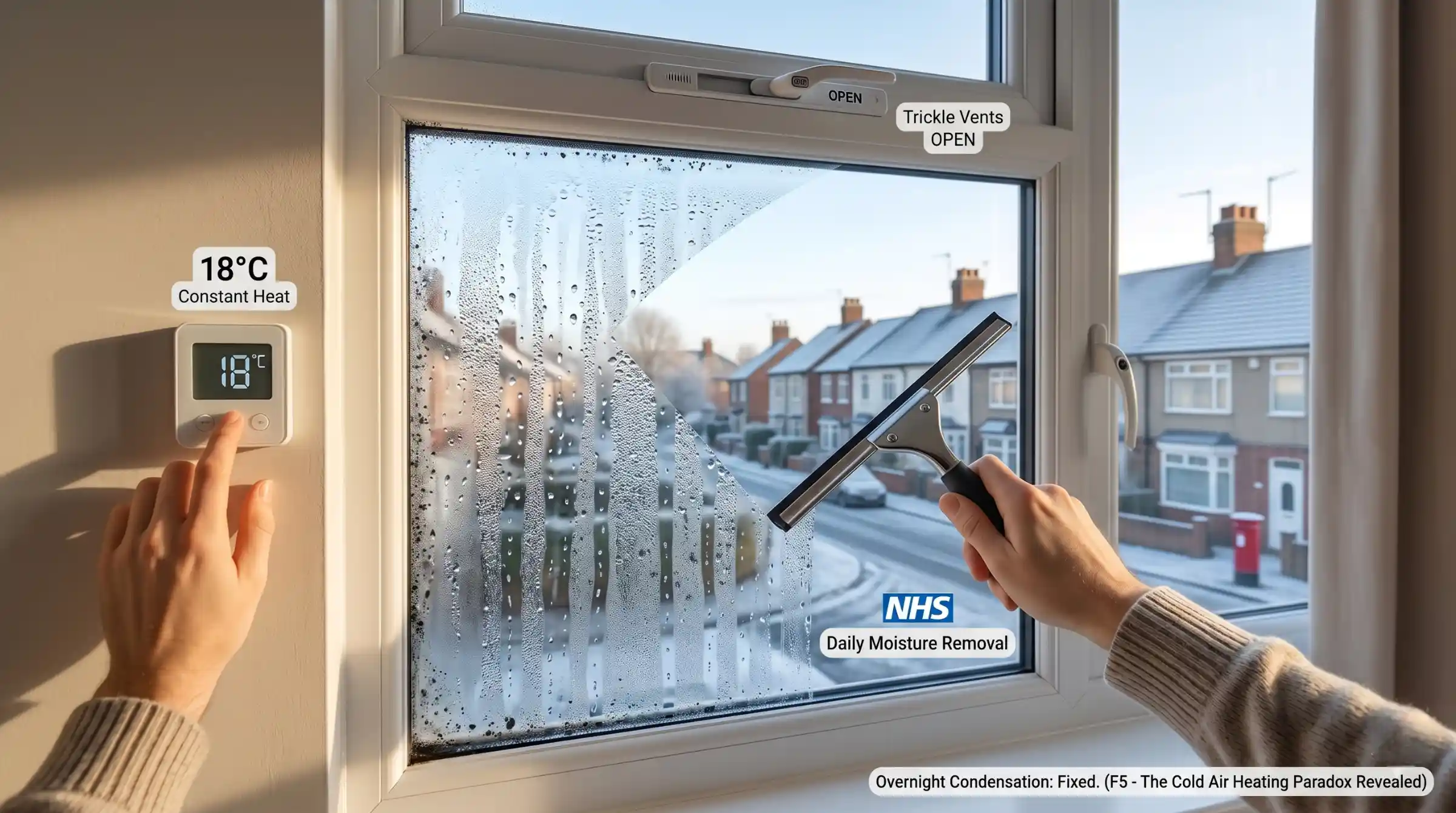
To stop condensation on bedroom windows overnight in the UK, keep your bedroom heated to a consistent background temperature of at least 18°C. Ensure trickle vents remain open all night for continuous airflow. Finally, open the main window for 5 to 10 minutes every morning to release trapped moisture.
Key Takeaways
- Keep trickle vents open 24/7 rather than taping them shut.
- Maintain a minimum room temperature of 18°C.
- Morning ventilation for 5 to 10 minutes actually saves heating money.
- Never dry clothes on bedroom radiators.
- Wipe windows daily to prevent toxic black mould.
Quick Start: The Morning Condensation Clearance Checklist
- Wipe down glass and sills with a dry cloth or window vac.
- Open the bedroom window wide for 5 to 10 minutes to release moist air.
- Ensure trickle vents remain open after closing the main window.
- Turn heating to a low, consistent background temperature of at least 18°C.
What Causes Bedroom Window Condensation in the UK?
The amount of condensation in your bedroom depends on three things. These are the moisture you produce, the room temperature, and the air circulation. As you sleep, your breathing releases water vapour into the air. This moisture meets the cold surface of the glass and reaches its “dew point”. The gas then turns back into liquid water.
As Lancaster City Council notes in their 2025 housing guidance, “Condensation occurs when warm, moist air touches a cooler surface… If left for a prolonged period, it can cause damp and/or mould.”
The UK “Condensation Season” Explained
Condensation is the most common cause of damp in the UK. We even have an official “condensation season”. This period peaks from October to May. Outside temperatures drop. We turn the heating on. We close the windows. This creates the perfect trap for moisture.
The “Cold Air Heating Paradox” (Why Opening Windows Saves Money)
Many people refuse to open windows in winter. They think it wastes money. Common mistake: People assume keeping the house completely sealed is the cheapest way to stay warm. Moist, humid indoor air is dense. It takes a lot of energy to heat. Dry, cool air from outside is much easier to heat up.
By opening your window for 10 minutes in the morning, you swap the damp air for dry air. This actually improves your overall heating efficiency. The room will heat up faster and cost less to keep warm. As Calderdale Council advised in 2025, it is “Better to have a little heat for a long time than a lot of heat for a short time.”
You can explore more about efficient heat retention through Energy Saving Trust guidance on home insulation.
Immediate Overnight Fixes (Step-by-Step Method)
You can clear your windows without spending a fortune. Follow these specific steps to improve overnight airflow and temperature.
- Adjust your thermostat: Keep your bedroom heated to a constant 18°C. Short bursts of high heat do not warm the walls enough to stop condensation.
- Reposition your furniture: Pull wardrobes and beds at least 5cm away from external walls. This small gap allows air to circulate and stops hidden damp.
- Manage internal doors: Keep your bedroom door closed if it sits next to a damp bathroom. Open it if the rest of your house is warm and well-ventilated.
- Utilise trickle vents: Never block your window trickle vents or wall air bricks. They provide essential continuous background ventilation, even in freezing weather.
Pro Tip: Open your bedroom window for 5 to 10 minutes first thing every morning to purge the moist air you breathed out overnight. Wipe down the glass and sills every single morning using a squeegee to manually remove resting moisture.
Typical scenario example: A tenant in a standard UK flat suffers from heavy morning condensation. They decide to leave their window trickle vents open 24/7. They also open the main window for 10 minutes every morning to release trapped night air. The condensation clears entirely without significantly increasing their daily heating bill.
Comparing Solutions: Quick Hacks vs. Long-Term Fixes
Some fixes are completely free. Others require a financial investment. Let’s compare the most effective options for your home.
| Solution | Cost | Effort | Effectiveness |
| Manual Wiping | Free (or low cost for squeegee) | Daily | High for surface moisture, low for prevention. |
| Dehumidifier | £100 – £250+ | Low | High. Extracts moisture directly from the air. |
| Double Glazing | Very High | Zero once fitted | Variable. Must include built-in trickle vents. |
| PIV System | £400 – £1,000+ | Zero once fitted | Very High. Forces fresh air through the entire house. |
Got some spare budget? Run a dehumidifier. It pulls excess moisture straight from the air. The Energy Saving Trust recommends this if natural ventilation is poor. You can compare models on consumer sites like Which? reviews on dehumidifiers.
Pro Tip: Look at your bathroom. If you have an extractor fan in an en-suite, make sure it has an overrun timer. Edinburgh Council advises leaving the fan running after a shower. This stops steam drifting into your bedroom while you sleep.
Mid-Article Summary
- The Core Rule: Condensation relies entirely on moisture levels, temperature, and airflow.
- The Double Glazing Trap: Upgraded double glazing makes homes airtight. This can actually worsen damp if natural draughts are sealed up without adding new ventilation.
- The Machine Fix: Dehumidifiers are an officially recommended solution to extract excess moisture if natural airflow fails.
The Hidden Dangers of Unresolved Bedroom Damp
Wiping windows might feel like a chore. Ignoring the water is much worse. Unresolved condensation quickly turns into a serious health hazard.
Black Mould and Respiratory Health
Water resting on window frames breeds toxic black mould. The spores from this mould pollute your bedroom air. This poses serious respiratory health risks. Children, older adults, and those with asthma are particularly vulnerable according to official government health data.
Awaab’s Law and UK Tenant Rights
Tenants now have stronger protections against damp. Awaab’s Law requires social landlords to fix reported health hazards within strict timeframes.
Local authorities are stepping up enforcement. In 2025, Lancaster City Council updated their Damp & Mould Policy. They now classify widespread damp affecting health as a “Significant Hazard” requiring urgent action. You can read the exact legal definitions via GOV.UK official guidance on damp and mould for landlords.
3 Common Condensation Mistakes to Avoid
Many people accidentally make their condensation worse. Stop doing these three things immediately.
- Drying clothes indoors: Never dry wet laundry on bedroom radiators. This pumps massive amounts of water vapour into the air while you sleep.
- Taping over trickle vents: People often block vents to stop cold draughts. Keeping vents closed traps moisture indoors. This directly leads to severe mould on window reveals.
- Using short bursts of heat: Blasting the radiator for an hour does not work. The physical walls stay cold. When the heating switches off, moisture immediately condenses on the cold plaster and glass.
Typical scenario example: A homeowner consistently dries wet laundry on a clothes horse in the bedroom with the door shut. Trapped moisture settles on the cold window glass overnight. Thick black mould grows on the silicone sealant. Moving the drying rack to a well-ventilated bathroom with an extractor fan completely resolves the bedroom issue.
Do You Need Better Ventilation or More Heat?
Not sure what to try first? Use this simple decision tree to find your next step.
-
Are your bedroom windows dripping with water every morning?
-
Yes -> Proceed to next step.
-
- Are trickle vents open and is the room heated to at least 18°C?
-
-
No -> Open your window vents. Adjust the thermostat to a consistent low heat.
-
Yes -> The moisture load is simply too high. Stop drying clothes indoors. If that fails, buy a dehumidifier.
-
Summary
Waking up to condensation does not mean your home is failing. It just means the moisture you exhale overnight has nowhere to go. Mastering the 18°C rule changes everything. Utilise your trickle vents and embrace a 5-minute morning purge of cold air. You can permanently protect your bedroom from damp and mould.
Next Steps:
- Check your window frames tonight to ensure trickle vents are fully open.
- Set your bedroom radiator TRV (Thermostatic Radiator Valve) to maintain 18°C.
- Buy a basic squeegee to start your daily morning moisture clearance.
FAQs
Does opening the bedroom window at night stop condensation?
Yes. Leaving a window slightly ajar allows moist air to escape. If it is too cold to do this, open it wide for 10 minutes first thing in the morning instead.
Should I wipe condensation off my windows every morning?
Absolutely. Wiping down bedroom windows and sills with a cloth or squeegee is essential. It manually removes moisture before mould can grow.
Is it cheaper to heat a house with dry air?
Yes. Dry, cool air from outside takes less energy to heat than damp, humid indoor air. Morning ventilation improves heating efficiency.
Why do my new double-glazed windows have condensation on the inside?
New glazing seals old draughts. Without those natural gaps, moisture gets trapped. You must use trickle vents to replace the lost airflow.
Will a dehumidifier stop condensation on windows overnight?
Yes. A dehumidifier directly extracts water from the air. It is highly recommended if your room lacks adequate natural ventilation.
What temperature should a bedroom be to stop condensation?
Keep your bedroom heated to a consistent background temperature of at least 18°C. This keeps the walls warm enough to stop a dew point forming.
Does drying clothes in the bedroom cause damp?
Yes. Drying clothes on radiators or racks releases huge amounts of water vapour. This severely exacerbates overnight condensation.
About the Author