What Is A Heat Pump Tumble Dryer? The Complete UK Guide
Your energy bills are too high. Right now, millions of UK households are overpaying for basic laundry routines. The recent energy price caps have forced a massive shift away from traditional, power-hungry vented machines. Enter the modern alternative. Heat pump models demand a higher upfront investment. Yet, they provide unmatched long-term financial savings and superior fabric care. Let’s break down exactly why.
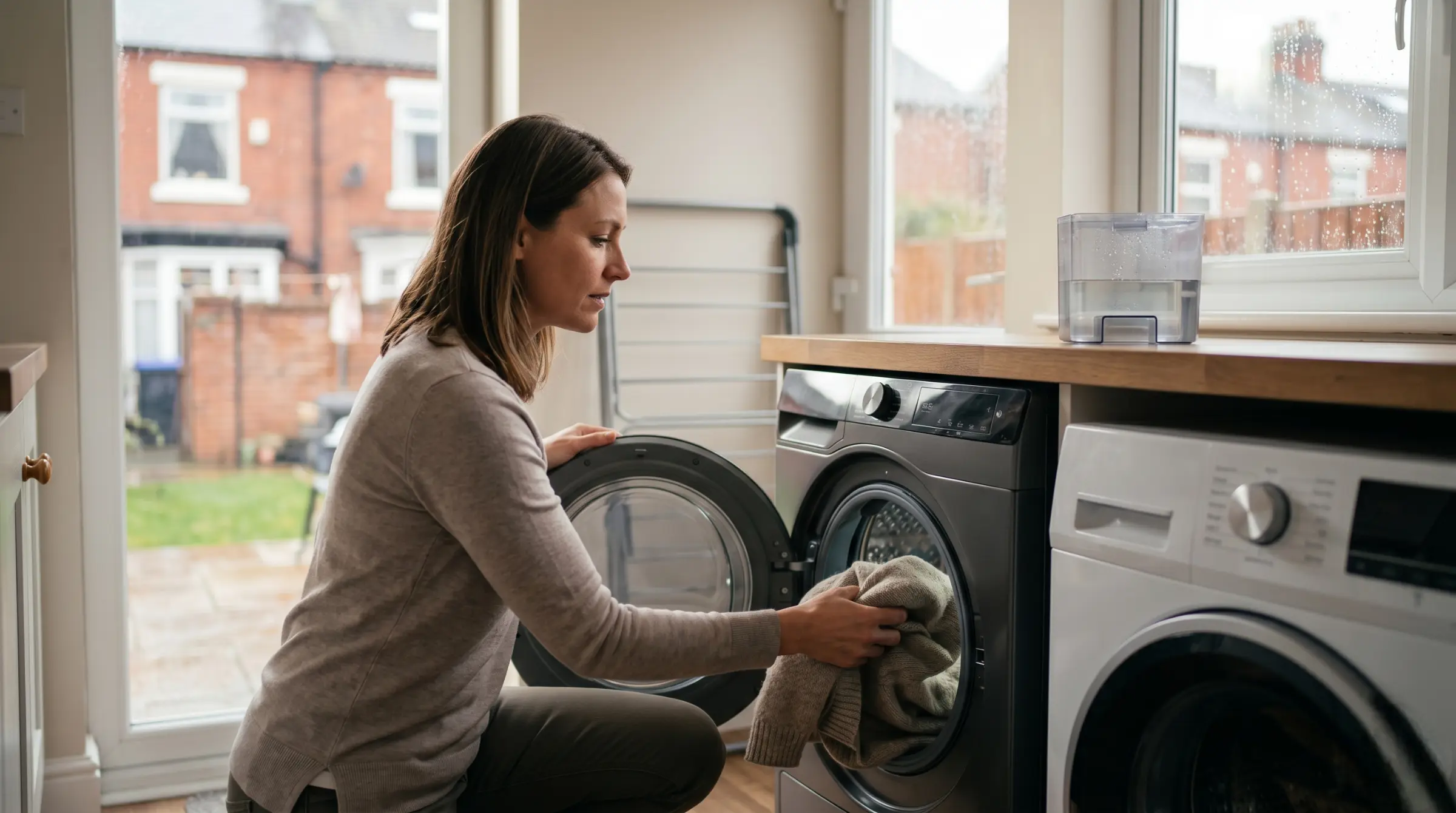
A heat pump tumble dryer is a highly energy-efficient appliance that uses a closed-loop system to dry clothes. Instead of venting hot exhaust outdoors, it recycles the warm air, extracting moisture into a built-in condensation tank. By operating at lower temperatures, it significantly reduces electricity usage and protects delicate fabrics.
Key Takeaways
- Runs on roughly £51 per year compared to £130 for traditional condenser models.
- Operates ventlessly, allowing installation anywhere indoors.
- Uses a closed-loop system at 50°C, lowering thermal stress on fabrics.
- Requires a higher initial purchase price (starting around £350).
- Drying cycles take inherently longer than conventional machines.
Quick Start: Pre-Purchase Evaluation
Before you buy, ask yourself these four simple questions:
- [ ] Do I have the upfront budget (basic models start around £350) for the initial purchase?
- [ ] Can my household routine accommodate slightly longer drying cycles?
- [ ] Do I need an appliance that operates without an external wall vent?
- [ ] Will the machine be placed in a room that stays above 10°C year-round?
How Does A Heat Pump Tumble Dryer Work?
To understand the savings, you need to look inside the machine. Traditional dryers pull in cold air, heat it, blast your clothes, and dump the hot air outside. It is incredibly wasteful. Heat pump technology changes the game entirely.
As the Energy Saving Trust (2026) states: “Electric heat pump tumble dryers are more efficient again. These recycle the heat from the ventilation tube back into the dryer.”
The Closed-Loop System Explained
Think of it like a refrigerator working in reverse. The appliance uses a closed-loop heat exchange system. It continuously circulates hot air to evaporate and extract moisture from your wet laundry.
The damp air is then cooled. This forces the water to condense, dripping neatly into a built-in collection tank. The remaining dry air is reheated and sent right back into the drum. This constant recycling is why your bills drop. You aren’t paying to heat fresh air every single minute. You can verify how this impacts your household budget by checking the current UK energy price cap data.
This system also changes how your clothes feel. Heat pump dryers operate at a lower maximum temperature of roughly 50°C, making them gentler on fabrics compared to the 70°C+ of traditional dryers (HomeServe, 2021). Less heat means less shrinkage. Your favourite jumper actually survives the winter.
Heat Pump vs Condenser vs Vented Tumble Dryers
Shopping for a new dryer can be confusing. The market splits into three main categories. Each handles hot air and moisture differently.
Common mistake: Assuming a condenser dryer and a heat pump dryer are the same thing. While both collect water in a tank, a standard condenser still uses an old-fashioned, energy-hungry heating element. A heat pump does not.
Let’s compare the raw numbers.
| Dryer Type | Average Upfront Cost | Annual Running Cost (2026) | Vent Required? | Drying Speed |
| Heat Pump | £350 to £1,000+ | £51 | No | Slower |
| Condenser | £250 to £400 | £130 | No | Fast |
| Vented | £150 to £300 | Highest | Yes (Wall/Window) | Fastest |
The pattern is clear. Vented machines are cheap to buy but terrible to run. Heat pumps flip that math upside down.
The Pros and Cons of Heat Pump Technology
Before upgrading, you need to weigh the daily realities of the machine. The benefits heavily outweigh the negatives for most families. But you must understand the trade-offs.
The Benefits for UK Homes
The main attraction is your utility bill. “Heat pump dryers are far more energy-efficient and will only cost you £51 to run a year on average,” according to independent testing by Which? (2026). That is a staggering reduction compared to standard models.
They achieve top-tier energy ratings. A standard 8 kg condenser dryer typically consumes around 561 kWh per annum, while an 8 kg A+ heat pump dryer consumes only about 265 kWh per annum (Beko UK, 2025). The environmental impact is drastically lower. The financial impact is immediate.
The Drawbacks to Consider
There is a catch. Drying cycles take noticeably longer. Because the machine relies on a gentle 50°C heat rather than blasting fabrics with 70°C+ air, you will wait longer for your laundry to finish.
Pro Tip: Spin your laundry on the maximum speed setting in your washing machine before transferring it to the dryer. This extracts excess water mechanically, offsetting the inherently slower heat pump drying times.
The Hidden Costs and Maintenance Requirements
Heat pump technology relies entirely on flawless airflow. If the air cannot circulate, the heat exchange fails. Your A+++ energy rating will vanish if you ignore maintenance.
- Clean the primary lint filter after every single cycle. Do not skip this. A blocked filter forces the motor to work harder.
- Vacuum the secondary bottom heat exchanger monthly. Many users ignore this hidden grille. Dust build-up here drastically increases energy consumption and extends drying times.
- Empty the built-in water reservoir promptly. If the tank fills mid-cycle, the machine’s sensors will halt the program, leaving you with damp clothes.
Mid-Article Summary:
- Heat pump technology is a long-term investment: high initial cost, remarkably low running cost.
- Strict maintenance is non-negotiable for preserving energy efficiency.
- Lower temperatures mean your clothes last much longer, though cycles take more time.
Where Should You Put Your Heat Pump Dryer? (The Cold Garage Trap)
You do not need a vent. This changes everything about where you can put your appliance.
Typical scenario example: A renter in a flat without external wall access desperately needs a drying solution. Because a heat pump dryer condenses moisture into a built-in tank and does not expel damp exhaust air, they safely install the unit in an unvented internal hallway cupboard. They avoid causing condensation or mould issues entirely.
You can learn more about the health impacts of dampness by reviewing official managing indoor condensation guidance. However, you must be careful with placement.
Because these machines extract ambient heat from the room to function, putting them in an unheated UK outbuilding or cold garage during winter is a massive mistake. Operating them in near-freezing temperatures slows the closed-loop heat exchange process to a crawl. Always check the manufacturer guidelines before installing a model in an unheated space.
Are They Worth the Initial Investment in 2026?
Yes. The maths firmly support the upgrade. You just need to calculate your specific break-even point.
Typical scenario example: A UK household upgrades from an aging vented dryer to an A+++ heat pump model. Despite the higher £600 initial purchase price, their annual running costs drop from £130 to £51. Over the appliance’s lifespan, they save enough on electricity to fully offset the premium price tag. Plus, they notice significantly less shrinkage in their clothing.
To see if this works for you, use this simple calculation method. Check official appliance energy ratings explained resources if you need help finding your exact model specs.
Step-by-Step Method: Calculating Your ROI (Return on Investment)
- Step 1: Identify the upfront purchase price of your chosen heat pump model (e.g., £550).
- Step 2: Identify the upfront purchase price of a standard condenser model (e.g., £250). Calculate the difference (a £300 premium).
- Step 3: Note the average annual running cost savings. An average condenser costs £130/year and a heat pump costs £51/year, resulting in a £79 annual saving.
- Step 4: Divide the price premium from Step 2 by the annual savings from Step 3 (£300 ÷ £79). It will take roughly 3.8 years for the heat pump dryer to pay for itself in energy savings alone.
End Summary
The transition away from vented and standard condenser dryers is entirely justified by the numbers. While the initial outlay is steeper, the mathematics firmly support heat pump tumble dryers as the superior choice for long-term household budgeting and fabric longevity. They protect your clothes. They protect your wallet.
Next Steps:
- Calculate your household’s specific ROI using the formula provided above.
- Measure your intended indoor installation space, strictly avoiding unheated outbuildings.
- Compare entry-level A++ models against premium A+++ units to match your budget.
FAQs
Do heat pump tumble dryers need a vent pipe?
No. They use a closed-loop system that condenses moisture into a built-in water tank, meaning no external wall vent or exhaust hose is required.
How long does a heat pump dryer take to dry clothes?
They take longer than standard dryers. Because they operate at a gentle 50°C to protect fabrics and save energy, cycles can take anywhere from 1.5 to 3 hours depending on the load size and fabric type.
Are heat pump dryers cheaper to run?
Yes, significantly. Under the April 2026 UK energy price cap, they cost an average of £51 per year to run, compared to £130 for a standard condenser dryer.
Can I put a heat pump tumble dryer in a cold garage?
It is highly discouraged. Heat pump dryers rely on the ambient temperature of the room to operate efficiently. Placing them in a near-freezing UK garage during winter will drastically extend drying times and reduce their efficiency.
Do heat pump dryers cause condensation in the room?
No. Because they condense the extracted moisture directly into an internal reservoir rather than venting hot, damp air into the room, they do not cause wall condensation or mould.
Why is my heat pump dryer not drying my clothes?
This is usually caused by restricted airflow. If you fail to clean the primary lint filter or the secondary bottom heat exchanger, the machine cannot circulate hot air. Alternatively, mixing heavy wet towels with light synthetics confuses the moisture sensors.
What is the lifespan of a heat pump tumble dryer?
With proper maintenance, including rigorous filter cleaning, a high-quality unit should last between 10 to 15 years, giving you plenty of time to recoup the higher initial purchase cost through energy savings.
About the Author