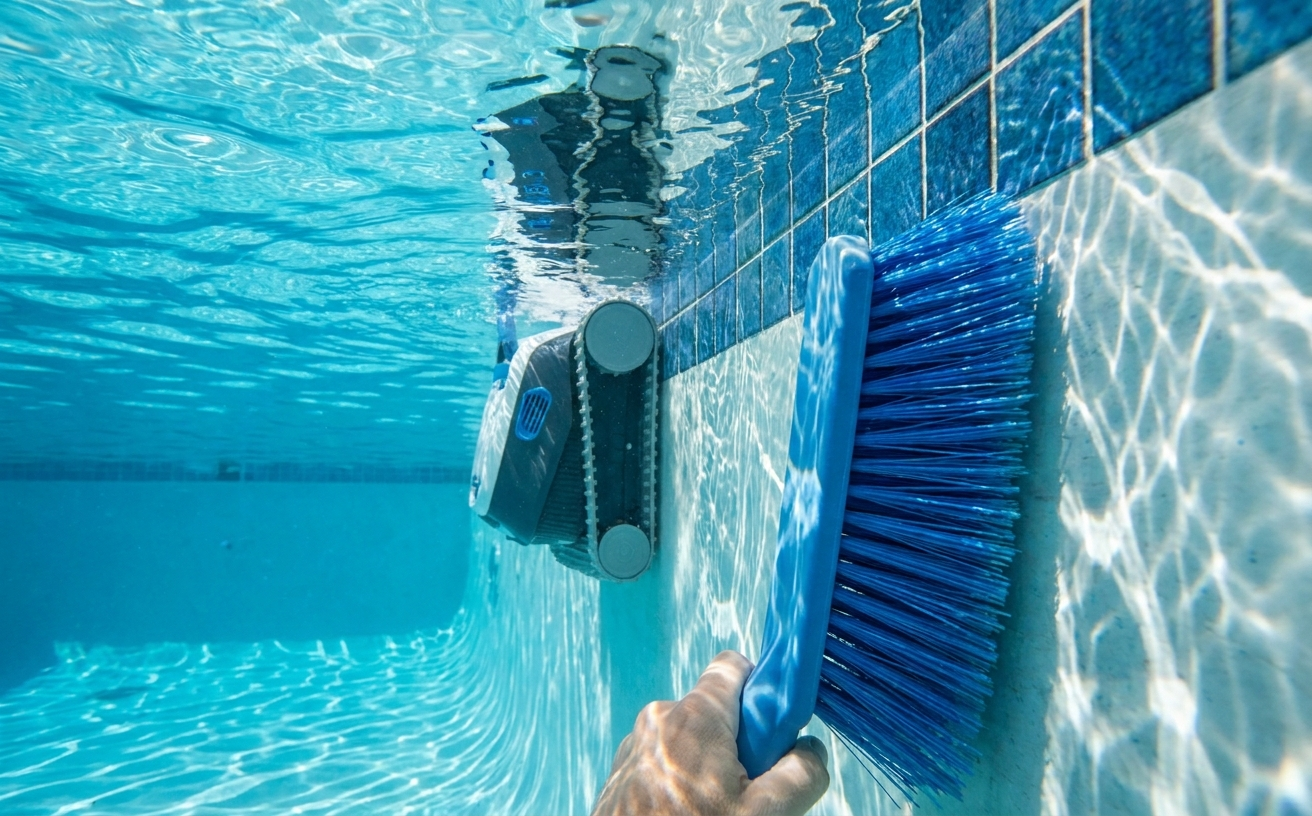
Brushing is the most physically demanding part of pool maintenance. It requires sustained effort against a surface that resists your stroke, in water that resists your movement, while standing on wet concrete in the sun. It is no surprise that pool owners want to believe a machine can do it for them.
The answer is not a simple yes or no. Machines can brush, but the brushing they do and the brushing you do are different in ways that matter for water quality and surface longevity. Understanding the difference helps you decide where to invest your effort and where to trust the machine.
What Manual Brushing Actually Does
When you brush a pool wall, you are doing three things simultaneously. You are removing visible debris and biofilm from the surface. You are disrupting the initial stage of algae attachment before it becomes visible. And you are agitating the water along the wall surface, which brings contaminants into suspension where the filter can capture them.
The pressure you apply with a manual brush varies naturally based on the angle, the contour of the wall, and the resistance you feel. You instinctively press harder where the surface feels slick, which is where biofilm or early algae is forming. You spend more time on the areas that need more attention.
Manual brushing also allows you to target specific areas that you know are problem zones. The shaded corner that grows algae first. The area behind the ladder where circulation is poor. The waterline where oils accumulate. You direct your effort where it matters most.
What Machine Brushing Does
A robotic pool cleaner with active scrubbing brushes contacts the wall surface as it climbs. The brushes rotate continuously, scrubbing the surface with consistent pressure and speed. The scrubbing action removes loose debris and thin biofilm effectively.
The consistency is both a strength and a limitation. The machine applies the same pressure everywhere, regardless of whether the surface needs heavy scrubbing or light cleaning. It cannot sense that a particular area needs more attention and adjust its effort accordingly.
The scrubbing action is also limited by the weight and traction of the machine. A heavy cleaner with good traction and aggressive brushes scrubs more effectively than a lightweight model that slides along the wall. The design of the brush material matters too: stiff bristles clean more aggressively but may be too harsh for delicate surfaces like vinyl liners.
Where the Machine Falls Short
The waterline is the most significant gap. No current robotic cleaner scrubs the waterline effectively, because the waterline sits at the air-water interface where the cleaner cannot maintain consistent contact. The cleaner either dives below the waterline or climbs above it and loses suction. The thin band of tile at the waterline remains a manual task.
Corners and tight curves are another weak point. The cleaner’s brushes are positioned along the bottom of the unit and scrub in a fixed pattern. When the unit encounters a tight corner, it may bounce off before the brushes have time to work the area. Manual brushing in corners is more thorough because you can hold the brush in place and work it into the angle.
Stubborn algae that has established beyond the initial attachment stage often requires the focused, high-pressure scrubbing that only a manual brush can provide. The machine will remove the surface layer, but the root structure embedded in the plaster or tile grout may survive and regrow within days.
Where the Machine Excels
Frequency is the machine’s primary advantage. Most pool owners brush once per week, sometimes less. A cleaner that runs two to three times per week scrubs the walls two to three times per week, which prevents biofilm from accumulating to the point where it requires aggressive manual intervention.
The preventative scrubbing that a machine provides is more valuable than most owners realize. Algae attachment is a progressive process. It takes three to five days for airborne spores to establish a visible colony on a pool wall. Regular machine scrubbing disrupts this process at the attachment stage, before it becomes visible and before it requires manual brushing to resolve.
The result is that manual brushing becomes less necessary over time when a machine is running regularly. Not unnecessary, but less necessary. The interval between manual brushings stretches from weekly to every two or three weeks, and the effort required per session decreases because there is less buildup to remove.
The Practical Combination
The most effective approach combines machine and manual brushing. Run the cleaner two to three times per week for preventative maintenance. Brush the waterline manually every two weeks. Brush the full walls manually once per month, or more frequently during algae season.
This combination reduces total manual brushing time by roughly sixty to seventy percent compared to manual brushing alone, while maintaining better overall wall cleanliness than either method achieves independently. The machine handles the routine. You handle the details it misses.
The honest answer to whether a machine can replace your brush is this: it replaces most of your brush work, but not all of it. The machine handles the volume — the regular, repetitive scrubbing that prevents problems from developing. You handle the precision — the targeted work at the waterline, in the corners, and on stubborn spots that the machine cannot reach or resolve. Together, they are more effective than either one alone.
About the Author