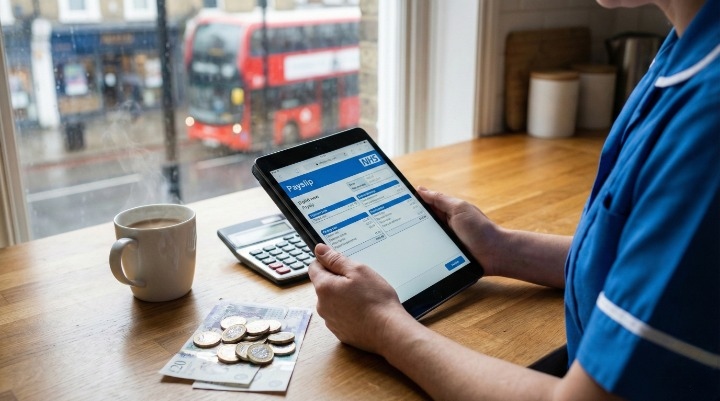
MTD for Income Tax April 2026: [Hidden] £50k Traps to Avoid
Imagine hitting ‘submit’ on your January 2026 Self Assessment tax return. You breathe a sigh of relief. Then you notice your gross income figure. Without realising it, that specific number just legally bound you to the MTD for Income Tax April 2026 mandate. This is a common scenario facing thousands of UK sole traders and landlords.
Making Tax Digital for Income Tax (MTD for ITSA) becomes mandatory on 6 April 2026 for sole traders and landlords with a combined annual qualifying income over £50,000. You must keep digital records and submit quarterly updates to HMRC using compatible software, rather than filing a single annual return.
Key Takeaways
- The April 2026 rollout strictly applies to those earning over £50,000 in combined gross property and trading income.
- Eligibility depends entirely on the figures reported in your 2024/25 tax return, which is due by 31 January 2026.
- Taxpayers must replace the traditional annual return with four quarterly updates and one final end-of-year declaration.
What is MTD for Income Tax (MTD for ITSA)?
For decades, the UK tax system relied on a yearly look-back approach. You traded for a year, tallied your receipts, and filed a Self Assessment months later. Making Tax Digital for Income Tax rips up that old model. It requires business owners to manage their tax affairs closer to real time.
Instead of handing a box of paper receipts to an accountant once a year, you will use approved software to track daily transactions. The government introduced this initiative to reduce recording errors and close the national tax gap. HM Revenue & Customs official guidance on MTD for ITSA confirms that keeping digital records is now a strict statutory requirement for eligible individuals.
The Critical Difference: MTD for VAT vs. MTD for Income Tax
Many business owners mistakenly believe they are already fully compliant. They assume that because they use software for their quarterly VAT returns, they have ticked the MTD box. This is a dangerous assumption. MTD for VAT and MTD for Income Tax are separate legal frameworks with completely different reporting thresholds and deadlines.
Expert Tip: Using software to file your VAT does not automatically make you compliant for Income Tax. You must actively register for MTD for ITSA separately and ensure your chosen platform supports detailed Income Tax categorisation for sole traders.
The Official MTD for Income Tax Timeline & Deadlines
The government has delayed this rollout in the past, but the current timeline is set in stone. HMRC has structured a phased implementation to help smaller businesses adapt gradually. The exact dates depend entirely on your qualifying income.
| Implementation Date | Mandated Taxpayers | Qualifying Income Threshold |
| 6 April 2026 | Sole traders and landlords | Over £50,000 |
| 6 April 2027 | Sole traders and landlords | Over £30,000 |
| 6 April 2028 | Sole traders and landlords | Over £20,000 |
Note: The government will announce the mandated timeline for partnerships and limited companies at a later date.
Quarterly Update Deadlines Explained
Under the new rules, the annual tax return disappears for those in scope. Instead, you must submit regular summaries of your business income and expenses. These submissions do not include complex accounting adjustments or actual tax payments. They simply provide HMRC with a digital audit trail of your cash flow.
For a standard tax year, your mandatory submission deadlines are:
- 7 August: Covering the period from 6 April to 5 July.
- 7 November: Covering the period from 6 July to 5 October.
- 7 February: Covering the period from 6 October to 5 January.
- 7 May: Covering the period from 6 January to 5 April.
After submitting these four updates, you must provide a final end-of-year declaration. This completely replaces the traditional Self Assessment return and is due by 31 January following the end of the tax year.
Are You in Scope? Calculating Your ‘Qualifying Income’
The most common point of confusion is how HMRC defines your income threshold. The £50,000 threshold refers entirely to your gross qualifying income. That is your total sales or rental income before you deduct any business expenses. If your gross turnover is £52,000 but your net profit is only £18,000, you are still legally required to comply with the April 2026 mandate.
Eligibility relies on the figures reported in your 2024/25 Self Assessment tax return. You must submit this return by 31 January 2026. According to the Association of Taxation Technicians guidance on MTD for ITSA, this specific tax year acts as the legal trigger.
Decision Checklist: Calculating Your Qualifying Income
- Include: Gross income from self-employment (sole trader turnover).
- Include: Gross income from UK property rentals (including furnished holiday lets).
- Exclude: Income from PAYE employment.
- Exclude: Dividend income from limited companies.
- Exclude: Savings interest or pension income.
Result: If your combined ‘Included’ figures exceed £50,000 for the 2024/25 tax year, you must register for MTD for ITSA by 6 April 2026.
4 Proven Steps to Prepare for April 2026
Waiting until March 2026 to change your accounting habits will cause unnecessary stress. You should begin adjusting your bookkeeping practices now. Follow these four practical steps to ensure a smooth transition.
- Assess your 2024/25 gross income. Monitor your turnover carefully. If you project your combined trading and property income will cross the £50,000 mark, start planning for digital compliance immediately.
- Separate business and personal finances. Do not use a single bank account for everything.
Pro-Tip: Open a dedicated business bank account right now. Mixing personal groceries with business expenses makes digital quarterly reporting incredibly messy. Clean bank feeds are the secret to stress-free MTD compliance.
- Choose compatible software. You cannot use a paper ledger. You must select software from the official HMRC list of approved vendors.
- Register for your Government Gateway ID. You need an active set of credentials to authorise your chosen software to communicate directly with HMRC systems. You can set up your Government Gateway account online in a few minutes.
Choosing the Right MTD Software: Cloud vs Bridging
HMRC does not provide its own software for quarterly updates. You must use commercial software that integrates directly with their systems via an Application Programming Interface (API). You have two primary routes: full cloud accounting or bridging software.
Full Cloud Accounting Software (e.g., Xero, QuickBooks)
Cloud platforms manage your entire bookkeeping process. You connect your bank feed, and the software categorises your transactions automatically.
Pros:
- Automation: Reduces manual data entry by pulling transactions directly from your bank.
- Real-time insights: Provides a live dashboard of your tax liabilities and business health.
- Receipt capture: Many apps let you photograph receipts, storing digital copies securely.
Cons:
- Cost: Requires an ongoing monthly subscription fee.
- Learning curve: Adapting to a completely new system takes time and training.
Bridging Software for Spreadsheet Users
Many sole traders refuse to abandon their trusted Excel sheets. HMRC permits the use of spreadsheets, provided you use bridging software to submit the data. Bridging software takes the final totals from your spreadsheet and transmits them digitally to HMRC.
Pros:
- Familiarity: You can continue using your current spreadsheet templates.
- Cost-effective: Often cheaper than full cloud accounting packages. The Low Incomes Tax Reform Group guidelines on free MTD software highlight several low-cost or free bridging options.
Cons:
- Manual risk: You must still manually input data into your spreadsheet, increasing the chance of human error.
- No bank feeds: You miss out on the automated time-saving features of cloud platforms.
Can You Opt Out? Understanding “Digital Exclusion”
Some taxpayers simply cannot use computers or the internet. The government recognises this and offers a formal exemption known as digital exclusion.
If you meet specific criteria, you do not have to comply with MTD rules. As stated by HM Revenue & Customs digital exclusion rules, you can apply for an exemption if it is not practical for you to use software. Valid reasons include your age, a disability, or living in a remote location with poor broadband access. You must formally apply to HMRC for this exemption; you cannot simply ignore the mandate.
The Cost of Ignoring MTD: HMRC Penalty Points
HMRC is replacing the old system of immediate fines with a new points-based penalty system. This is designed to be more forgiving for occasional mistakes but penalises chronic late filing.
- Earning points: You receive one penalty point for every missed submission deadline, including the new quarterly updates.
- Reaching the threshold: If you accrue four points for quarterly submissions, HMRC issues an immediate financial penalty.
- Subsequent fines: Every late submission after hitting the threshold triggers another immediate fine until your compliance record improves.
- Late payment interest: Separate financial penalties still apply if you fail to pay your final tax bill by the 31 January deadline.
Conclusion & Next Steps
The April 2026 deadline shifts how millions report their income to HMRC. Preparation must begin well before the implementation date, as your 2024/25 income dictates your legal obligations. Assess your current gross income, review your bookkeeping processes, and test HMRC-approved software options today. If you feel overwhelmed by the transition, speak to a qualified UK tax accountant to handle the digital setup on your behalf.
FAQs
What is the MTD for Income Tax April 2026 deadline?
The mandate officially begins on 6 April 2026. The first quarterly update for that tax year will be due by 7 August 2026.
Does MTD apply to limited companies in 2026?
No. The April 2026 rollout strictly applies to sole traders and landlords. The timeline for partnerships and limited companies will be announced at a later date.
What counts as qualifying income for MTD?
Qualifying income is your combined gross income from self-employment and property rentals before any business expenses are deducted.
Can I still use spreadsheets for MTD?
Yes, you can keep records in spreadsheets. However, you must use HMRC-approved bridging software to submit your quarterly updates digitally.
What happens if I miss a quarterly update?
You will receive a penalty point. If you accumulate enough penalty points, you will face financial fines under the new HMRC points-based penalty system.
How do I apply for a digital exclusion exemption?
You must apply directly to HMRC by phone or post. You need to prove that age, disability, or a remote location makes it impractical for you to use computers or the internet.
Do landlords need to comply with MTD in 2026?
Yes. If your combined gross property and trading income exceeds £50,000 for the 2024/25 tax year, you must keep digital records and comply by April 2026.
About the Author