Scale and Polish: 2025 NHS Costs, Procedure Steps, & Patient Reality
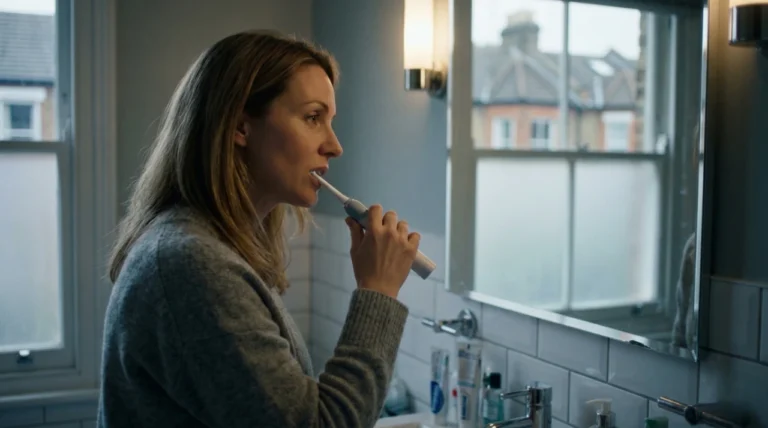
You brush twice a day. You floss when you remember. Yet, during your dental check-up, your dentist mentions those three dreaded words: “scale and polish.”
For over 50% of adults in the UK, gum disease is a silent, often painless reality. It starts with a bit of bleeding when you brush, a sign many ignore. But beneath the gumline, hardened bacteria are actively damaging the foundations of your teeth.
A scale and polish isn’t just a “fancy clean” or a cosmetic luxury. It is a vital medical intervention designed to stop gum disease in its tracks. However, confusion around NHS funding, upcoming 2025 price hikes, and anxiety about the procedure itself stops thousands of patients from booking this essential appointment.
This guide cuts through the noise. We will break down exactly what happens in the chair, the specific NHS Band 1 costs for 2025/26, and why this procedure is the best insurance policy for your smile.
What is a Scale and Polish? (Biofilm & Calculus Removal)
To understand why this treatment is necessary, you first need to understand the enemy: plaque and tartar.
Plaque is a sticky, colourless film of bacteria that constantly forms on your teeth. It’s what dentists call “biofilm.” When you eat sugary or starchy foods, these bacteria produce acids that attack tooth enamel. The good news? You can brush and floss plaque away at home.
The problem arises when plaque is missed.
Within 24 to 72 hours, unremoved plaque hardens into tartar (also known as calculus) by absorbing minerals from your saliva. Tartar is like cement. No amount of aggressive brushing will remove it. It provides a rough surface for even more plaque to stick to, creating a cycle of bacterial growth that irritates the gums and causes gingivitis.
A scale and polish is the professional removal of these deposits.
Plaque vs. Tartar: The Critical Difference
| Feature | Plaque | Tartar (Calculus) |
| Texture | Soft, sticky film | Hard, rock-like deposit |
| Visibility | Often invisible (unless thick) | Yellow or brown staining at gumline |
| Removal | Brushing and flossing | Professional dental scaling only |
| Primary Danger | Cavities and early gum irritation | Receding gums and bone loss |
2025/26 NHS Scale and Polish Costs in the UK
One of the most common questions patients ask is: “Do I have to pay private fees for a clean?”
Under the National Health Service (NHS), a scale and polish is available if your dentist deems it clinically necessary. This means if the health of your gums is at risk, the NHS must provide the treatment. It is not available on the NHS for purely cosmetic reasons (like removing coffee stains if your gums are healthy).
The Band 1 Breakdown
Dental treatments on the NHS are grouped into bands. A simple scale and polish falls under Band 1.
- Current Cost (Until March 31, 2025): The charge is £26.80.
- New Cost (From April 1, 2025): The charge is scheduled to rise to £27.40.
This single payment covers your examination, diagnosis (including X-rays if needed), and the scale and polish itself.
Important Note: If you visit a dental hygienist at a private practice, you are paying for their time, not a fixed NHS band. Private hygiene appointments typically range from £65 to £95 depending on the clinic and location. While more expensive, these appointments are often longer (20–30 minutes) compared to the shorter slots available in busy NHS lists.
[NHS Dental Charges 2025/26 – NHSBSA]
The Step-by-Step Procedure: What Actually Happens?
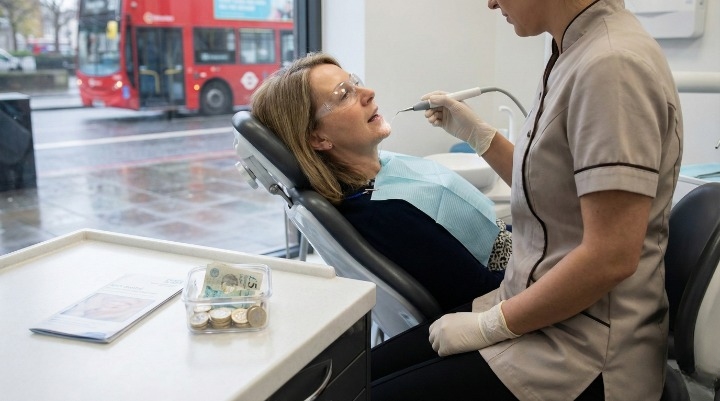
Anxiety often stems from the unknown. If you haven’t had a clean in years, the machinery can look intimidating. Here is a sensory walkthrough of exactly what you will feel, hear, and experience in the chair.
1. Ultrasonic Debridement (The Vibrating Scraper)
The first tool the clinician uses is usually an ultrasonic scaler.
- What it does: It uses high-frequency sound waves to vibrate the tip of the instrument. These vibrations shatter the hard tartar deposits.
- What you feel: You will feel a strong vibration against your teeth and a lot of water. The tip sprays a cool mist of water to flush away the debris and keep the tooth cool.
- The Sensation: It doesn’t “cut” anything. It feels like an intense electric toothbrush humming against the gumline. You might feel the occasional sharp sensation if the scaler touches a sensitive area of the gum, but this is fleeting.
2. Hand Instrumentation for Precision
After the ultrasonic does the heavy lifting, the dentist or hygienist switches to hand tools, often called Scalers or Curettes (like “Graceys”).
- What they do: These curved metal instruments are designed to fit perfectly around the neck of the tooth to remove smaller deposits and smooth the root surface.
- What you feel: You will feel pressure and a scraping sensation. This is the hallmark “scraping” sound that some patients dislike.
- Pro-Tip: If the scraping sound bothers you, bring noise-cancelling headphones. Most dentists are more than happy for you to listen to music or a podcast during this stage.
3. Professional Polishing & Air-Flow Technology
Once the teeth are smooth, it’s time to polish.
- What it does: The clinician uses a rotating rubber cup or brush loaded with prophylaxis paste.
- What you feel: This feels like a very gritty, sandy toothpaste being rubbed over your teeth. It removes extrinsic surface stains from tea, coffee, and red wine.
- Air-Flow Option: Some modern clinics use “Air-Flow” technology, a high-pressure jet of air, water, and bicarbonate powder. It feels like a cold, sandy power-wash for your teeth and is incredible for removing heavy staining without contact.
Why You Need It: The Oral-Systemic Health Link
It is easy to detach what happens in your mouth from the rest of your body, but modern medicine confirms they are deeply connected. A scale and polish does more than brighten your smile; it lowers systemic inflammation.
Preventing Periodontal Pockets
When tartar sits on the gumline, the gum pulls away from the tooth, creating a “pocket.” Bacteria fill this pocket, destroying the bone that holds the tooth in place. This is periodontitis. Once bone is lost, it does not grow back. Regular scaling cleans these pockets out before permanent damage occurs.
The Heart-Health Connection
According to research published in the Journal of Clinical Periodontology, there is a proven association between gum disease and cardiovascular issues. Bacteria from infected gums can enter the bloodstream, potentially contributing to the clotting that leads to heart attacks and strokes. By reducing the bacterial load in your mouth, you are essentially lowering the stress on your immune system.
Diabetes Management
The relationship goes both ways. Diabetics are at higher risk of gum disease, and severe gum disease can make blood sugar harder to control. Effective plaque control is now considered a key part of diabetes management protocols in the UK.
[Gum disease and heart health – British Heart Foundation]
Frequency: How Often Is “Often Enough”?
For decades, the standard advice was “see you in six months.” However, the National Institute for Health and Care Excellence (NICE) guidelines have shifted towards risk-based recall intervals.
Your dentist shouldn’t just guess; they should assess your risk.
- Low Risk (Excellent hygiene, no past gum disease): You may only need a scale and polish every 12 months.
- Moderate Risk (Some bleeding, history of fillings): The 6-month interval is still standard.
- High Risk (Smokers, diabetics, history of gum disease): You likely need a 3-month recall.
The Hygienist’s Truth: If your gums bleed when the hygienist cleans them, it is not because they are being “too rough.” It is because the gum tissue is inflamed (ulcerated) due to bacteria. The bleeding is the body’s way of telling you that you need more cleaning, not less.
Managing Sensitivity & Dental Anxiety
If the thought of a scaler makes you tense up, you are not alone. Sensitivity is the main barrier for many patients.
Topical Numbing Agents
You don’t always need a full injection. Ask your dentist for “numbing gel” (topical anaesthetic). They can rub this on your gums before they start scaling. It takes the edge off the sharp sensations without leaving you with a numb face for hours.
Desensitising Toothpaste
Start using a high-quality desensitising toothpaste (like Sensodyne or Colgate Pro-Relief) two weeks before your appointment. Rub a little bit of the paste directly onto the necks of your sensitive teeth before bed. This helps block the nerve pathways and makes the ultrasonic scaling much more tolerable.
Communication is Key
Agree on a “stop signal” with your clinician, usually raising your left hand. Knowing you have control over the procedure instantly lowers anxiety levels.
FAQs
Does a scale and polish hurt?
It can be uncomfortable, especially if your gums are inflamed or your teeth are sensitive. However, it should not be painful. If you feel sharp pain, inform your clinician immediately so they can adjust their technique or offer anaesthetic.
Is a scale and polish available on the NHS?
Yes, but only if it is clinically necessary to treat gum disease. You cannot demand a scale and polish on the NHS just to remove stains; that is considered cosmetic.
Can a scale and polish whiten my teeth?
It will remove surface stains (from coffee or smoking), which can make teeth appear whiter and brighter. However, it does not change the natural shade of your enamel. For that, you need professional teeth whitening.
Why are my teeth sensitive after scaling?
Removing the “blanket” of tartar can expose the tooth neck to air and cold temperatures. This sensitivity usually subsides within a few days. Using a fluoride mouthwash can help settle it.
How long does the procedure take?
A routine NHS scale and polish usually takes 10 to 15 minutes. Private hygiene appointments are typically longer (20 to 30 minutes) allowing for a deeper clean.
Can I eat and drink normally after the appointment?
Yes, you can eat immediately, though your teeth might feel a bit sensitive to very cold or hot drinks for a few hours. If you had a fluoride varnish applied, you might be asked to wait 30 minutes.
Is it worth paying for a private hygienist?
If you have heavy staining or advanced gum disease, a private hygienist has the time to do a more thorough job than a quick NHS clean. They also often have access to advanced equipment like Air-Flow.
Conclusion
A scale and polish is far more than a “beauty treatment” for your teeth. It is a fundamental maintenance check for the machinery of your mouth.
By removing the tartar that your toothbrush cannot shift, you are protecting yourself from bone loss, tooth mobility, and systemic health issues. Whether you opt for the £27.40 NHS Band 1 treatment (price effective April 2025) or invest in a private session, the cost is minimal compared to the price of losing a tooth.
Your Next Step: Check your calendar. When was your last professional clean? If it has been more than six months, or if you notice bleeding when you floss, call your local practice today. Ask specifically about your “BPE score” (Basic Periodontal Examination), it’s the quickest way to know exactly where your gum health stands.
About the Author