Snow and Ice Warning UK: Expert Safety Guide for the February 2026 Cold Snap
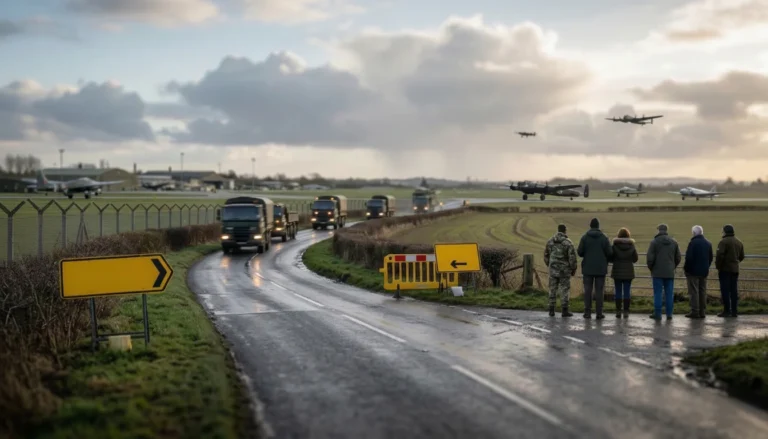
On the morning of February 13, 2026, drivers on the A66 between Bowes and Brough faced a sudden reality check. What started as a standard winter forecast quickly turned into a “concentrated snowfall” event, forcing National Highways to close the trans-Pennine route completely.
This isn’t just about a bit of bad weather. With a snow and ice warning UK wide, the Met Office and UK Health Security Agency (UKHSA) have activated protocols that affect everything from your morning commute to how you should heat your home.
If you are reading this, you likely need to know if it is safe to drive, how to prepare your vehicle, or how to keep vulnerable family members safe during this “Half-Term Freeze.” This guide breaks down the official Met Office impact matrix, explains the current health alerts, and provides a professional driver’s manual for navigating the ice.
Current UK Weather Warnings: What Do They Actually Mean?
When you see a weather app flash “Yellow Warning,” it is easy to dismiss it as routine. However, the system used by the Met Office, the National Severe Weather Warning Service (NSWWS), is more technical than most people realise. It relies on an Impact-Likelihood Matrix.
The Difference Between Yellow and Amber Snow Warnings
A warning colour isn’t just about how much snow falls; it is a calculation of risk.
- Yellow Warning: This often means “Medium Impact” but “Low Likelihood,” or “Low Impact” with “High Likelihood.” In the current February 2026 context, the Met Office has issued Yellow warnings for Northern England, Scotland, and parts of Wales. This signals likely travel delays, potential stranding of vehicles, and rural communities being cut off.
- Amber Warning: This escalates the threat. An Amber warning implies an increased likelihood of “Medium” to “High” impacts. This means rail cancellations are probable, power cuts are likely, and there is a potential risk to life and property.
Note: During this specific Arctic maritime event, the “blocking pattern” of high pressure over Scandinavia is keeping cold air trapped over the UK. This increases the chance of warnings upgrading rapidly from Yellow to Amber if the precipitation bands stall over one area.
Understanding the 2026 UKHSA Cold-Health Alerts
While the Met Office watches the sky, the UK Health Security Agency (UKHSA) watches the hospitals.
As of mid-February 2026, a Yellow Cold-Health Alert is active across Central and Northern England. Unlike the weather warning, this alert targets the NHS and social care sectors.
According to the UKHSA Adverse Weather and Health Plan (2025 update), a Yellow alert means the cold is severe enough to cause “significant impacts” on health and social care services. The risk isn’t just hypothermia; it is the “silent” surge in heart attacks and strokes caused by blood thickening in cold temperatures.
[Check current UKHSA Cold-Health Alert status]
Winter Travel Disruption: Navigating the February Half-Term Freeze
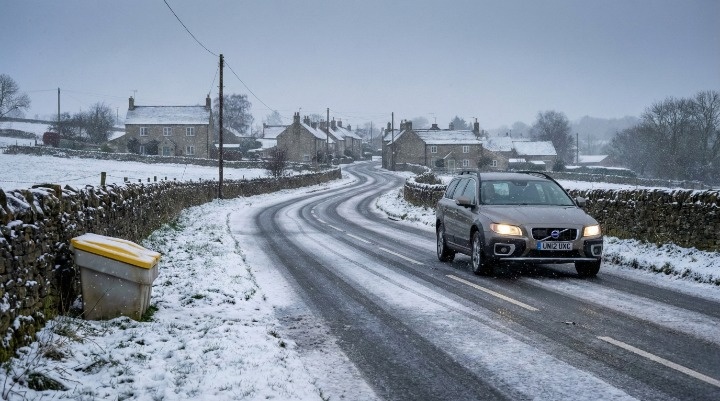
Driving in February 2026 presents a specific challenge: the “freeze-thaw” cycle. Snow melts during the day and refreezes overnight, creating invisible hazards.
Hazardous Roads: Lessons from the A66 Closure
The closure of the A66 on February 13 serves as a critical case study. The issue wasn’t just the depth of the snow (accumulations of 3–7cm above 150m), but the rate of fall combined with strong winds.
When snow and ice warning UK alerts are active, exposed routes like the M62, A66, and A9 become high-risk zones. The wind chill freezes the road surface faster than gritters can sometimes treat it, rendering standard winter tyres less effective if you drive aggressively.
Essential Icy Roads Safety for UK Motorists
If you must travel, forget how you drive in the rain. Ice requires a completely different mechanical approach.
The “10x” Rule The Highway Code is clear: stopping distances on ice can be ten times longer than on dry roads. If you are driving at 70mph, your stopping distance is normally around 96 metres. On ice, that theoretical distance extends to nearly a kilometre. In reality, you simply won’t stop.
- Action: Drop your speed by half. Increase the gap to the car in front to at least 20 seconds.
My Pro-Tip: The Second-Gear Secret Wheel spin is your enemy. If you drive a manual car, do not pull away in first gear.
- The Technique: Select second gear. Lift the clutch slowly until you feel the bite point. This reduces the torque sent to the wheels, preventing them from spinning and polishing the ice beneath you.
- For automatic drivers, check if your car has a “Winter” (W) mode. If not, select a low gear manually (L or 2) to limit torque.
Handling “Black Ice” Black ice is transparent; you see the tarmac through it. If your steering suddenly feels “light” and silent, you are on ice.
- Do not brake.
- Do not steer suddenly.
- Lift off the accelerator gently and allow the car to lose speed naturally.
How to Prepare for Moderate Snow and Ice
Preparation prevents the panic of a breakdown in sub-zero temperatures. National Highways recommends the T.R.I.P protocol, updated for the 2025/26 winter season.
The 5-Minute Winter Car Check (The T.R.I.P Protocol)
- Top-up: Fuel, oil, and screen wash. Use a winter-grade screen wash concentrate effective down to -15°C. Water alone will freeze your jets, blinding you on the motorway.
- Rest: Fatigue kills. Plan your journey with breaks every two hours.
- Inspect: Check your tyres (see the test below) and wipers. If your wipers streak, replace them immediately.
- Prepare: Have your kit ready.
The 20p Tyre Test Tyres are your only contact with the road. The legal minimum tread is 1.6mm, but on snow, anything less than 3mm is dangerous.
- Take a 20p coin.
- Insert it into the main tread grooves.
- If you can see the outer band of the coin, your tread is too low. Get them changed immediately.
Electric Vehicles (EVs) in the Cold: Range and Charging Tips
If you drive an EV, the snow and ice warning UK affects you differently. Lithium-ion batteries lose efficiency in the cold.
- Range Anxiety: Expect a drop of 20–30% in range. Heating the cabin uses significant energy.Pre-Conditioning: While plugged in at home, set your departure time in the app. This warms the battery and cabin using mains electricity, preserving your range for the road.
- Charging Ports: Ice can freeze the locking pin on your charging port.
-
-
Tip: If the cable is stuck, do not force it. Use a warm (not hot) heat pack or gentle pressure to release the mechanism.
-
Protecting the Vulnerable: Home Safety & Health
Safety isn’t just about the roads. The UKHSA data indicates that most cold-weather hospital admissions happen due to conditions inside the home.
Why 18°C is the Magic Number for Indoor Heating
There is a scientific reason for the 18°C threshold.
- Below 18°C: Your blood begins to thicken (haemoconcentration) to conserve core heat.
- The Risk: Thick blood increases blood pressure and the risk of clotting, leading to heart attacks and strokes.
- The Advice: Keep your main living room at 18–21°C during the day and your bedroom at 18°C at night. If you have vulnerable neighbours, check they are maintaining this temperature.
Avoiding Slips and Falls on Untreated Pavements
Pavements are often the last to be gritted.
- Walk like a penguin: Keep your centre of gravity over your front leg. Take short, flat steps.
- Footwear: Wear boots with deep treads. Avoid smooth-soled shoes until you are indoors.
- Hands free: Keep your hands out of your pockets to help balance yourself if you slip.
FAQs
Is it a legal requirement to clear snow from your car roof in the UK?
Yes. While there isn’t a specific law stating “clear your roof,” driving with snow on it falls under “driving without due consideration” or “using a vehicle in a dangerous condition” (Section 40A of the Road Traffic Act 1988). If snow falls off and blinds a driver behind you, you can be fined £60 and receive 3 penalty points.
What is the fine for driving with obscured windows?
You must clear all windows, not just a “porthole” on the windscreen. Failure to do so can result in a fine of up to £2,500 and 3 penalty points.
Are schools closed during a Yellow snow warning?
Not automatically. Schools make individual risk assessments based on staff ratios and site safety. Always check your local council website or school app.
How do I report an ungritted road to the council?
Motorways are managed by National Highways (England) or Traffic Scotland. Local roads are managed by your local council. Most councils have a “Report It” page on their website specifically for winter maintenance requests.
Does car insurance cover accidents on Red warning days?
Generally, yes, comprehensive cover remains valid. However, if you drive recklessly or against explicit police instructions (e.g., passing a “Road Closed” sign), your insurer may refuse the claim due to negligence.
Can I pour hot water on my windscreen?
No. Never do this. The thermal shock can crack the glass instantly. Use a scraper and de-icer spray.
What should be in a winter emergency car kit?
At a minimum: a shovel, blanket, torch (wind-up or battery), high-vis vest, screen wash, food, water, and a phone charger.
How long do Met Office snow warnings usually last?
It varies. The current warnings for Feb 2026 are valid for 24–48 hours, but they are reviewed every morning. Always check the NSWWS updates before travel.
Conclusion
The current snow and ice warning UK alert for February 2026 is a reminder that our weather can change instantly. The forecast predicts accumulations of 10–15cm on high ground this weekend, but even 1cm on a busy motorway can cause gridlock.
Experience counts, but physics wins. No amount of driving skill can override the lack of friction on black ice. If you do not need to travel during an Amber warning, don’t. If you must, prepare your vehicle, respect the 10x stopping distance, and keep your home heated to protect your health.
Stay safe, keep your distance, and check the live Met Office app before you turn the key.
[Met Office Live Weather Warnings]
About the Author