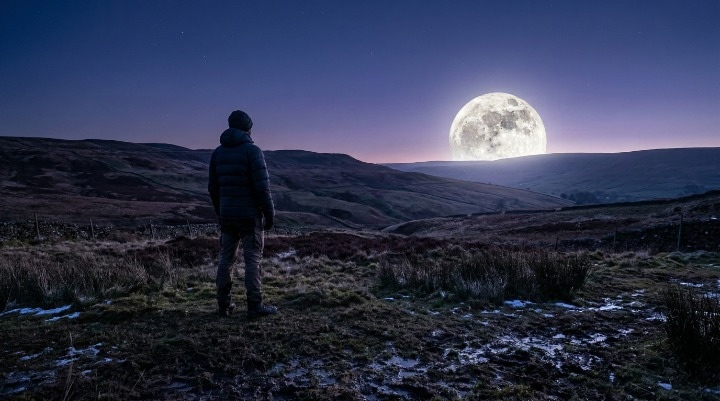
Full Moon March 2026: Exact UK Times and How to See the Worm Moon
As the long, dark days of the British winter finally begin to retreat, the March full moon signals the arrival of early spring. It is a welcome sight for UK stargazers looking for clearer, milder evenings.
This guide provides the exact UK timings for the March 2026 full moon, dispels common myths about the coinciding lunar eclipse, and offers practical advice to help you get the best view of the ‘Worm Moon’.
The next full moon in March 2026 will occur on Tuesday, 3 March 2026. In the UK, peak illumination happens during the day at exactly 11:38 AM GMT. For the best visual experience, UK stargazers should look to the skies on the evening of 2 March or 3 March just after sunset.
Key Takeaways
- Date and Time: The March 2026 full moon peaks on 3 March at 11:38 AM GMT.
- Best Viewing: Because the peak happens during daylight, plan to watch the moonrise on the evening of 2 or 3 March.
- The Name: Traditionally called the Worm Moon, named after the earthworm trails that appear as spring soil thaws.
- Eclipse Warning: A Total Lunar Eclipse happens simultaneously, but it will not be visible from the UK.
When is the March 2026 Full Moon in the UK?
Timing is everything when planning to observe lunar events. According to the Royal Museums Greenwich full moon calendar, the March full moon falls on Tuesday, 3 March 2026.
The exact moment of peak illumination is 11:38 AM GMT. Experts at BBC Sky at Night Magazine confirm this timing, though global astronomical trackers like Time and Date calculate it precisely at 11:37 AM GMT. Both timings mean the event peaks right in the middle of the British working day.
Why You Shouldn’t Wait for Peak Illumination
Because the moon reaches 100% illumination at 11:38 AM GMT, the sun will be high in the sky. You will not be able to see the full moon at its exact peak in the UK.
Expert Tip: To get the most striking view, do not wait for the exact peak time. Instead, head outside on the evening of 2 March or 3 March. Watching the moon rise just above the horizon creates a visual effect called the “moon illusion”, making it look significantly larger and brighter against the twilight sky.
Why is it Called the ‘Worm Moon’?
The most common colloquial name for the March full moon is the Worm Moon.
This title originates from Native American cultures. As Royal Museums Greenwich (2026) explains, the name refers to the earthworm trails that appear as the spring ground finally thaws. The return of these earthworms invites birds to feed, marking a clear biological shift from winter into early spring.
Alternative Names for the March Full Moon
While ‘Worm Moon’ is the most popular term today, various cultures use different names to describe this transitional time of year.
- Crow Moon: Named by some Northern Native American tribes because the cawing of crows signalled the end of winter.
- Crust Moon: Refers to the snow crust that forms when daytime thaws freeze again at night.
- Sap Moon: Marks the time of year when maple sap begins to flow.
- Lenten Moon: An Anglo-Saxon and European term. If the full moon falls before the March Equinox, it takes this traditional Christian fasting name.
If you want to read more about how the seasons impact our skies, check guide to [understanding the UK moon phase cycle and equinoxes].
Will the UK See the March 2026 Total Lunar Eclipse?
A Total Lunar Eclipse (often referred to as a Blood Moon) will coincide with the 3 March 2026 full moon. However, if you are planning to watch this from the UK, you need to manage your expectations.
What to Avoid: Do not stay up late or set an alarm expecting to see a Blood Moon. Because the eclipse happens simultaneously with peak illumination at 11:38 AM GMT, it will not be visible from the UK.
Space.com (2026) confirms that visibility for this specific lunar eclipse is primarily limited to North America. UK viewers will see a bright, standard full moon on the evenings before and after, but the eclipse itself will occur while the moon is below our horizon.
Expert Tips for Viewing and Photographing the Worm Moon in the UK
You do not need an expensive telescope to enjoy the March full moon, but a little preparation goes a long way.
Finding the Best Location (Dark Sky Reserves)
The UK suffers from significant light pollution in major cities. To see the moon and surrounding winter constellations clearly, try to visit a designated dark sky area.
Locations like the Brecon Beacons, Exmoor, or the South Downs offer excellent visibility. You can find your nearest protected area via the UK National Parks Dark Skies map.
Managing Unpredictable British Spring Weather
March weather in the UK is notoriously changeable. Heavy cloud cover can easily ruin a viewing attempt.
Check local weather apps specifically for cloud cover percentages rather than just rain. The best viewing window usually occurs during astronomical twilight, just after the sun has completely set, provided the sky remains clear.
A 3-Step Checklist for Smartphone Lunar Photography
Capturing the moon on a standard smartphone often results in a blurry white dot. Follow this quick checklist to improve your results:
- Use a tripod or steady surface: Stability is essential. Even a slight hand tremor will blur a bright object against a dark background.
- Lower the exposure manually: Tap the moon on your screen to focus, then drag the sun icon down to reduce the brightness. This reveals the craters rather than blowing out the light.
- Shoot during moonrise: Photographing the moon as it sits near the horizon allows you to include trees or buildings in the frame, providing scale and making the moon appear larger.
What’s the Next Full Moon After March?
Once the Worm Moon passes, the next major lunar event is the April Pink Moon. This marks deeper progress into spring. If you want to plan ahead for the rest of the year, save [complete 2026 UK full moon calendar] to ensure you never miss a date.
Conclusion
The March 2026 full moon is a clear signal that the UK winter is finally ending. Remember that while the exact peak happens at 11:38 AM GMT on Tuesday, 3 March, your best visual experience will be watching the moonrise on the evening of the 2nd or the 3rd. While we miss out on the Total Lunar Eclipse this time, the Worm Moon remains a brilliant sight on a clear spring night.
Where are you planning to watch the moonrise? Let us know your favourite local viewing spots in the comments below.
FAQs
What time is the full moon in March 2026 UK?
The exact peak illumination occurs at 11:38 AM GMT on Tuesday, 3 March 2026. However, the best viewing times are the evenings of 2 March and 3 March.
Why is the March moon called a Worm Moon?
It originates from Native American traditions, referring to the earthworm trails that appear in the soil as the ground begins to thaw at the end of winter.
Is the March 2026 full moon a Supermoon?
No. A supermoon occurs when a full moon coincides with the moon’s closest approach to Earth (perigee). The March 2026 moon does not meet this criteria.
Will the Blood Moon eclipse be visible in London?
No. The Total Lunar Eclipse occurring on 3 March 2026 happens during daylight hours in the UK, making it invisible from London and the rest of the country.
How long does a full moon actually last?
Astronomically, a full moon is an exact moment (peak illumination). Visually, however, the moon appears full to the naked eye for about three days around this exact time.
What is a Lenten Moon?
It is an alternative, traditional Anglo-Saxon name for the March full moon, used specifically when the full moon occurs before the March Equinox.
Where is the best place in the UK to see the moon?
Any of the UK’s designated Dark Sky Reserves, such as Northumberland National Park or Snowdonia, offer the best views away from city light pollution.
About the Author