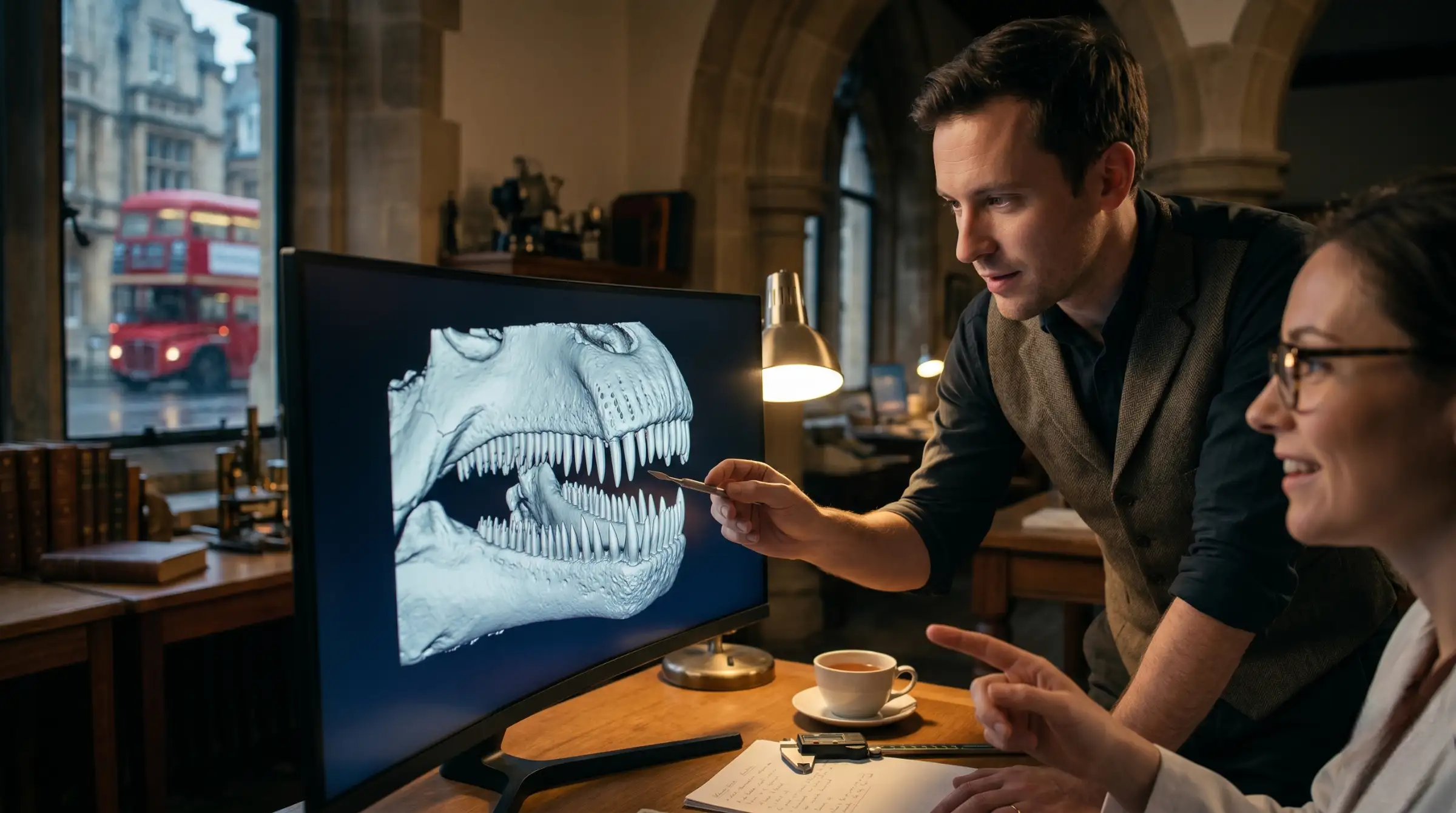
What Dinosaur Has 500 Teeth? The Science Behind the Meme
A viral internet search has everyone asking about prehistoric dentistry. People want the punchline to a joke. But the real answer is far better. Meet the Nigersaurus (pronounced NYE-jer-SORE-us). This strange creature moves past the online trend into actual science. It was an anatomical marvel. It literally treated its own teeth like an industrial conveyor belt.
The dinosaur that has 500 teeth is the Nigersaurus (Nigersaurus taqueti). Living over 100 million years ago, this plant-eating sauropod possessed a wide, straight-edged muzzle containing a complex dental battery. It continuously grew and replaced 500 small, needle-like teeth to survive a diet of low-lying, abrasive vegetation.
Key Takeaways
- The exact species is the Nigersaurus taqueti.
- It was a plant-eating sauropod from the middle Cretaceous period.
- Fossils place it in present-day Niger roughly 115 to 105 million years ago.
- Palaeontologists call it the “Mesozoic cow” because of its ground-level grazing habits.
- It replaced its front teeth every 14 days to fight rapid wear.
- The animal weighed roughly two tonnes and measured nine metres in length.
Quick Start: The Nigersaurus Fact-Checker
- Does it have 500 teeth? Yes. They sat tightly packed into a complex dental battery.
- Was it a carnivore? No. It was a plant-eating sauropod.
- Was it a giant dinosaur? Not exactly. It was relatively small for a sauropod at roughly nine metres long.
- Did it chew its food? No. It simply nipped low-lying plants and swallowed them whole.
Meet the Nigersaurus: The “Mesozoic Cow”
Why do scientists call a dinosaur a cow? The answer lies in how it ate. This beast grazed entirely on low-lying ferns and horsetails. It acted just like modern cattle. That is why experts often refer to it as the “Mesozoic cow”.
But do not let the farm animal nickname fool you. It was still a hefty creature. It weighed around two tonnes and stretched roughly nine metres in length. Picture a standard UK double-decker bus. The dinosaur was almost exactly that long.
Common mistake: People often assume all sauropods craned their necks high into the trees. Think of the famous Brachiosaurus. The Nigersaurus did the exact opposite. It kept its head permanently angled near the ground.
Habitat and Era
Where did this creature live? Its fossilised remains come from the Elrhaz Formation. You can find this rock unit in the modern-day Republic of Niger.
It lived during the Aptian to Albian stages of the middle Cretaceous period. That means it walked the earth roughly 115 to 105 million years ago. To put that in perspective for British readers, it lived around the same broad era as the famous Iguanodon. While the Iguanodon roamed the early Cretaceous environments of the Isle of Wight, the Nigersaurus was busy vacuuming up plants in ancient Africa. [UK Early Cretaceous Dinosaurs]
The 500-Tooth Dental Battery Explained
The jaw of this dinosaur is genuinely bizarre. It featured a highly specialised, straight-edged muzzle. It worked quite literally like a vacuum cleaner. Inside that wide mouth sat the famous dental battery.
The upper jaw contained 60 columns of small, needle-shaped teeth. The lower jaw held 68 columns. All 500 teeth sat packed tightly at the very front of the mouth. They were not built for heavy grinding. As palaeontologist Paul Sereno notes, its mouth appears designed for “nipping rather than chomping”.
The 14-Day Tooth Conveyor Belt
How did it maintain so many teeth? The system was a marvel of biological engineering. Eating dirt and tough ferns ruins tooth enamel fast. The dinosaur needed a continuous supply.
- Continuous Growth: The teeth never stopped growing. Every single active tooth had up to seven replacement teeth stacked directly behind it inside the jaw bone.
- Rapid Wear: As the dinosaur scraped its broad jaw along the dirt, the front teeth wore down almost instantly.
- The 14-Day Cycle: It solved the wear problem with speed. The animal naturally shed and replaced every single front tooth approximately every 14 days.
- Metabolic Cost: Keeping this conveyor belt running required massive energy. It forced the animal to eat constantly.
Teachers often use this staggering replacement rate for classroom maths. If you take the 14-day replacement cycle and map it across the 128 active front teeth, you get incredible numbers. The dinosaur turned over roughly two full sets of active teeth every single month. It is a fantastic way to calculate the massive biological energy required to sustain a prehistoric grazing lifestyle.
Diet and Biology: Why Did It Need So Many Teeth?
Why develop 500 teeth in the first place? The answer is dirt.
Grazing on the ground means eating a lot of grit and sand. This constant grinding destroys tooth enamel fast. To survive this harsh diet, the animal hacked through low-lying vegetation with choppers like a lawn mower. That is how palaeontologist Paul Sereno famously described its eating habits.
It simply could not afford to run out of teeth. If it did, it would starve. This is why the massive dental battery was so necessary.
| Feature | Nigersaurus (Sauropod) | Tyrannosaurus Rex (Theropod) | Iguanodon (UK Ornithopod) |
| Diet | Low-lying ferns (Herbivore) | Meat (Carnivore) | Plants (Herbivore) |
| Tooth Count | ~500 | ~60 | ~100 |
| Function | Nipping / Vacuuming | Crushing bone | Chewing / Grinding |
[BBC Science Dinosaur Diets Guide]
Mid-Article Summary Box
- The Nigersaurus used a unique, vacuum-cleaner-like jaw to graze on ground-level plants.
- The 500 teeth were essential to survive the rapid wear caused by eating dirt and grit.
- Its continuous biological replacement system is unparalleled among similar prehistoric species.
Discovery and Digital Reconstruction
We have known about this dinosaur for a few decades. French palaeontologist Philippe Taquet discovered the first partial remains. He found them during expeditions between 1965 and 1972. However, it took years of later global expeditions to fully understand the animal.
The bones presented a massive challenge. Its skull was highly pneumatised. This means the bone was filled with air spaces to save weight. The structure was incredibly delicate. In fact, some areas of the skull bone were almost translucent. You could barely touch the fossils without breaking them.
So, scientists turned to technology. The Nigersaurus became one of the very first dinosaur skulls to be fully digitally reconstructed using CT scanning. This let experts look inside the jaw without damaging the remains. By scanning the jaw, they could see the replacement teeth stacked inside. As researcher Jeffrey Wilson Mantilla explained, counting those internal growth lines tells you exactly how old the teeth are.
Debunking the Viral Social Media Meme
If you found this page by typing a specific question into Google, you probably know the meme. The search term “what dinosaur has 500 teeth” frequently trends on social media platforms like Reddit and TikTok.
The internet often turns the dinosaur’s scientific name into an inappropriate phonetic joke. However, the true story is much more interesting than a cheap punchline. Educational sites see huge spikes in traffic from teenagers searching for the meme. The best result? Many stay to learn. They come for the viral joke but end up discovering the fascinating 3D CT scan data of a translucent, 100-million-year-old skull. Science wins in the end.
End Summary
The viral query “what dinosaur has 500 teeth” acts as a brilliant gateway into real science. Behind the meme sits the Nigersaurus. It was a nine-metre sauropod that mastered low-level grazing. It fought off tooth decay with a ruthless 14-day replacement cycle and possessed a fragile, air-filled skull that pushed the boundaries of modern CT scanning.
Next Steps:
- Explore the rich, diverse ecosystems of the middle Cretaceous period.
- Learn exactly how palaeontologists use medical CT scans to rebuild fragile fossil fragments.
- Discover the local dinosaurs that roamed the United Kingdom during the exact same geological era.
FAQs
Is the dinosaur with 500 teeth real?
Yes. The Nigersaurus was a very real, plant-eating sauropod that lived over 100 million years ago.
How do you pronounce Nigersaurus?
It is pronounced “NYE-jer-SORE-us”. It is named after the Republic of Niger, where its fossils were discovered.
Why did the Nigersaurus need 500 teeth?
It ate low-lying ferns covered in dirt and grit. This wore its teeth down quickly, requiring a constant biological supply of replacement teeth.
How big was the Nigersaurus compared to a human?
It was roughly nine metres long and weighed two tonnes. This makes it about the length of a standard double-decker bus.
Did the Nigersaurus live in the UK?
No. Its fossils have only been found in the Elrhaz Formation, located in the modern-day Republic of Niger in Africa.
Was the Nigersaurus a carnivore or herbivore?
It was strictly a herbivore. Its teeth were designed for nipping soft plants, not chewing meat.
Who discovered the Nigersaurus?
French palaeontologist Philippe Taquet discovered the first remains between 1965 and 1972. Paul Sereno later expanded the findings and reconstructed the skull.
About the Author