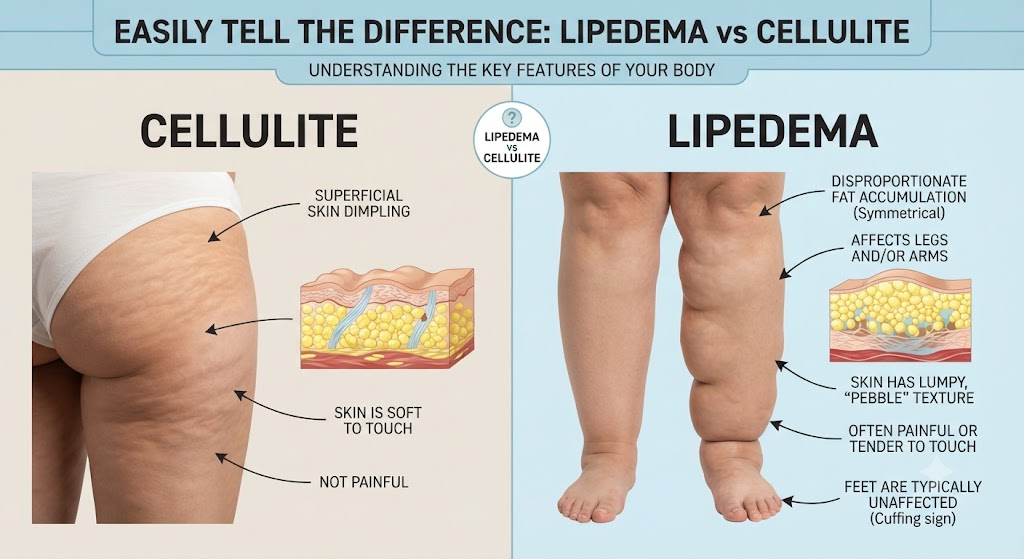
Have you ever looked at your legs and wondered what those bumps or lumps really are? It is so easy to mix up normal dimples on the skin with other body changes. When looking at Lipedema vs Cellulite, you might feel a bit lost. They can both make your legs or arms look a little uneven. But do you know what? They are very different on the inside and the outside. Knowing the facts helps you understand your body better. It also helps you talk to a doctor if you feel worried or sore. Cellulite is super common and just a normal part of having skin and soft tissue. On the other hand, lipedema vs cellulite shows us that fat disorders are much more complex and need a closer look. Let us break down everything in a super simple way so you can spot the clues yourself.
What is Cellulite Really Made Of?
Cellulite happens when tiny bands of connective tissue pull your skin down. At the same time, normal fat cells push up between those bands. This makes the top of your skin look bumpy, sort like an orange peel. Almost everyone gets it, no matter their size or how active they are. When we study lipedema vs cellulite, we see cellulite is just surface stuff. It does not hurt when you press it. It mostly shows up on your thighs, hips, and bottom. Hormones, genes, and diet can play a big part in why you have it. You can see it more when you pinch the skin. It is totally harmless and does not grow or spread into a medical issue. People often try dry brushing or creams, but the dimples usually stay put. It is just how human skin is built, and it is nothing to stress about at all.
What is Lipedema?
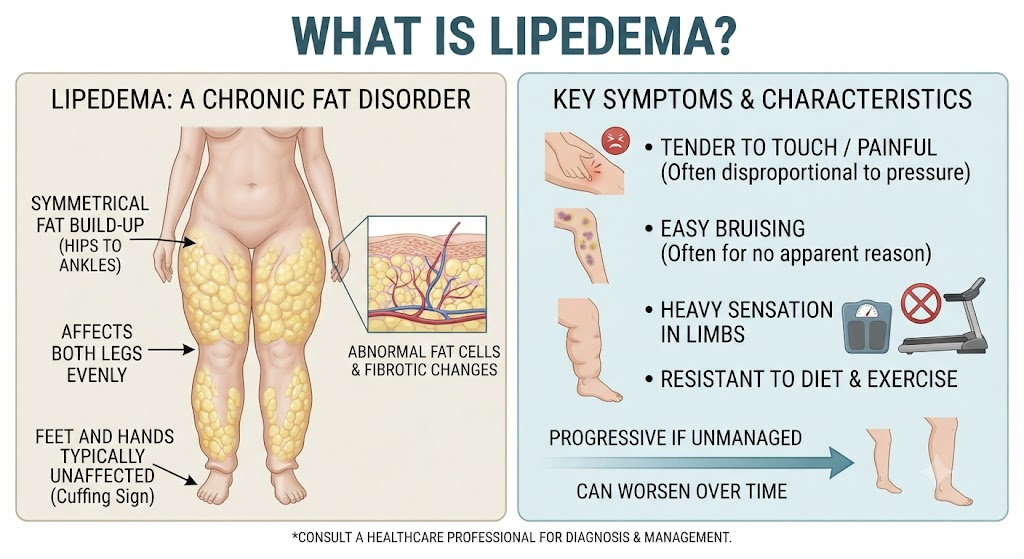
Lipedema is a real medical condition that causes abnormal fat to build up. When thinking about lipedema vs cellulite, this one is a chronic fat disorder. It usually affects both legs evenly, from the hips down to the ankles. Sometimes it hits the arms too, but it almost always spares the hands and feet. This creates a kind of cuff or shelf look right at the ankle. The fat feels different than regular body fat. It might feel tender, heavy, or painful when you press on it. Bruises can pop up on your legs for no clear reason at all. Diet and exercise will not make this special fat go away. It is important to know about lipedema vs cellulite because lipedema can get worse over time if no one helps you manage it.
Spotting the Pain Factor
Pain is a huge clue when you compare lipedema vs cellulite. Normal cellulite does not hurt when you touch your skin. You can poke it, squeeze it, or massage it without feeling a sharp ache. If you have lipedema vs cellulite, pain changes the whole picture. Lipedema tissue hurts a lot. Even a light brush against a table or a gentle hug from tight pants can feel sore. Your legs might feel heavy like they are carrying wet concrete all day long. This deep ache happens because the extra fat presses on tiny nerves and blood vessels under the skin. If your legs hurt every day and feel heavy, that goes way beyond normal skin dimples. Listening to your body is key here. Pain is a clear warning sign that your skin is dealing with a deeper medical issue.
Where the Fat Shows Up
Location matters so much when looking at lipedema vs cellulite. Cellulite can pop up in just one spot, like the back of your left thigh or your hip. It is patchy and uneven. When we look at lipedema vs cellulite patterns, lipedema is symmetrical. This means it happens on both sides of your body in the exact same way. If your left leg is bigger, your right leg is usually bigger too, matching it closely. Plus, lipedema stops right at the wrist or the ankle. You get a sudden drop where the normal skin of your foot or hand starts. Cellulite does not care about borders and can show up anywhere fat lives. Checking the shape and symmetry helps you figure out which one is hanging out on your body.
How Bruising Tells a Story
Do you bruise like a peach? That is another big hint in the lipedema vs cellulite puzzle. Cellulite does not make your skin turn blue or purple easily. If you bump into a chair, you might get a normal tiny mark, but nothing wild. With lipedema vs cellulite, bruising happens all the time. People with lipedema get huge purple marks just from a tiny bump they do not even remember getting. The tiny blood vessels in the abnormal fat tissue are super fragile. They break open easily under the skin. If you look down and see mysterious bruises on your thighs every single week, your body is waving a red flag. This high bruising rate is a classic sign of the fat disorder rather than normal skin dimpling.
Comparing the Texture
Texture gives away the secret game of lipedema vs cellulite. Cellulite feels soft and dimpled, like a quilted blanket. You can smooth the skin out a bit if you stretch it. When we compare lipedema vs cellulite textures, lipedema feels firm, nodular, and rubbery. You might feel tiny rice grain lumps or bigger walnut lumps deep under the skin. The skin does not feel smooth at all. It feels thick, cool to the touch, and tight. Pressing into it feels like pushing into a dense sponge that does not want to give way. This unique feel comes from trapped fluid and changed tissue fibers. Knowing this texture difference stops you from guessing and helps you understand what is going on beneath the surface.
How Diet and Exercise Affect Each
Diet changes your whole body, but it treats lipedema vs cellulite differently. If you lose weight, cellulite might soften up because the fat cells shrink a little bit. When looking at lipedema vs cellulite during weight loss, the upper body might get super thin, but the legs stay the exact same size. Lipedema fat does not respond to a calorie deficit or running miles on a track. This can feel so frustrating and lonely for anyone trying to fix their legs. People might think you are not trying hard enough, but your body is fighting a different battle. Knowing this truth brings so much relief. You realize it is not your fault that the leg shape stays the same no matter how healthy your salad is.
Why Early Diagnosis Matters
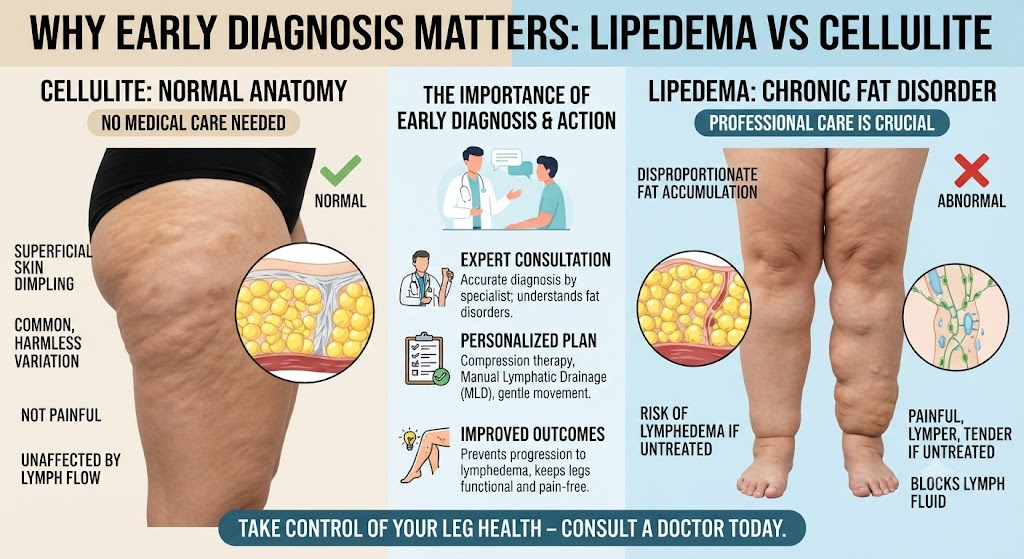
Catching things early changes everything in lipedema vs cellulite care. Cellulite needs no medical care at all since it is just normal anatomy. But lipedema vs cellulite needs professional eyes if pain is involved. Left alone, lipedema can block your lymph fluid and turn into lymphedema, making the legs swell even more. Doctors can measure your limbs and check your medical history. Early steps like wearing compression garments, doing special massage, and moving gently can keep your legs feeling light and strong. Finding a doctor who actually knows about fat disorders is a huge win. You deserve answers that make sense and a plan that keeps you moving through your day without pain.
Conclusion
Taking care of your legs makes life so much brighter. Whether you deal with lipedema vs cellulite, gentle movement helps your blood flow. Swimming, walking, and cycling are super gentle on your joints and keep fluid moving. Drinking plenty of water helps your whole body stay fresh. Eating fresh veggies and whole foods supports your blood vessels. For lipedema vs cellulite relief, try putting your legs up on pillows at the end of a long day. Wear soft, comfy clothes that do not pinch your skin too hard. Treat your legs with kindness and massage them gently with lotion. Small daily habits add up and help your legs feel happy and rested all week long.
Comparing Key Features
| Feature | Cellulite | Lipedema |
| Symmetry | Often random or one-sided | Always symmetrical (both legs match) |
| Pain Level | Pain-free | Tender and painful to the touch |
| Bruising | Normal bruising | Easy and frequent bruising |
| Ankles/Wrists | Not affected in a special way | Stops sharply at ankles or wrists |
| Weight Loss Response | Resists or improves slightly | Resists leg fat loss completely |
Frequently Asked Questions
Can lipedema turn into cellulite?
No, they are two totally different conditions. You can have both at the same time on your body, but one does not turn into the other. Cellulite is a normal skin texture, while lipedema is a disease of the fat tissue.
Is lipedema genetic?
Yes, genes play a big role in lipedema. It often runs in families, passing down from mothers to daughters or grandmothers. If the women in your family have heavy legs, you might be more likely to get it too.
Can exercise cure lipedema?
Exercise cannot cure or shrink lipedema fat. However, staying active is still super good for your heart, your joints, and your overall health. It helps keep your lymph fluid moving so your legs feel less heavy.
Why do my legs hurt so much with lipedema?
The abnormal fat cells grow large and press on tiny nerve endings and blood vessels under your skin. This pressure creates a constant, deep ache or tenderness when anything bumps against your legs.
Does cellulite affect men?
Cellulite can affect men, but it is super rare. Men have connective tissue bands that cross over in an “X” shape, which holds fat down better. Women have bands that run straight up and down, letting fat bulge out easier.
When should I see a doctor about my leg shape?
You should see a doctor if your legs hurt, bruise very easily, feel heavy all the time, or change shape suddenly. A good doctor can look at your symptoms and help you find the right support.
About the Author