Milano Cortina 2026: The Essential UK Guide to the Winter Olympics
The wait is over. For the first time in twenty years, the Winter Games have returned to the “Alpine Heart” of Europe. As the flame enters the San Siro Stadium today, 6 February 2026, Milano Cortina 2026 officially marks a new era for winter sports.
This edition is historic for more than just its location. It features a record 47% female participation, making it the most gender-balanced Winter Olympics in history. But for the travelling British fan or the dedicated viewer back home, these Games present a unique challenge. Unlike the “closed-loop” bubbles of Beijing 2022 or the compact city-centre clusters of Vancouver, this event is spread across a massive 22,000 square kilometres of Northern Italy.
If you are planning to follow Team GB’s 53-strong squad, you need a strategy. The logistical gap between the ice rinks of Milan and the slopes of the Dolomites is roughly 400km, a five-hour drive that catches many unprepared.
This guide acts as your strategic headquarters. We break down the full schedule, analyse the realistic medal prospects for Team GB, and provide the essential travel logistics you need to navigate the sprawling geography of Milano Cortina 2026.
The Road to Italy: Dates and Key Events
The schedule for these Games is dictated by geography. The organisers have split the events between the metropolitan energy of Milan and the rugged, traditional terrain of the Dolomite mountains. Understanding this split is critical for knowing where to look and when to tune in.
Opening Ceremony at San Siro (6 Feb)
The festivities kick off tonight at the iconic San Siro Stadium (Stadio Giuseppe Meazza) in Milan. This is a break from tradition, it is one of the few times an Opening Ceremony has been held in a dedicated football stadium rather than an athletics arena.
Expect a show that leans heavily on Italian style and Alpine heritage. While specific performance details are often kept under tight wraps until the last second, rumours circulating in the Italian press suggest appearances by global icons like Andrea Bocelli to anchor the operatic segments.
Key Timing for UK Viewers:
- Ceremony Start: 19:00 GMT (20:00 Local Time)
- Broadcast: BBC One and Discovery+
The Full 19-Day Schedule
The action begins immediately following the ceremony. The schedule is dense, with 116 medal events packed into just over two weeks.
We have analysed the official programme from Olympics.com Official Schedule to highlight the “Gold Medal Days” that British fans cannot miss.
| Date | Key Discipline | Significance for Team GB |
| 7 Feb | Men’s Downhill | The “Blue Riband” event of the Games. |
| 8 Feb | Snowboard Slopestyle | A major medal hope for Team GB (Mia Brookes). |
| 12-15 Feb | Skeleton | Britain’s most consistent Winter Olympic sport. |
| 14 Feb | Ice Dance | Historically a strong event for British skating. |
| 21 Feb | Men’s Curling Final | Potential title defence or medal push. |
| 22 Feb | Closing Ceremony | Held at the historic Verona Arena. |
Pro-Tip: Do not overlook the Paralympics, which follow shortly after. The 2026 Winter Paralympics run from 6 March to 15 March, and Team GB usually outperforms their Olympic counterparts in medal conversion rates during these events.
Team GB 2026: Medal Prospects and Athletes to Watch
The British Olympic Association has selected a squad of 53 athletes, blending veteran experience with explosive young talent. The verified target set by UK Sport is a medal range of 4–8. Achieving the upper end of this scale would represent Great Britain’s best-ever Winter Games performance, surpassing the five medals won in Sochi 2014 and PyeongChang 2018.
The “Rocket” and the “Stoke Train”: Who to Follow
Two names define the current generation of British winter talent, and they sit at opposite ends of the career spectrum.
Dave Ryding (Alpine Skiing):
At 39 years old, “The Rocket” enters his fifth Olympics. Ryding has defied the aging curve in slalom skiing, remaining a podium threat on the World Cup circuit throughout the 2025 season. His consistency is unmatched in British skiing history. While a medal would be a fairytale ending to his Olympic career, a top-six finish is the baseline expectation given his current form.
Mia Brookes (Snowboard Slopestyle):
On the other side is teenage sensation Mia Brookes. After bursting onto the scene as the youngest-ever World Champion in 2023, she has dominated the slopestyle circuit. Her ability to land the 1440 rotation consistently gives her a technical edge over nearly every competitor in the field. She is arguably Team GB’s safest bet for gold in Milano Cortina 2026.
The Skeleton Squad:
You cannot discuss Team GB without mentioning Skeleton. British sliders have won medals at every Games since the sport was reintroduced in 2002. Matt Weston and Marcus Wyatt have both secured World Cup victories in the 2025/2026 season, proving that the British programme remains a global powerhouse despite the retirement of previous legends like Lizzy Yarnold.
UK Sport’s Bold Investment
According to official funding figures released by UK Sport, over £24 million has been invested into winter sports for this cycle. This investment is highly targeted.
- Curling: Receives the lion’s share of funding, supporting both the Men’s and Women’s teams, plus the Mixed Doubles pair.
- Ski & Snowboard: Funding has increased significantly following the successes of 2022.
- Bobsleigh: Remains a funded sport, though the medal targets here are more conservative compared to Skeleton.
This “no-compromise” approach means that if an athlete is on the plane to Italy, they are statistically capable of reaching a final.
Navigating the 400km Gap: A UK Traveler’s Logistics Hack
If you are travelling to Italy, or planning a last-minute trip, you must understand the geography. Milano Cortina 2026 is not one city. It is a region.
The venues are grouped into four main clusters:
- Milan: Ice Hockey, Figure Skating, Short Track.
- Cortina d’Ampezzo: Women’s Alpine Skiing, Curling, Bobsleigh/Skeleton/Luge.
- Valtellina (Bormio/Livigno): Men’s Alpine Skiing, Snowboard, Freestyle Skiing.
- Val di Fiemme: Cross-Country Skiing, Ski Jumping, Speed Skating.
Milan vs. Cortina: Choosing Your Base
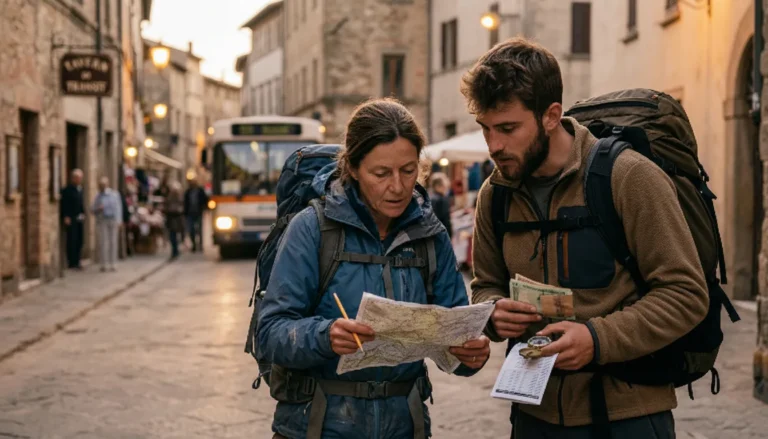
The mistake most UK travellers make is booking a return flight to Milan Malpensa for all events. If you are watching curling or skiing in Cortina, Milan is the wrong airport.
From Heathrow to the Dolomites: My Transit Recommendation
The Problem: Milan to Cortina is a 5-hour drive (often longer in winter traffic). The train connections are improving but can still be complex, requiring changes at Verona.
The Solution: If your tickets are for mountain events (Cortina), fly into Venice Marco Polo (VCE).
- Venice to Cortina: approx. 2 hours by direct shuttle bus or rental car.
- Milan to Cortina: approx. 5+ hours.
By flying into Venice, you cut your travel time in half and avoid the congestion of the Milan ring road. Only fly into Milan (MXP or LIN) if you are specifically attending the Opening Ceremony, Ice Hockey, or Figure Skating.
The “Red Zones” and Security Reality
Security for Milano Cortina 2026 is tight. Italian authorities have implemented “Red Zones” around all Olympic venues.
Access to these zones requires more than just an event ticket. You will need a digital Fan ID (similar to the Hayya card in Qatar) linked to your passport. Do not attempt to drive a private rental car directly to a venue entrance. You will be turned away kilometres out.
Travel Rule: Park at the designated “Park & Ride” hubs identified on your ticket and use the free Olympic shuttle buses. These buses have clearance to bypass local traffic checkpoints.
Also, be aware that while Italy is in the Schengen zone, temporary border controls are often reinstated during major events. Keep your physical passport on you, especially if you are crossing into Switzerland or Austria for day trips during the Games.
New Horizons: Ski Mountaineering (Skimo) Debut
Every Olympics introduces tweaks to the programme, but Milano Cortina 2026 brings an entirely new sport: Ski Mountaineering, commonly known as “Skimo.”
For the uninitiated, Skimo is essentially a race that combines uphill climbing with downhill skiing. Athletes use “skins” on the bottom of their skis to gain traction while ascending steep gradients, then rip them off at the summit for a high-speed descent.
The inclusion of Skimo is a nod to the host nation’s culture. It is wildly popular in the Dolomites and the Alps. The event will feature:
- Men’s Sprint
- Women’s Sprint
- Mixed Relay
The “Sprint” format is particularly TV-friendly. It takes place on a relatively short course with a vertical drop of around 100 metres. Races last only a few minutes and include sections where athletes must detach their skis and run uphill on foot (bootpacking). It is frantic, physical, and likely to be a breakout hit with UK audiences who enjoy the chaos of Ski Cross.
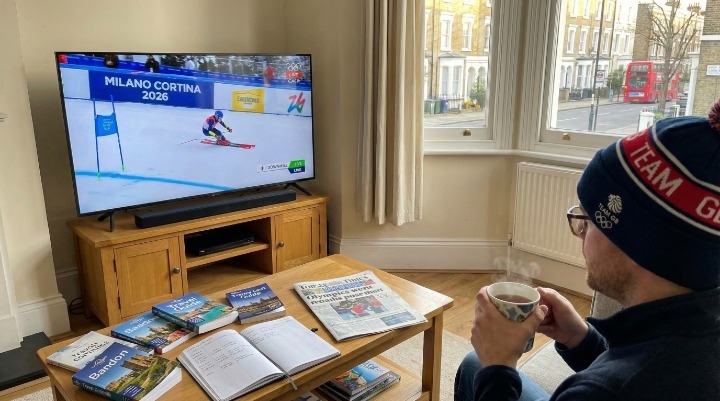
How to Watch in the UK: BBC and Beyond
The broadcasting rights for the Olympics in Europe can be confusing due to the partnership between the BBC and Warner Bros. Discovery. Here is exactly how to watch the Milano Cortina 2026 action from the UK.
1. The Free-to-Air Option: BBC
The BBC retains the rights to broadcast over 200 hours of live coverage.
- Where: BBC One, BBC Two, and BBC iPlayer.
- What you get: The “main feed.” They will focus heavily on Team GB athletes, major finals (like the Men’s 100m equivalent events), and the Opening/Closing ceremonies.
- Limitation: The BBC can usually only show two live streams at once. If a British curler is playing at the same time as a major hockey semi-final, the hockey match might not make the cut.
2. The “Every Minute” Option: Discovery+ / Eurosport
If you are a hardcore fan who wants to watch the Latvian Luge team or the preliminary rounds of Moguls, you need Discovery+.
- Where: Discovery+ App or Eurosport channels on Sky/Virgin.
- What you get: Every second of every event, live and on-demand.
- Cost: Requires a subscription (Standard plan usually covers sport).
Time Zone Note: Italy is on Central European Time (CET), which is 1 hour ahead of the UK (GMT). This is great news for British viewers. Most events will air during the day or prime time evening slots, with very few “middle of the night” alarms required compared to Tokyo or Beijing.
FAQs
What time is the 2026 Winter Olympics Opening Ceremony in the UK?
The ceremony begins at 19:00 GMT (7 pm) on Friday, 6 February 2026. Coverage on the BBC will likely start 30-60 minutes earlier.
Which UK athletes are competing in Milano Cortina 2026?
Team GB has sent 53 athletes. Key names include Dave Ryding (Skiing), Mia Brookes (Snowboard), Matt Weston (Skeleton), and Bruce Mouat’s curling rink.
How far is Milan from Cortina d’Ampezzo?
The distance is approximately 400km (250 miles). It takes about 5 hours to drive, or you can take a train to Venice and transfer, which takes a similar amount of time.
Do UK citizens need a visa for the 2026 Winter Olympics?
UK citizens do not currently need a visa for short stays in Italy (up to 90 days). However, ensure your passport was issued less than 10 years before the date you enter and has at least 3 months left until it expires.
What is the new sport in the 2026 Winter Olympics?
Ski Mountaineering (Skimo) makes its debut. It involves climbing up mountains on skis and descending rapidly.
Where is the 2026 Winter Olympics Closing Ceremony?
The Closing Ceremony will be held at the Verona Arena, a Roman amphitheatre in Verona, on 22 February 2026.
Can I still buy tickets for Milano Cortina 2026?
Yes, but availability is limited for high-profile finals. You should only purchase through the official platform tickets.milanocortina2026.org to avoid scams.
Conclusion
The Milano Cortina 2026 Games represent a pivotal moment for winter sports. We have moved past the sterile, crowd-less environments of recent years and returned to the roaring grandstands of the Alps.
For Team GB, the next 16 days are a test of progress. With 53 athletes and a realistic shot at a record-breaking medal haul, the excitement back home is palpable. Whether you are navigating the motorways of Lombardy or watching from your living room in Leeds, the spectacle promises to be unmatched.
Keep your eyes on the schedule, plan your travel based on the specific venue clusters, and get ready for what could be Britain’s golden winter.
Stay tuned. We will be updating this guide daily with medal counts and live reactions as the Games unfold.
About the Author