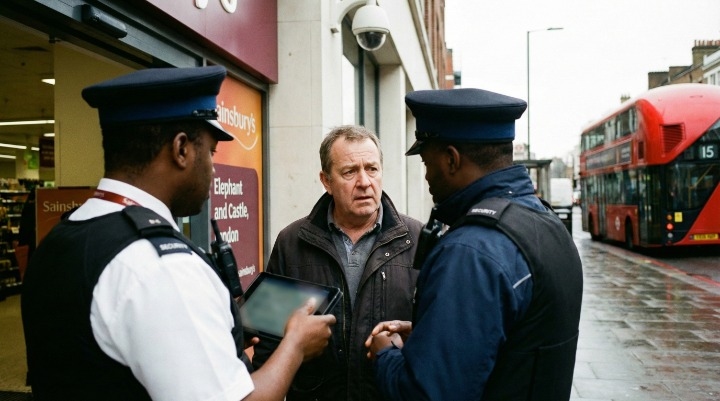
Sainsbury’s Facial Recognition Error: Was It A Human Or Tech Failure?
It was supposed to be a routine milk run.
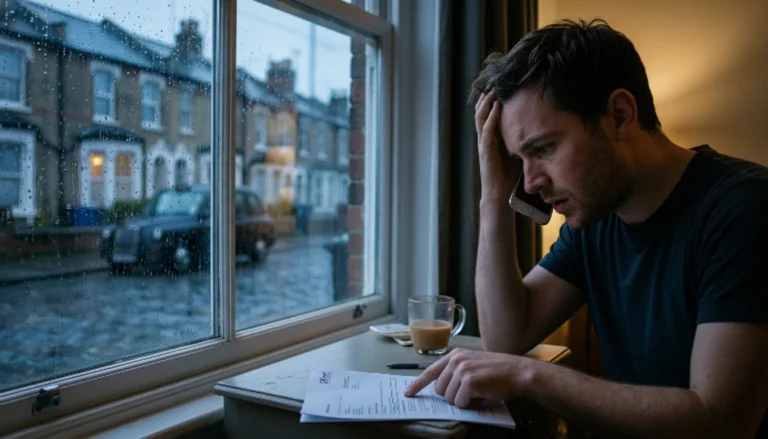
On the morning of January 27, 2026, Warren Rajah, a 42-year-old data strategist, walked into the Sainsbury’s Local at Elephant and Castle in South London. Ten minutes later, he was escorted out by security, accused of being a blacklisted offender.
He hadn’t stolen anything. He hadn’t caused a scene. He simply walked through the door.
This incident has ignited a firestorm in the UK retail sector, pitting the need for security against the civil liberties of innocent shoppers. While Sainsbury’s and technology provider Facewatch have attributed the mistake to “human error,” the event exposes a deeper, systemic vulnerability in how biometric surveillance is being deployed on our high streets.
In this investigation, we break down exactly what went wrong, the “human-in-the-loop” paradox, and, crucially, your legal rights under the newly implemented Data (Use and Access) Act 2025.
What Happened at Elephant and Castle? The Timeline of a Misidentification
The incident began not with an alarm, but with a tap on the shoulder.
According to reports from The Standard and BBC News, Mr Rajah was browsing the aisles when he was approached by a Sainsbury’s staff member and a security guard. They informed him that he had been flagged by the store’s facial recognition system as a banned individual.
The “Barcode” Confusion
In a bewildering exchange, staff reportedly asked Mr Rajah for a “barcode.” Confused, he offered his Nectar card app, assuming it was a loyalty check. It wasn’t. The staff were likely referring to an internal reference code generated by the Facewatch system, a “Subject ID” linked to a known offender.
When Mr Rajah protested his innocence, he was told the system was “never wrong” and was subsequently ejected from the premises.
Compensation or Hush Money?
Following the incident, Mr Rajah contacted Facewatch directly. In a humiliating twist, he was required to submit more biometric data, a selfie and his passport, to prove he wasn’t the person on their watchlist.
Facewatch later confirmed he was not on their database. The alert had flagged a different individual, but store staff had mistakenly identified Mr Rajah as the target.
Sainsbury’s has since issued a formal apology and a £75 voucher. For many privacy advocates, this sum trivialises the experience of public criminalisation.
The Compliance Paradox: Retailers argue they need facial recognition to stop the “shoplifting epidemic” (which saw over 500,000 offences in 2025). However, to prove you aren’t a criminal in their database, you often have to surrender your most sensitive identity documents (Passport/ID) to a private company. You lose your anonymity to prove you had the right to it.
Technology vs. Human Error: The Facewatch Defense
To understand how this error occurred, we have to look under the hood of the technology. Sainsbury’s uses Facewatch, a cloud-based facial recognition system.
How Facewatch Actually Works
The system operates on a “Watchlist” basis. It does not scan every face to identify who you are; it scans faces to check if they match a specific list of “Subjects of Interest” (SOIs).
- The Scan: Cameras at the entrance map the geometry of your face (distance between eyes, jawline shape) and convert it into a biometric template.
- The Comparison: This template is compared against the Facewatch cloud database of reported offenders.
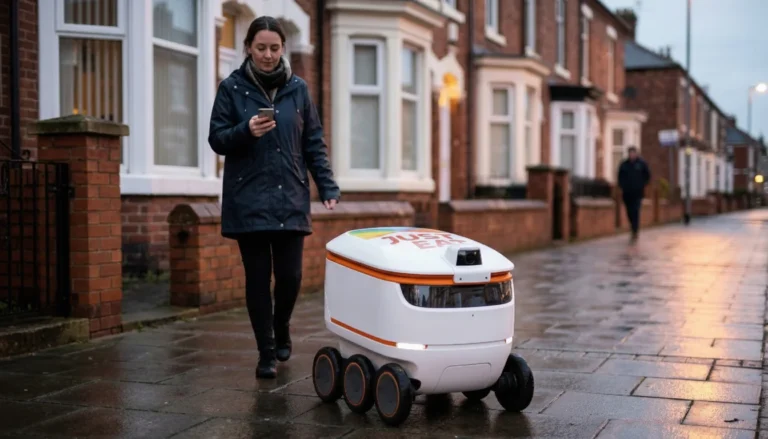
- The Alert (The Danger Zone): If the algorithm finds a match, it sends an alert to a handheld device carried by store staff. This happens in seconds.
The Staff Verification Gap
Facewatch claims a 99.98% accuracy rate. However, they emphasize that their system is merely an advisory tool.
The alert sent to staff includes an image of the “Subject of Interest.” It is then the human employee’s job to look at the screen, look at the shopper, and verify if they are the same person.
In the Elephant and Castle incident, the technology may have flagged a “low confidence” match or a different person entirely. The failure happened when the staff member, likely under pressure and lacking forensic training, decided Mr Rajah was the man on the screen.
Sainsbury’s 7-Store Rollout
Despite this error, J Sainsbury plc has defended the technology, citing a 46% reduction in crime in trial stores. As of February 2026, the technology is active in:
- Elephant and Castle
- Dalston
- Camden
- Whitechapel
- Ladbroke Grove
- Sydenham
- Bath Oldfield Park
Is It Legal? UK Facial Recognition Laws in 2026
The legal landscape for biometrics has shifted significantly with the passing of the Data (Use and Access) Act 2025.
The “Recognised Legitimate Interests” Shift
Previously, retailers had to work hard to justify processing biometric data under UK GDPR. The new 2025 Act introduced the concept of “Recognised Legitimate Interests.” This allows organisations to process data for “crime detection, investigation, or prevention” with a presumed legitimacy, potentially lowering the barrier for deploying surveillance tech.
ICO Guidelines on Biometric Processing
However, the Information Commissioner’s Office (ICO) remains strict. Even with the new Act, retailers must:
- Prove Necessity: They cannot use a sledgehammer to crack a nut. If standard CCTV works, LFR (Live Facial Recognition) is disproportionate.
- Conduct a DPIA: A Data Protection Impact Assessment must be completed before cameras are turned on.
- Ensure Human Intervention: Automated decisions (like banning a shopper) cannot happen without meaningful human review.
The Sainsbury’s error highlights a failure in that “meaningful human review.” If staff blindly follow the algorithm, the human is no longer a safeguard, they are just an enforcer.
The Privacy Catch-22: “Prove You Aren’t a Criminal”
Civil liberties group Big Brother Watch has condemned the Sainsbury’s rollout as “Orwellian.” Their primary concern is the creation of permanent biometric records for innocent people.
When Mr Rajah was asked to send his passport to Facewatch, he entered a privacy grey zone. He was forced to share verified government ID to correct an unverified commercial database.
- The Risk: If that database is hacked, thieves don’t just get your credit card number; they get your face map and passport details.
- The Reality: Most shoppers don’t know they can refuse. They assume if a security guard demands ID, they must comply. In a private shop, you have the right to leave, but you are not legally obligated to provide ID unless arrested by a police officer.
How to Protect Your Rights: A Step-by-Step Guide for Shoppers
If you find yourself approached by staff in a store using facial recognition, you need to know your rights immediately. The shock can be disorienting, so keep this checklist in mind.
The 5-Step Response to a False Identification
- Stay Calm and Ask for Clarity: explicitly ask, “Am I being detained?” and “On what grounds?” If they cite facial recognition, ask to see the image they are comparing you to.
- Do NOT Hand Over ID Immediately: You are not required to show a passport or driving licence to a store guard.
- Leave the Store: Unless they are performing a Citizen’s Arrest (which requires them to have seen you commit a crime), you are free to walk away.
- File a Subject Access Request (SAR): This is your legal weapon. You have the right to ask Sainsbury’s and Facewatch for all data they hold on you.
-
-
Tip: Use the ICO’s template for a SAR. They have one month to respond.
-
- Demand Erasure: Under Article 17 of the UK GDPR (Right to Erasure), if the data was collected in error, you can demand it be deleted immediately.
Who to Contact
- Sainsbury’s Data Protection Officer: privacy@sainsburys.co.uk
- Facewatch Privacy Team: dpo@facewatch.co.uk
- The ICO: If they fail to respond, lodge a complaint at ico.org.uk.
The Future of Biometric Retail: Security at What Cost?
The Sainsbury’s facial recognition error is not an anomaly; it is a statistical inevitability of deploying military-grade surveillance in a consumer environment.
While the Data (Use and Access) Act 2025 has paved the way for easier adoption of these tools to combat the very real issue of retail crime, the cost is being paid in consumer trust.
Technology is only as reliable as the entry-level staff member interpreting the alert. As long as the “human in the loop” is under-trained or over-reliant on the machine, innocent shoppers like Warren Rajah will continue to be casualties of the algorithmic war on shoplifting.
Have you been wrongly flagged by retail security technology? Don’t stay silent. File a SAR, know your rights, and hold the algorithm accountable.
[Read the ICO Guidance on Facial Recognition]
About the Author