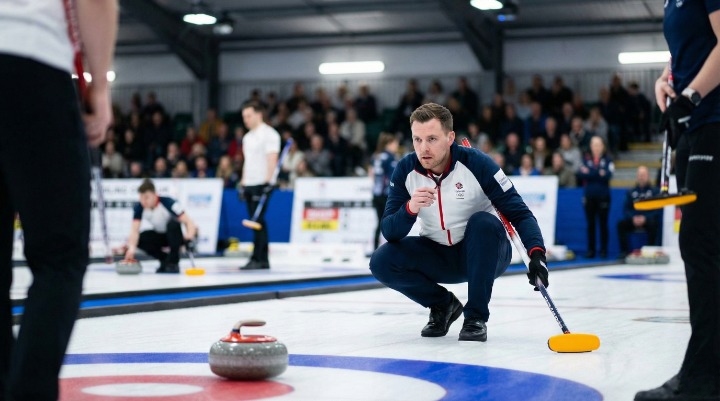
What Is the Hammer in Curling? The Last Stone Advantage
The arena goes silent. The skip screams their final instruction, and one last granite stone glides down the sheet. This single shot will decide whether the team wins gold or goes home empty-handed.
In curling, this moment relies entirely on one crucial rule: the hammer.
If you have watched the Winter Olympics or Team GB’s nail-biting matches, you have likely heard commentators obsess over “who has the hammer.” It is the most powerful weapon a team possesses. But what is the hammer in curling, and why does it dictate every strategic move on the ice?
This guide breaks down the rule, the strategy, and the psychology behind the last stone advantage, helping you watch the next match like a seasoned pro.
The Definition: What Does “Having the Hammer” Mean?
Simply put, the hammer is the right to deliver the final stone in an end.
In a standard game of curling, each team throws eight stones per end. The team with the hammer throws the 16th and final stone. This is a massive tactical advantage.
Think of it like batting last in baseball or cricket. You know exactly what score you need to beat. The team throwing the last rock sees exactly where every other stone has settled. They have the final say. They can knock an opponent’s stone out to score, or draw their stone to the button (the centre of the target) to take the point.
The Last Rock Advantage
Without the hammer, you are guessing. You place your stones hoping to block or guard. With the hammer, you are executing.
According to World Curling statistics, the team with the last stone advantage scores roughly 60-70% of the time in a given end. This statistical edge is why teams fight so hard to keep it.
How to Spot the Hammer on the Scoreboard
You do not need to memorise who scored last to know who has the advantage. Television broadcasts and arena scoreboards make it easy.
- Look for a small hammer icon or an asterisk (*) next to a team’s name.
- If you see the symbol next to Team GB, they have the last shot in the current end.
Why Is It Called “The Hammer”?
The term’s origin is debated, but most curling historians agree it comes from the idea of “hammering” the final nail. The last rock settles the score, effectively hammering down the result of that end.
How is the Hammer Decided? (Rules & Regulations)
The way a team earns the hammer depends entirely on the level of play. The rules at your local club differ significantly from the high-tech measurements used at the Olympics.
The Pre-Game Coin Toss vs. The LSD
If you walk into a local curling club in Scotland for a friendly match, the hammer in the first end is often decided by a simple coin toss.
However, in professional tournaments like the Winter Olympics or World Championships, chance is replaced by skill. This is determined by the Last Stone Draw (LSD).
Before the match begins, each team selects players to deliver a stone towards the button. Officials measure the distance from the centre of the house to the stone’s resting position using laser measurements.
- The Rule: The team with the lower total distance (closest to the button) wins the hammer for the first end.
- Source: According to the World Curling Rules of Curling (2024), teams must rotate which players throw the LSD throughout a tournament to ensure fairness.
The “Scoring Rule” (Who Gets It Next?)
Once the game starts, the hammer moves based on scoring. This is the golden rule of curling strategy:
- If you score: You give up the hammer to the other team for the next end.
- If you do not score: You keep the hammer.
This trade-off drives the game’s tactics. Scoring points is great, but giving up the hammer puts you on the defensive.
The Strategic “Blank End”
You might see a skip intentionally throw their last stone through the house, hitting nothing and scoring zero points. To a new viewer, this looks like a mistake.
It is actually a brilliant tactic called a Blank End.
If neither team scores (0-0), the team with the hammer retains the hammer for the next end. Teams often “blank” an end if the setup is messy or if they want to carry the advantage into an even-numbered end where they feel more comfortable. It is a way of saying, “I don’t like this setup; let’s try again.”
Strategy 101: How Teams Use the Hammer to Win
Understanding what is the hammer in curling is only step one. Step two is understanding how skips use it to control the scoreboard.
The “Deuce” (Scoring Two Points)
With the hammer, scoring one point is often considered a failure.
The aggressive goal is to score two or more points (a “deuce”). A team will use their first seven stones to build a situation where they can count multiple rocks. If they succeed, they happily give up the hammer to the opponent, having put a significant dent in the scoreboard.
The “Force” (Defense Without the Hammer)
When a team does not have the hammer, their goal is defence. They want to “force” the opponent to take only one point.
- The Tactic: The defending team clogs up the centre of the house.
- The Result: The team with the hammer is forced to make a difficult draw just to get a single point.
- Why it works: If the hammer team scores only one, they lose the hammer for the next end. The defending team has successfully limited the damage and regained control.
Stealing the End
The ultimate defensive play is a steal. This happens when the team without the hammer manages to score one or more points.
This is rare and usually results from a mistake by the hammer-holding skip. A steal swings the momentum of the match instantly. As noted in historical data from Team GB, matches are often won or lost on a single stolen end in the late stages of a game.
Coach’s Insight: The Pressure of the 10th End Having the hammer in the final end (usually the 10th) is the “Holy Grail” of curling. If the game is tied coming home, the team with the hammer has a roughly 80% chance of winning. The skip just needs to land their final stone anywhere in the scoring zone. The pressure, however, is immense. Miss the shot, and you lose the gold.
Mixed Doubles Curling: How the Hammer Changes
Mixed Doubles is a faster, more aggressive variation of the sport (two players instead of four). The rules regarding the hammer are slightly different here, designed to make the game higher-scoring.
The “No Blanking” Rule
In traditional curling, a blank end lets you keep the hammer. In Mixed Doubles, you lose the hammer if the end is blanked.
According to World Curling regulations, if a Mixed Doubles end results in no score, the hammer passes to the opposing team. This forces teams to be aggressive; they cannot just “wash” an end and try again.
The Power Play Option
In Mixed Doubles, the team with the hammer can call a Power Play once per game.
Normally, stones are positioned in the centre at the start of an end. In a Power Play, the pre-placed stones are moved to the side of the sheet. This opens up the centre of the ice, creating a clear path to the button. It is a high-risk, high-reward option used when a team desperately needs to score multiple points.
FAQs
Why do curlers throw the hammer away in a blank end?
They do this to keep control. If they score just one point, they lose the hammer. By scoring zero (blanking), they retain the last stone advantage for the next end, hoping to set up a two-point score later.
Does the team with the hammer always win?
No, but they have a distinct advantage. Statistics show the team with the hammer wins the end (scores) the majority of the time. However, a missed final shot can lead to a “steal” for the opponent.
How is the hammer decided in the first end of the Olympics?
It is decided by the Last Stone Draw (LSD). Two players from each team throw a stone towards the button before the game. The team with the shortest combined distance to the centre wins the first-end hammer.
What happens if the last stone ties the game?
If the game is tied after 10 ends, the teams play an “Extra End.” The team that scored to tie the game gives up the hammer. The team that did not score in the 10th end gets the hammer for the extra end, a massive advantage.
Can you lose the hammer without scoring?
In standard curling, no. If you don’t score, you keep it. In Mixed Doubles, yes, a blank end causes you to lose the hammer.
What is a “steal” in curling?
A steal occurs when the team without the hammer manages to score a point. This usually happens because the skip with the hammer missed their final shot.
Is the hammer rule different in mixed doubles?
Yes. The main differences are the “Power Play” option and the rule that forfeits the hammer after a blank end.
Conclusion
So, what is the hammer in curling? It is far more than just the last rock thrown down the ice. It is the currency of the game.
Teams spend the entire match trading, protecting, and fighting for this single advantage. Whether they are blanking an end to keep it or executing a perfect “power play” to maximise it, the hammer dictates the flow of play.
When you next watch a match, perhaps rooting for Team GB or watching the Winter Olympics, ignore the shouting for a moment and check the scoreboard. Find that little asterisk. The team with that symbol controls destiny.
If they have the hammer coming home in the final end, sit back and watch closely. The game is theirs to win, or lose.
About the Author