How Much Is Laser Hair Removal? UK Costs, NHS Funding & Safety
Tired of the daily shaving routine? You are not alone. Navigating the flashy sales tactics of private cosmetic clinics can feel overwhelming. Many chains hide their true long-term pricing. To understand the actual financial commitment, you need to compare high-street deals against medical-grade clinics. You also need to know exactly where you stand with public healthcare. A typical full-body course of six to eight treatments at a private UK clinic ranges from £1,500 to £2,400. Let’s break down exactly what you are paying for.
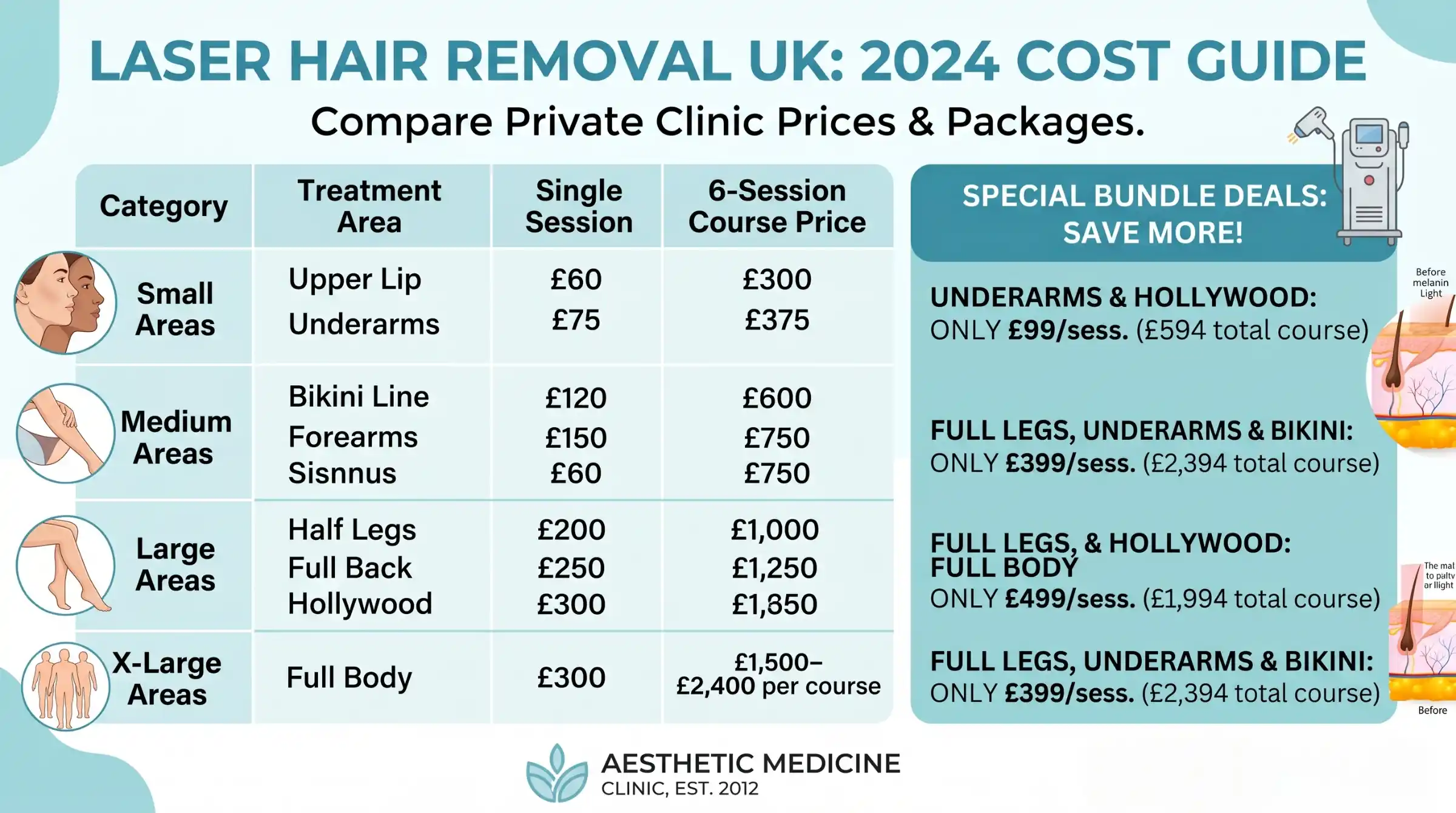
In the UK, laser hair removal costs between £35 and £300 per single session. Most clinics recommend a package of six to eight sessions. This means small areas like the upper lip cost £150 to £400 total. Full-body packages range from £1,500 to £2,400. The NHS does not routinely fund cosmetic treatments.
Key Takeaways
- Single sessions vary wildly from £35 to £300 depending on the clinic and technology.
- Permanent hair reduction generally requires a committed block of six to eight sessions.
- UK law does not require laser operators to hold formal medical qualifications.
- The NHS only steps in for strict clinical needs, not cosmetic preferences.
- Booking a package is nearly always cheaper than paying per session.
Quick Start: NHS Funding Eligibility Check
Start here before you open your wallet. Determine if you need to pay privately or if you qualify for public healthcare support.
- Is the hair removal strictly for aesthetic or cosmetic reasons? (If Yes: Private funding is required).
- Is the hair growth facial and caused by an underlying endocrine condition like severe hirsutism or PCOS? (If Yes: Check your local Integrated Care Board criteria for possible 10-session NHS funding).
- Is the treatment clinically required to prevent pilonidal sinus recurrence or treat abnormally located hair from reconstructive surgery? (If Yes: High likelihood of NHS clinical funding).
Private Laser Hair Removal Prices in the UK (2026 Guide)
Prices fluctuate based on several factors. Where you live matters. The specific laser technology used, such as Nd:YAG for darker skin or Alexandrite for lighter skin, also shifts the cost.
Here is a realistic look at what you can expect to pay across the UK.
| Treatment Area | Single Session Cost | 6-Session Package Cost |
| Upper Lip / Chin | £35 – £60 | £150 – £400 |
| Underarms | £40 – £75 | £180 – £350 |
| Half Legs | £80 – £150 | £400 – £700 |
| Full Body | £250 – £300 | £1,500 – £2,400 |
Always compare the cost of a six-session package against “Pay As You Go” single sessions. Most clinics heavily discount the package route to ensure you complete the full clinical growth cycle.
Common Mistake: Buying a single session just to “try it out.” Laser hair removal only works on hair in the active growth phase. One session will barely make a dent in the overall hair volume, meaning you essentially waste your money.
For a broader view of current high-street pricing, check official clinic price lists.
High-Street Clinics vs. Medical-Led Practices: Why Prices Vary
You might see a local beauty salon offering laser hair removal for half the price of a private dermatology clinic. Why the massive gap? It often comes down to staff training and equipment overheads.
Medical-led practices invest in expensive, hospital-grade lasers and highly trained nursing staff. High-street chains often rely on cheaper machines and basic operator training.
This brings us to a shocking reality about the UK aesthetics industry. According to Save Face, “There is currently no strict legal regulation in the UK requiring practitioners of non-surgical cosmetic procedures to hold formal medical qualifications.”
Anyone can buy a laser machine. That is a terrifying thought.
To protect yourself, you must verify your practitioner is registered with a Professional Standards Authority approved body, like the JCCP. Do not risk permanent skin damage to save a few pounds.
Clinic Safety & Value Checklist
- [ ] Is the clinic or practitioner actively listed on the JCCP register?
- [ ] Does the clinic conduct a mandatory patch test before taking full payment?
- [ ] Is the quoted price for a package of at least six sessions to cover all active hair growth phases?
- [ ] Did the practitioner evaluate your hair and skin type compatibility to ensure the laser will actually target the melanin?
- [ ] Does the clinic provide a clear outline of pricing for long-term maintenance “top-up” sessions?
Can You Get Laser Hair Removal on the NHS?
The short answer is usually no. Public healthcare prioritises medical necessity over aesthetics. The official guidance from the NHS North Bristol Trust is blunt: “Laser hair removal for strictly cosmetic purposes is not routinely funded by the National Health Service.”
However, funding does exist. You just need to meet very specific clinical criteria.
Eligibility for Facial Laser Treatment (e.g., PCOS)
Hormonal imbalances can cause severe, distressing facial hair growth. Polycystic Ovary Syndrome (PCOS) is a common trigger. The NHS may step in here. For example, the NHS Norfolk and Waveney Integrated Care Board may fund up to 10 facial laser sessions. You must have severe hirsutism confirmed by an endocrinologist. Additionally, topical or oral treatments must have failed for at least four months.
Consider a typical patient with diagnosed PCOS experiencing severe facial hair. After documented failure of topical creams over six months, her GP refers her to the local Integrated Care Board. She is approved for a fully NHS-funded block of eight facial laser sessions. This pathway requires patience and detailed medical records.
If you decide to go private, speak up. If you have diagnosed PCOS, ask clinics for medical discounts. Some clinical providers offer up to 20% off upon presenting a medical summary.
Non-Facial Exceptions (Pilonidal Sinus & Surgery)
Body hair removal is almost never funded. Yet, exceptions apply for highly specific physical traumas. The NHS provides funding to treat abnormally located hair-bearing skin resulting from reconstructive surgery. They also fund it to prevent the painful recurrence of a pilonidal sinus. Your GP must build a strong clinical case for these referrals.
Mid-Article Summary
- High-Street Private: The cheapest route (£150–£400 for small areas), but lacks medical regulation and requires careful vetting of the practitioner.
- Clinical Private: More expensive, but offers safer oversight by trained nurses and dermatologists using hospital-grade lasers.
- NHS Funding: Free, but strictly reserved for documented medical conditions like severe hirsutism, pilonidal sinus, or reconstructive surgery recovery.
The Hidden Costs: What Clinics Don’t Tell You
A £1,500 package sounds like a fixed cost. It rarely is. Clinics rely on add-ons and maintenance fees to boost their profit margins. Be prepared.
The 4 Steps to Avoid Hidden Fees:
- Mandatory Patch Testing Fees: Always request a patch test before committing to a costly package. This checks for adverse reactions like hyper-pigmentation, particularly on darker skin tones. Some clinics charge an upfront fee for this test, which they may or may not deduct from your final package price.
- Top-up Maintenance Sessions: “Permanent” reduction does not mean you will never see a hair again. Take a typical consumer paying £850 for a six-session private package. They achieve an 80% permanent reduction. However, they still require a single £120 maintenance top-up every year to handle new hormonal hair growth. Factor this into your long-term budget.
- Missed Appointment Penalties: Laser sessions are tightly scheduled. If you miss a slot without 48 hours’ notice, clinics will often deduct that session from your prepaid package. You instantly lose hundreds of pounds.
- Ineffective Treatments: Do not pay for laser hair removal if your hair is blonde, grey, or white. The laser targets melanin. Without dark pigment, the treatment is largely ineffective. You will waste your money entirely. Review JCCP safety guidelines to understand what your practitioner should be checking during your consultation.
How to Get the Best Results for Your Money
Preparation dictates success. Your behaviour between sessions impacts your financial return just as much as the laser itself.
Even private clinics operating within hospitals demand strict adherence to rules. Salisbury NHS Foundation Trust operates a private laser clinic where a course of six upper lip sessions costs £275. They reinvest proceeds back into the NHS. They, like all reputable clinics, issue firm pre-treatment instructions.
First, shave the treatment area 24 hours prior to your session. Strictly avoid waxing, plucking, or epilating between appointments. The laser needs the hair follicle root to remain intact so it can destroy it.
Second, timing is everything. Time your sessions four to six weeks apart. This catches the hair follicles in their active (anagen) growth phase. Rushing your sessions closer together wastes your prepaid treatments on dormant hair.
[NHS treatment preparation advice] offers deeper medical insight into the anagen cycle.
End Summary
Finding the true cost of laser hair removal means looking past the initial promotional flyer. Cheap high-street deals might cost you more in maintenance top-ups or poor results. Medical-led clinics charge a premium but provide safer, regulated care. Never assume you have to pay privately if a medical condition drives your hair growth; NHS funding is strict but possible. Protect your skin and your bank balance by asking the right questions before you commit.
Next Steps:
- Check your NHS eligibility with your GP if your hair growth is related to a medical condition like PCOS or surgery.
- Search the JCCP register to verify the safety credentials of any local private clinic.
- Book a consultation, request a mandatory patch test, and demand a written quote for long-term maintenance costs.
FAQs
Is laser hair removal permanent?
Most clinics recommend an initial course of six to eight sessions to achieve permanent hair reduction. However, “permanent reduction” means a significant decrease in hair density, not always a 100% hair-free result forever.
How many laser hair removal sessions do I need?
You will typically need a block of six to eight treatments. The laser only works during the active hair growth phase, so multiple sessions are required to catch all hairs in this cycle.
Does laser hair removal work on blonde or grey hair?
No, it is generally ineffective. The laser targets melanin (dark pigment) in the hair follicle. Blonde, white, or grey hair lacks this pigment.
Can I get laser hair removal for PCOS on the NHS?
Yes, but only in severe cases. The NHS may fund up to 10 facial sessions if you have severe hirsutism confirmed by an endocrinologist and have tried topical treatments for at least four months without success.
What happens if I wax between laser sessions?
Waxing or plucking pulls the hair root out. The laser needs that root intact to destroy the follicle. If you wax, the subsequent laser session will be a waste of money.
Are there any side effects to laser hair removal?
Common side effects include temporary redness, swelling, and blistering. Patients with darker skin face a higher risk of temporary or permanent hyper-pigmentation, making a patch test essential.
Do I need to see a doctor for laser hair removal in the UK?
No. There is currently no legal requirement in the UK for laser practitioners to hold medical qualifications. This makes it vital to check voluntary safety registers like the JCCP.
About the Author