Tooth Is Loose But Still Attached Adults: Urgent UK Guide
Finding a loose adult tooth causes instant panic. You immediately wonder if it is going to fall out. Losing teeth is not a normal part of getting older. But a wobbly tooth does not always mean an automatic extraction. We will show you exactly what causes this mobility. You will learn immediate at-home steps to protect the tooth and when you must call NHS 111 for triage.
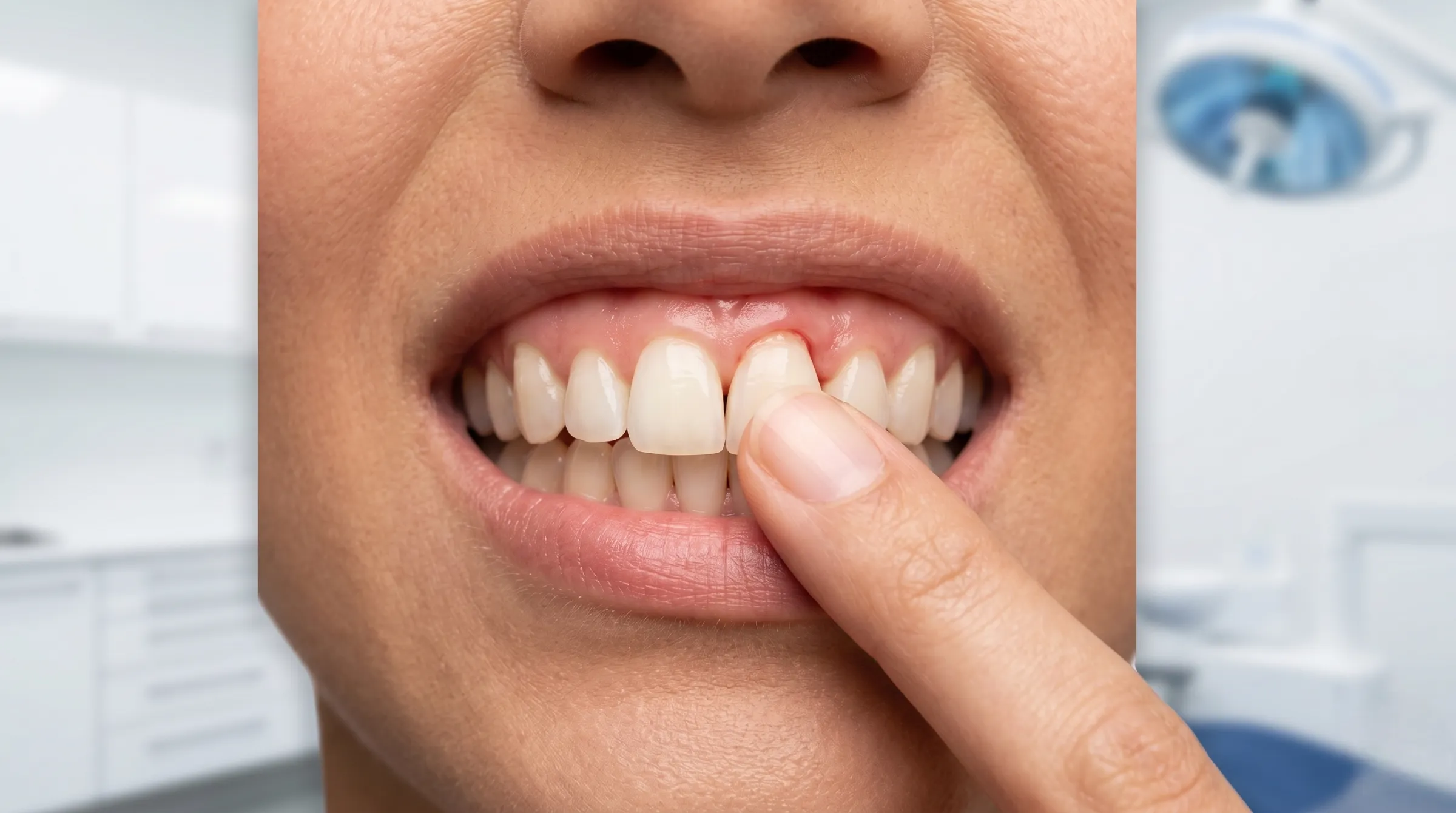
If a tooth is loose but still attached in adults, leave it completely alone. Do not wiggle it, as this damages the supporting ligaments. Switch to a soft diet immediately. If caused by trauma, seek an emergency dentist for splinting. For gum disease, book a periodontal assessment. Call NHS 111 if accompanied by severe swelling.
Key Takeaways
- Gum disease and physical trauma are the leading UK causes.
- Splinting can stabilise traumatised teeth within 2 to 4 weeks.
- Never wiggle or test the mobility of the tooth yourself.
- Periodontitis requires lifelong maintenance; it has no cure.
- Severe swelling or out-of-hours emergencies require an NHS 111 call.
Immediate Home-Care Checklist (While awaiting a dentist)
- [ ] Leave the tooth completely alone (resist pushing it with your tongue or fingers).
- [ ] Adopt a soft diet immediately, such as soups, mashed potatoes, or smoothies.
- [ ] Take standard painkillers like paracetamol or ibuprofen for active pain.
- [ ] Apply a cold compress to the outside of the cheek to reduce trauma swelling.
- [ ] Clean adjacent teeth normally, but use extremely gentle strokes with a soft brush on the affected tooth.
What Causes a Loose Adult Tooth?
Many people assume teeth are fixed rigidly in the jawbone. They are actually suspended by a hammock of tiny fibres called periodontal ligaments. Damage to these ligaments or the surrounding bone causes mobility.
Pro Tip: Request a clinical assessment for teeth grinding (bruxism) if your loose tooth feels worse or more tender upon waking. Excess overnight bite force strains the ligaments.
Periodontitis (Severe Gum Disease)
Gum disease is the leading cause of tooth loss in adults. It destroys the bone that supports and anchors the teeth in place. With proper care, older adults should retain their natural teeth for life.
Untreated plaque causes the gums to pull away, forming deep pockets below the gumline. Bacteria then destroy the bone. [Oral Health Foundation]
“Periodontitis is an irreversible condition with no cure; it must be constantly maintained through strict oral hygiene.” (Royal Devon University Healthcare NHS Foundation Trust, 2024).
Physical Dental Trauma
Adult teeth often become displaced due to sudden physical impact. Sporting injuries, road traffic accidents, and physical violence are common triggers. The sudden force tears the periodontal ligaments holding the tooth.
Real Example: A patient presents with a loose front tooth following a physical accident. The clinical treatment involves repositioning the tooth and applying a metal wire splint for 2 to 4 weeks. (East Kent Hospitals University NHS Foundation Trust, 2024).
Orthodontic Risks and Bruxism
Moving teeth requires strict clinical supervision. Orthodontic treatments conducted without proper oversight, such as direct-to-consumer clear aligners, can move teeth too quickly. This creates a severe risk of root damage, bone loss, and loosened teeth.
Chronic grinding can also push teeth out of alignment.
Real Example: A patient with extreme teeth grinding develops a loose tooth due to excess biting pressure. The dentist removes a small amount of enamel to adjust the bite and prescribes a night guard. (Cleveland Clinic, 2024).
Immediate At-Home Care: Do’s and Don’ts
Your actions in the first few hours dictate whether the tooth survives. You must protect the damaged root structure.
Pro Tip: Do not test the tooth’s mobility. Wiggling it out of curiosity or habit tears the remaining ligaments and heavily worsens the damage.
Pro Tip: Switch immediately to a strictly soft diet for 2 to 4 weeks if the looseness is trauma-related. Completely avoid biting using your front teeth.
Common Mistake: Never attempt “DIY” fixes like superglue or chewing gum to hold the tooth in place. These introduce toxic chemicals, trap bacteria, and heavily complicate professional clinical treatment.
Follow this 4-step home protocol while waiting for your dental appointment:
- Stop chewing on the affected side of your mouth entirely.
- Apply a cold compress to the cheek to limit trauma-induced swelling.
- Take standard over-the-counter painkillers to manage throbbing.
- Brush adjacent teeth normally, but only gently dab the loose tooth with a soft-bristled brush.
When to Call NHS 111 vs. Booking a Routine Dentist
It is hard to know who to ring when a tooth wobbles. You need answers fast. If your regular practice is open, call them first. But dental accidents often happen out of hours.
“If an emergency dentist is required out-of-hours and a local practice is closed, UK patients are instructed to call NHS 111 for clinical advice.” (NHS, 2024).
Urgent Care Decision Tree
- Are you experiencing a loose tooth alongside severe facial swelling that affects your eye, breathing, or swallowing? YES: Go to A&E immediately. NO: Continue below.
- Did the tooth become loose due to a sudden physical impact or trauma? YES: Contact an emergency dentist immediately. Splinting works best when performed quickly.
- Is the tooth loose with no trauma, accompanied by bleeding or receding gums? YES: Book an urgent periodontal assessment for gum disease. Do not wiggle the tooth.
- Is your regular dental clinic closed and you have severe symptoms? YES: Call NHS 111. [NHS 111 Online]
| Symptoms | Likely Cause | NHS Pathway / Action Required |
| Mobile tooth + extreme facial swelling | Severe Infection | Go to A&E immediately. |
| Sudden mobility after physical impact | Dental Trauma | Urgent emergency dental appointment. |
| Very sore gums, mouth ulcers, loose tooth out of hours | Advanced Infection / Trauma | Dial NHS 111 for clinical triage. |
| Gradual looseness, bleeding gums over time | Periodontitis | Book routine periodontal assessment. |
[Mid-Article Summary]
- A loose tooth always requires professional clinical assessment.
- Trauma needs fast splinting; severe gum disease requires deep cleaning (RSD).
- Never attempt DIY fixes at home. Stick to soft foods until a professional assesses you.
- Call NHS 111 if you develop severe swelling or ulcers outside regular clinic hours.
Professional Treatments to Save the Tooth
Dentists have specific interventions to save your smile. The treatment depends entirely on how the tooth became loose.
Dental Splinting for Trauma
Impact injuries require mechanical support. A loose or displaced adult tooth caused by trauma is typically treated by a dentist repositioning the tooth and applying a metal wire splint. This splint remains in place for 2 to 4 weeks.
Typical scenario example: A 28-year-old suffers a sports injury resulting in a loose but attached upper front tooth. They attend an emergency clinic where the dentist splints the tooth to adjacent stable teeth. After maintaining a soft diet for 4 weeks, the splint is removed successfully.
Root Surface Debridement (RSD)
Gum disease requires a different approach. When gum disease progresses below the gumline and affects the tooth roots, patients may require a deep cleaning procedure. This is known as root surface debridement (RSD) and is performed under local anaesthetic.
Typical scenario example: A 45-year-old notices their lower incisors feel slightly mobile when brushing. No trauma has occurred. A dentist identifies moderate bone loss. The patient undergoes root surface debridement to clear subgingival plaque, stabilising the teeth and avoiding extraction.
Root Canal and Long-Term Monitoring
Teeth are unpredictable. Injured teeth may eventually lose vitality in the nerve, become infected, or require root canal treatment. This can happen even several years after the initial trauma occurred. Regular x-rays are vital.
Can a Loose Tooth Tighten Back Up on Its Own?
Sometimes, a mildly traumatised tooth will tighten up as the periodontal ligaments heal. But you must facilitate this healing by avoiding hard foods and keeping your tongue away from the area.
If the looseness is caused by periodontitis, the tooth will never tighten up without professional intervention. The bone loss is permanent.
End Summary & Next Steps
Adult teeth can often be saved if you act quickly. The root cause—whether a sudden physical trauma or a slow-moving bacterial infection—dictates your treatment path. Do not wait to see if it gets worse.
Next Steps:
- Secure the area immediately by switching to a soft diet and keeping your fingers away.
- Identify the cause. Was it a sudden impact, or has it been getting worse over months?
- Call your dental practice for an emergency slot, or dial NHS 111 if you experience severe symptoms out of hours.
FAQs
Can an emergency dentist save a loose front tooth?
Yes. If you act quickly following a trauma, a dentist can reposition the tooth and apply a metal wire splint to stabilise it.
How much does a dental splint cost on the NHS?
Verified data not available – cannot assume. NHS emergency dental banding charges update frequently; ask your clinic or NHS 111 for current pricing.
Will my loose tooth fall out in my sleep?
It is highly unlikely to fall out simply from sleeping, provided you are eating a strictly soft diet and not wiggling it during the day. If you grind your teeth, wear a night guard.
Can chlorhexidine mouthwash tighten loose gums?
No. While antibacterial mouthwash helps reduce surface plaque, it cannot reach deep periodontal pockets or reverse bone loss. You need professional root surface debridement (RSD).
What foods should I eat with a wobbly adult tooth?
Following dental trauma, patients must eat a soft diet for 2 to 4 weeks. Soups, smoothies, and mashed potatoes are ideal. Avoid biting on your front teeth entirely.
How long does a traumatised tooth take to heal?
The initial splinting period lasts between 2 and 4 weeks. However, the tooth’s nerve must be monitored for years to ensure it does not lose vitality.
Can severe gum disease affect my heart?
Yes. The bacteria from severe gum disease can enter the bloodstream, increasing the risk of general inflammation, hardened arteries, and cardiovascular disease.
Should I still brush a loose tooth?
Yes. Maintain oral hygiene, but clean the traumatised tooth extremely gently with a soft toothbrush to avoid irritating the damaged ligaments.
About the Author