Russian Spy Ship ‘Yantar’ Targeted UK Pilots with Lasers: The Full November 2025 Incident Report
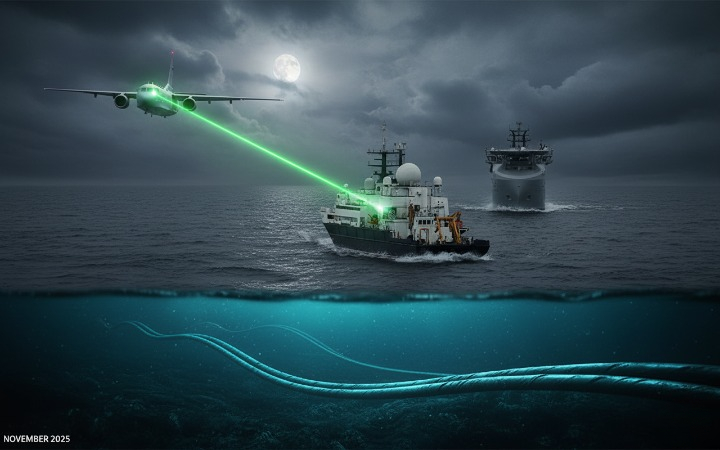
The rules of engagement in the North Sea just changed. On November 19, 2025, the presence of a Russian spy ship UK forces were tracking escalated from standard surveillance to direct aggression. The Yantar, an infamous vessel officially designated as a “research ship,” was reported to have directed laser energy weapons—known as “dazzlers”—at Royal Air Force (RAF) crews operating near Scotland.
This is not a drill, and it is not a routine patrol. The Yantar is loitering over critical undersea infrastructure, and its actions suggest it is testing the British military’s patience and reaction times.
For residents across the UK, this raises a critical question: Why is a vessel capable of severing the internet cables that power our economy operating with such impunity in our Exclusive Economic Zone (EEZ)?
Here is the full analysis of the November incident, the technical capabilities of the Yantar, and the threat posed to the UK’s digital lifeline.
The Incident: Lasers, Jets, and the ‘We See You’ Warning
The alarming events unfolded just north of the Scottish coast. According to reports verified by defense correspondents, RAF P-8 Poseidon aircraft—specialized maritime patrol jets designed to hunt submarines—were tracking the Yantar as it moved through the UK’s area of interest.
During this surveillance operation, the crew reported being targeted by lasers from the ship’s deck.
What Happened in Scottish Waters?
This wasn’t a simple spotlight. “Laser dazzling” is a recognized military gray-zone tactic. The intent is to blind the optical sensors of the aircraft or, more dangerously, temporarily blind the pilots themselves.
-
The Location: The incident occurred in international waters but within the UK’s Exclusive Economic Zone (EEZ), specifically in areas dense with undersea fiber-optic cables and energy pipelines.
-
The Escalation: While Russian vessels often transit the English Channel, actively engaging RAF assets with directed energy devices marks a significant step up in aggression compared to the Yantar’s previous visit in January 2025.
The UK Military Response (HMS Somerset & RAF)
The Ministry of Defence (MoD) has moved quickly to contain the threat. Royal Navy Press Release on HMS Somerset Deployment
HMS Somerset, a Type 23 frigate equipped with advanced anti-submarine warfare capabilities, was dispatched to shadow the Yantar. This “man-marking” tactic is standard procedure, but the rhetoric from the government has hardened.
Defence Secretary John Healey issued a stark warning in response to the vessel’s erratic behavior:
“We see you. We know what you are doing. The UK will not tolerate threats to our critical national infrastructure or our personnel.”
This statement signals a shift. The UK is no longer treating these incursions as passive transit; they are being categorized as active threats to national security.
Strategic Insight: Why use lasers? From a tactical perspective, using a laser dazzler is a low-cost, low-risk way to harass the enemy without firing a missile. It forces the RAF pilots to alter their flight path or rely on instrument-only flying, disrupting their ability to gather intelligence on what the Yantar is actually doing below the waterline.
Inside the Yantar: More Than Just a ‘Research’ Vessel
To understand the threat, you must look past the “Oceanographic Research” label painted on the hull. The Yantar is not collecting weather data. It is a specialized seabed warfare platform.
Project 22010 and the GUGI Connection
The Yantar belongs to Project 22010, a class of vessel that does not report to the standard Russian Navy command structure. Instead, it operates under the GUGI (Main Directorate of Deep-Sea Research).
Why GUGI matters: GUGI is a secretive branch of the Russian Ministry of Defence responsible for deep-sea engineering and, crucially, espionage. When GUGI ships deploy, their mission is almost always related to the seabed infrastructure of rival nations.
The ‘Mothership’ Capability: Mini-Subs and Drones
The Yantar is essentially a floating hangar. It is equipped to deploy manned and unmanned submersibles that can reach depths far greater than standard military submarines.
-
-
The Rus and Konsul Submersibles: These mini-subs can dive up to 6,000 meters (nearly 20,000 feet).
-
The Capability: At these depths, they can interact with objects on the ocean floor. This includes placing listening devices (taps) on cables or, in a conflict scenario, cutting them entirely.
-
The ROVs: The ship also carries Remotely Operated Vehicles (ROVs) equipped with robotic arms and cable cutters.
-
The Invisible Threat: Why Undersea Cables Matter to You
It is easy to dismiss a Russian spy ship UK sighting as a remote military issue. However, the target of the Yantar is directly linked to your daily life.
The ‘Digital Lifeline’ of the UK Economy
There is a common misconception that our internet comes from satellites. It doesn’t. 97% of global communications travel through fiber-optic cables lying on the seabed.
If the Yantar were to sever the strategic cables connecting the UK to the US and Europe, the consequences would be immediate and catastrophic:
-
Financial Freeze: Trillions of dollars in banking transactions flow through these cables daily. A cut could halt international payments.
-
Internet Blackout: Bandwidth would plummet, affecting everything from NHS data transfers to your ability to stream Netflix or send a WhatsApp message.
-
Energy Security: Many modern cables also control data flow for offshore wind farms and gas pipelines.
How Sabotage Works (Tapping vs. Cutting)
The Yantar specializes in two distinct threats:
-
Espionage (Peacetime): Using sensors to “tap” the cables, attempting to intercept data packets without breaking the connection.
-
Sabotage (Conflict): Physically severing the line. Because the ocean is vast, finding and repairing a cut cable can take weeks, especially if the Yantar cuts multiple lines simultaneously.
A Timeline of Aggression: Tracking the Yantar in 2025
This November incident is not an isolated event. 2025 has seen a persistent pattern of Russian naval activity testing UK borders.
January 2025 vs. November 2025
-
January 2025: The Yantar was spotted transiting the English Channel. It was shadowed by a Royal Navy destroyer but remained relatively passive, sticking to international shipping lanes.
-
November 2025: The vessel moved North, towards critical Atlantic cables off Scotland. The behavior became erratic (stopping and starting) and aggressive (laser attacks).
Strategic Insight: Why Now?
Defense analysts suggest this escalation is timed to coincide with geopolitical tension. By threatening the UK’s infrastructure, Moscow sends a message: “We can hurt you without ever setting foot on your soil.”
It forces the Royal Navy to stretch its resources, deploying frigates like HMS Somerset to babysit a single Russian ship for weeks at a time.
FAQs
Where is the Russian spy ship Yantar right now?
As of late November 2025, the Yantar is operating in the North Sea and waters north of Scotland, hovering near the edge of the UK’s Exclusive Economic Zone (EEZ).
What kind of lasers did the Russian ship use against the RAF?
The ship reportedly used “dazzler” class lasers. These are non-lethal directed energy weapons designed to temporarily blind optical sensors and distract pilots, making it dangerous to fly at low altitudes.
Can the Yantar ship cut internet cables?
Yes. The ship carries deep-sea submersibles (Project 16810 “Rus” and “Konsul”) capable of diving to 6,000 meters. These vehicles have robotic arms designed to manipulate or sever cables on the ocean floor.
What is the GUGI unit in the Russian Navy?
GUGI stands for the Main Directorate of Deep-Sea Research. It is a separate, highly secretive branch of the Russian military focused on deep-sea operations, espionage, and seabed warfare.
How is the UK responding to the Russian spy ship?
The Royal Navy has deployed HMS Somerset to shadow the vessel. Additionally, RAF P-8 Poseidon aircraft are conducting aerial surveillance to monitor the ship’s deployment of any submersibles.
Has the Yantar attacked the UK before?
While the Yantar has loitered near UK waters multiple times (including in 2021 and early 2025), the use of lasers against RAF aircraft in November 2025 marks a specific escalation in aggressive tactics.
Summary: The Seabed is the New Frontline
The incident involving the Russian spy ship UK forces faced this November is a stark reminder of modern hybrid warfare. The Yantar is not here to fight a naval battle; it is here to map the vulnerabilities of the British economy.
By directing lasers at RAF pilots, the crew of the Yantar has proven they are willing to operate in the “Gray Zone”—actions that fall just short of war but are undeniably hostile.
The Royal Navy remains on high alert. As long as the Yantar remains in our waters, the safety of the digital cables that connect us to the world remains a priority for national defense.
[Subscribe to the UK Defence Journal for updates] [Read guide on How to Prepare for a Digital Blackout]
About the Author