Ecojet Airlines Liquidators Appointed: A Deep Dive into the Failure of the World’s First Electric Carrier
On 14 January 2026, the dream of “guilt-free” flight stalled as Ecojet Airlines Limited entered provisional liquidation at Edinburgh Sheriff Court.
Launched by Ecotricity founder Dale Vince in 2023, the startup promised a hydrogen-electric revolution for UK regional aviation. But behind the headline-grabbing goal of zero-emission travel lay a complex web of regulatory hurdles and capital demands that ultimately grounded the fleet before a single passenger could board.
This article analyzes the legal mechanics of the Opus Restructuring appointment, the technical hurdles of hydrogen retrofitting, and why the £20 million capital adequacy requirement proved an insurmountable barrier for the “Green Britain” airline.
Opus Restructuring Official Site
The Appointment of Opus: Navigating the Ecojet Insolvency
The winding up of Ecojet is not just a startup failure; it is a significant case study in the collision of high-growth equity ambitions and Scottish insolvency law.
Who are the Provisional Liquidators?
Following the petition, Paul Dounis and Mark Harper of Opus Restructuring & Insolvency were appointed as joint provisional liquidators.
According to filings with Companies House (Form WU02(Scot), filed 21 January 2026), the liquidators have taken control of the company’s affairs. Dounis and Harper are veterans in the insolvency space, often tasked with managing complex wind-downs where stakeholder management is critical. Their immediate role is to secure the company’s position, or in this case, confirm the lack of assets, and execute the statutory duties owed to creditors.
[GOV.UK Companies House – Ecojet Airlines Ltd (SC707997)]
The Edinburgh Sheriff Court Winding-Up Petition
The legal mechanism used here is notable. While many startups dissolve quietly, Ecojet’s board initiated a “voluntary liquidation” that was formalized through a petition presented to Edinburgh Sheriff Court.
This route is often taken when a company is solvent enough to pay for the liquidation process but insolvent regarding its ability to continue trading. By presenting the petition themselves, the directors (including Vince) effectively handed the keys to the court to ensure an orderly exit, avoiding the chaotic “creditor-led” shut-downs seen in other recent failures.
Legal Insight: The petition “craving the court that Ecojet Airlines Limited be wound up” signals the end of the corporate entity (Company No. SC707997), legally separating the brand’s ambitions from the limited company’s liabilities.
Why Dale Vince “Paused” Investment: The £20 Million Gap
In public statements, Dale Vince described the decision to pause investment as a pragmatic response to a “tough investment market.” However, the specific figure cited, £20 million, tells a more technical story about aviation regulation.
CAA Capital Adequacy and the AOC Hurdle
To launch an airline in the UK, you need more than planes; you need an Air Operator’s Certificate (AOC). A critical part of the CAA’s assessment for a new AOC is financial fitness.
Inside the Regulatory Cockpit: The CAA’s “Forming a New Airline” guidelines require applicants to demonstrate they have enough working capital to survive three months of operations with zero income. This “burn rate” buffer protects passengers from being stranded.
For Ecojet, which planned to operate 19-seater and eventually 70-seater aircraft, that buffer was calculated at approximately £20 million. Without this cash ring-fenced in the bank, the CAA simply cannot grant the license. It is a binary pass/fail test that has grounded dozens of “paper airlines” before they ever reached the runway.
The “Tough Investment Market” of 2025/2026
Raising £20 million for a conventional airline is difficult; raising it for an unproven hydrogen-electric model in the economic climate of 2025/2026 was nearly impossible. Venture capital for “Green Tech” has shifted toward safer, revenue-generating assets.
Ecojet was caught in a “Series B” trap: too big for seed funding, but too risky for institutional growth equity. Vince’s admission that aviation is the “last frontier and the hardest” reflects a broader market realization that the return on investment (ROI) for zero-emission flight is likely decades, not years, away.
The Technical Turbulence: Retrofitting vs. Reality
Ecojet’s business model relied on retrofitting existing turboprops (like the Twin Otter and ATR 72) with hydrogen-electric engines. While conceptually sound, the regulatory timeline for this engineering feat did not match the company’s cash flow.
ZeroAvia and the Certification Lag
Ecojet’s technical viability was tethered to the success of partners like ZeroAvia. While ZeroAvia achieved a major milestone in November 2025 by receiving Design Organisation Approval (DOA) from the CAA, full type certification for commercial passenger use is a much longer road.
The ZA600 engine (targeted for 9-19 seaters) and the ZA2000 (for larger regional turboprops) are still undergoing rigorous testing. For an airline like Ecojet, this meant carrying overheads for pilots, crew, and ground staff years before the aircraft were legally allowed to carry paying passengers.
Sustainable Aviation Fuel (SAF) vs. Hydrogen-Electric
This delay exposes a critical content gap in the “Green Aviation” narrative. Competitors who focused on Sustainable Aviation Fuel (SAF), which works in existing engines, have been able to fly immediately.
- SAF: Drop-in solution, expensive but certified now.
- Hydrogen-Electric: Requires new engines, new airframes, and new ground infrastructure.
Ecojet bet on the “Moonshot” of pure electric/hydrogen. While noble, the infrastructure and certification lag meant they were burning cash on a runway that hadn’t been built yet.
What This Means for Creditors and Former Employees
For the staff laid off in early 2025 and the remaining skeleton crew, the liquidation brings a mix of finality and relief.
Statutory Entitlements and the Members’ Voluntary Funding
In a move that helps preserve his reputation as a “green industrialist,” Dale Vince and the other members have elected to fund the liquidation process.
What does this mean?
- No Material Assets: Opus confirmed the company has no planes or significant cash reserves to sell.
- The Funding: The directors are paying cash into the liquidation pot specifically to ensure employees receive their statutory entitlements (redundancy pay, notice pay, holiday pay).
- Trust Factor: This distinguishes Ecojet from chaotic collapses like Flybe (2020), where staff were left fighting for scraps. It ensures a “clean” exit for the brand.
Asset Disposal: The Missing ATR 72 Fleet
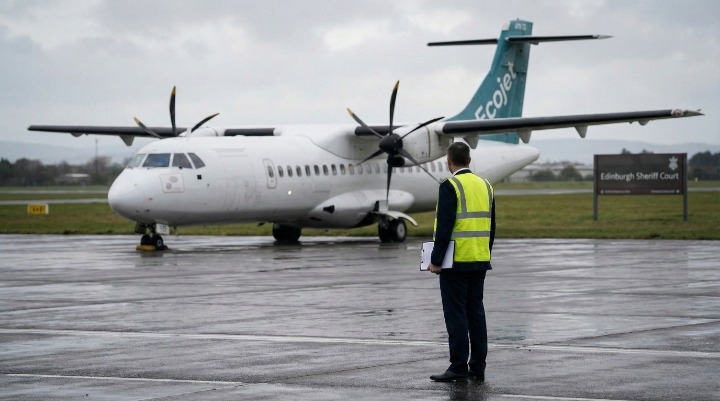
Despite early press releases showing Ecojet branded ATR 72-600s, the liquidators confirmed the airline “was a start-up business and has no material assets.”
Reality Check: The aircraft were likely subject to leasing agreements or Letters of Intent (LOI) that never finalized due to the missed funding targets. There is no fleet to auction off, which simplifies the liquidators’ job but leaves unsecured creditors (like suppliers or consultants) with little recourse.
The Future of Zero-Emission Aviation in the UK
Is “Jet Zero” Still Achievable?
Ecojet’s failure is a blow to the UK government’s “Jet Zero” strategy, which relies heavily on technological breakthroughs to decarbonise regional flights by 2040. It suggests that without massive state subsidy, the private sector cannot bridge the “valley of death” between prototype and commercial service.
Lessons Learned from the Ecojet Collapse
Experience Analysis: Comparing this to the Flybe 2023 collapse, the lesson is clear: Capital isn’t just for fuel; it’s for regulatory “holding patterns.”
- Certification is King: You cannot build an airline schedule around an engine that hasn’t been certified.
- Cash is Regulatory: The CAA’s financial tests are non-negotiable.
- The Pioneer Penalty: Being the “first” electric airline carries a financial burden that second-movers will not face.
Summary
The appointment of Ecojet Airlines liquidators marks the end of a bold experiment. While Paul Dounis and Mark Harper wind down the corporate shell, the broader challenge remains. Dale Vince has exited the “cockpit,” but the industry is left with the same problem: the technology for zero-emission flight exists, but the business model to pay for it does not.
Next Step: Are you an investor or creditor affected by recent green tech insolvencies? Sign up for our Industry Insight newsletter to track the next wave of Sustainable Aviation innovators and legal updates.
FAQs
Who are the liquidators for Ecojet Airlines?
On 14 January 2026, Paul Dounis and Mark Harper of the insolvency firm Opus Restructuring & Insolvency were appointed as joint provisional liquidators by Edinburgh Sheriff Court.
Is Ecojet still flying?
No. Ecojet Airlines never commenced commercial flights. The company was in the “pre-revenue” phase, attempting to secure its Air Operator’s Certificate (AOC) from the Civil Aviation Authority (CAA) when it was wound up.
Why did Ecojet Airlines fail?
The airline failed primarily due to an inability to raise £20 million in external capital required to satisfy the CAA’s financial fitness rules for new airlines. Founder Dale Vince also cited the slow pace of regulatory approval for hydrogen-electric engines as a key factor.
What happened to Dale Vince’s electric airline?
Dale Vince, founder of Ecotricity, “paused” investment in early 2026, leading the board to petition for voluntary liquidation. Vince stated that aviation is the “hardest frontier” to decarbonise and that the technology timeline did not align with the investment reality.
How can Ecojet employees claim their pay?
According to Opus Restructuring, the company’s members (shareholders) have elected to fund the liquidation process specifically to ensure all employees receive their full statutory entitlements, including redundancy and notice pay.
Did Ecojet ever launch a commercial flight?
No. Despite early promotional activity and branding exercises, the airline did not receive the necessary regulatory clearances to fly passengers before entering liquidation.
About the Author